Holding urine for a short time during travel, work, or an emergency situation is common. But
many people wonder, the answer depends on how often you delay urination and whether you already
have urinary problems. Regularly ignoring the urge to urinate can affect bladder function and
increase the risk of urinary complications. This blog explains how holding urine affects your
urinary system, when it becomes a concern, and when you should consult a specialist.
Can Holding Urine Damage Your Kidneys?
No, occasionally holding urine does not usually damage healthy kidneys. Your kidneys
continuously produce urine, which moves into your bladder for storage before leaving your body.
The problem occurs when you frequently hold urine for many hours. Repeatedly delaying urination
may increase the risk of urinary tract infections, bladder problems, and difficulty emptying the
bladder. In people with existing conditions such as urinary blockage or kidney-related
disorders, these issues may affect overall kidney health.
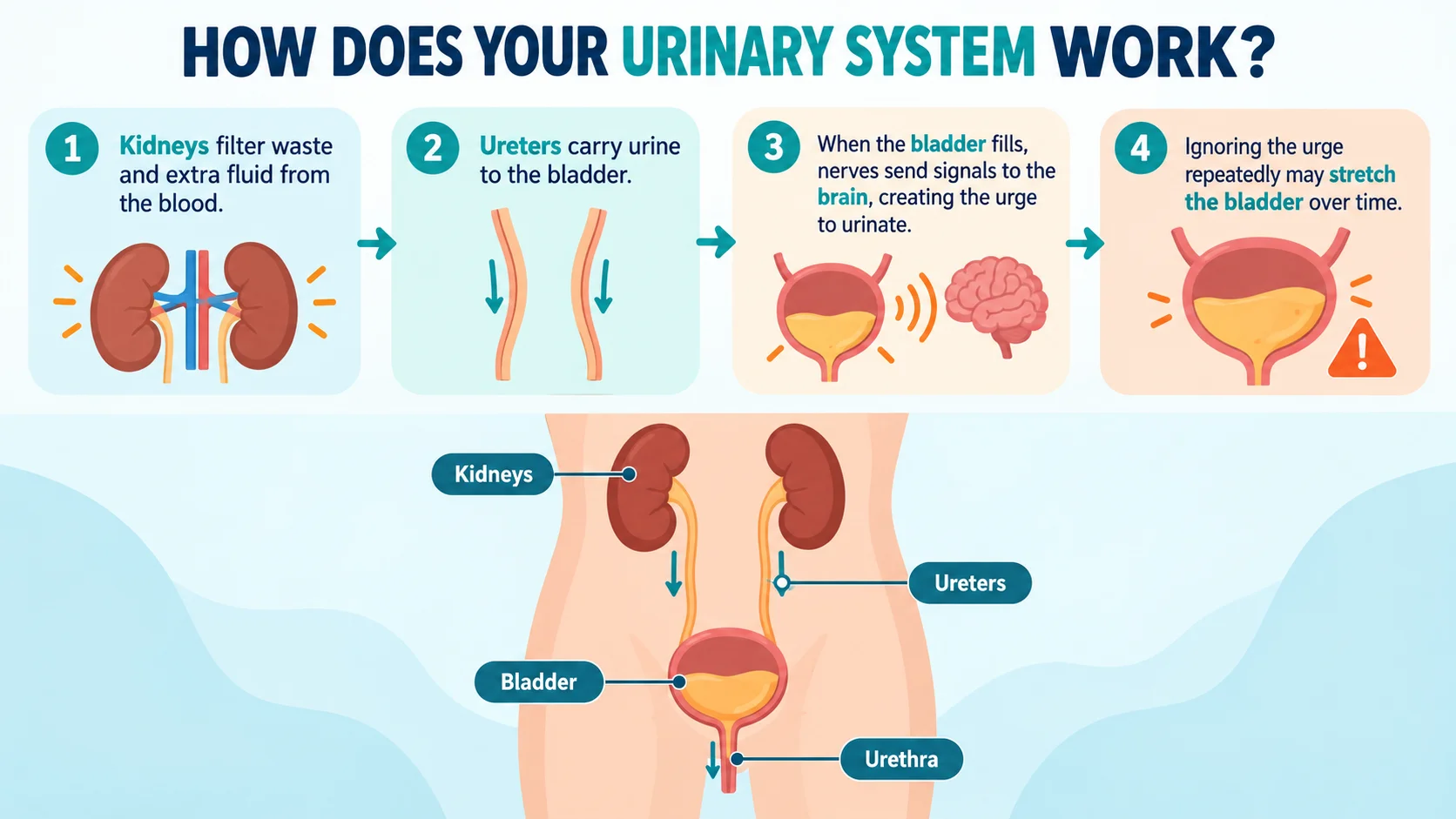
How Does Your Urinary System Work?
Your kidneys remove waste and extra fluid from your blood to produce urine. The urine travels
through thin tubes called ureters and collects in the bladder.
When your bladder fills, nerves send signals to your brain, creating the urge to urinate. This
natural signal helps your body maintain healthy bladder function.
When you repeatedly ignore this urge, your bladder stretches beyond its normal capacity. Over
time, this habit may affect the way your bladder stores and releases urine.
What Happens When You Hold Urine for Too Long?

1. Increased Risk of Urinary
Tract Infections
When urine remains in the bladder for extended periods, bacteria may get more time to multiply.
This can increase the chances of developing urinary tract infections.
Common symptoms include:
- Burning sensation while urinating
- Frequent urge to pass urine
- Lower abdominal discomfort
- Cloudy urine
- Unusual urine smell
If infections are ignored, they can sometimes move upward and affect the kidneys. Early
diagnosis and treatment from a specialist in Urology can help prevent
complications.
2. Bladder Function May Be
Affected
Your bladder is designed to expand when storing urine and contract when releasing it. Frequently
stretching the bladder by delaying urination may affect its ability to empty properly.
Some people may experience:
- Weak urine flow
- Difficulty starting urination
- Feeling that urine remains after passing urine
- Increased frequency of urination
These symptoms may require evaluation to identify the underlying cause.
3. Increased Pressure on the
Urinary Tract
An overfilled bladder can create pressure within the urinary system. In healthy individuals,
this does not usually cause kidney damage. But people with existing urinary conditions may face
a higher risk of complications.
Conditions such as enlarged
prostate, urinary obstruction, kidney stones, or bladder dysfunction
require proper medical assessment.
Does Holding Urine Cause Kidney Failure?
Holding urine occasionally does not cause kidney failure.
Kidney failure usually develops due to conditions such as diabetes, uncontrolled blood
pressure,
chronic kidney disease, severe infections, or urinary obstruction.
But if frequent urine retention leads to repeated infections or blockage of urine flow, it may
contribute to kidney-related problems in some individuals. This is why persistent urinary
symptoms should not be ignored.
How Can You Maintain Better Bladder and Kidney Health?
Simple daily habits can support your urinary health:
- Do not delay urination unnecessarily
- Drink enough water based on your body’s needs
- Maintain proper bathroom hygiene
- Avoid ignoring repeated urinary symptoms
- Get medical advice if changes in urination continue
Your body provides signals for a reason. Responding to these signals helps maintain normal
bladder function.
When Should You Consult a Urologist?
You should consider consulting a specialist if you experience:
- Frequent urinary infections
- Blood in urine
- Pain during urination
- Difficulty passing urine
- Sudden changes in urinary habits
- Feeling unable to empty your bladder completely
A urologist can
evaluate your symptoms through urine tests, imaging studies, and other
diagnostic methods to identify the cause.
If you are searching for the best urologist in Mumbai, choosing a healthcare centre with
experienced specialists and advanced diagnostic facilities can help you receive appropriate
care. For patients looking for a trusted urology hospital
Mumbai, Bombay
Hospital provides access to experienced doctors, advanced diagnostic support, and
multidisciplinary medical care.
Patients can contact the hospital team to book an appointment
with specialists for urinary,
kidney, and other healthcare concerns.