
Department Details
Location
2ND Floor, MRC
For Appointment
022-22067676 Extn. 374
Dept. Timings
Mon to Sat. 9:00 am to 5:00 pm

Department of Clinical Neurophysiology (EMG & EP)

This department was established in 1975 by Dr. S.S. Pandya who was trained in U.K. by Prof Buchthal, a pioneer in this field. Dr. Shubha Pandya was the first one to introduce this branch of diagnostic medicine in Mumbai and possibly in the country.

The Electrodiagnostic department at Bombay Hospital is equipped with top-of-the-line equipment. The entire study is performed by doctors trained specially in this branch of medicine.

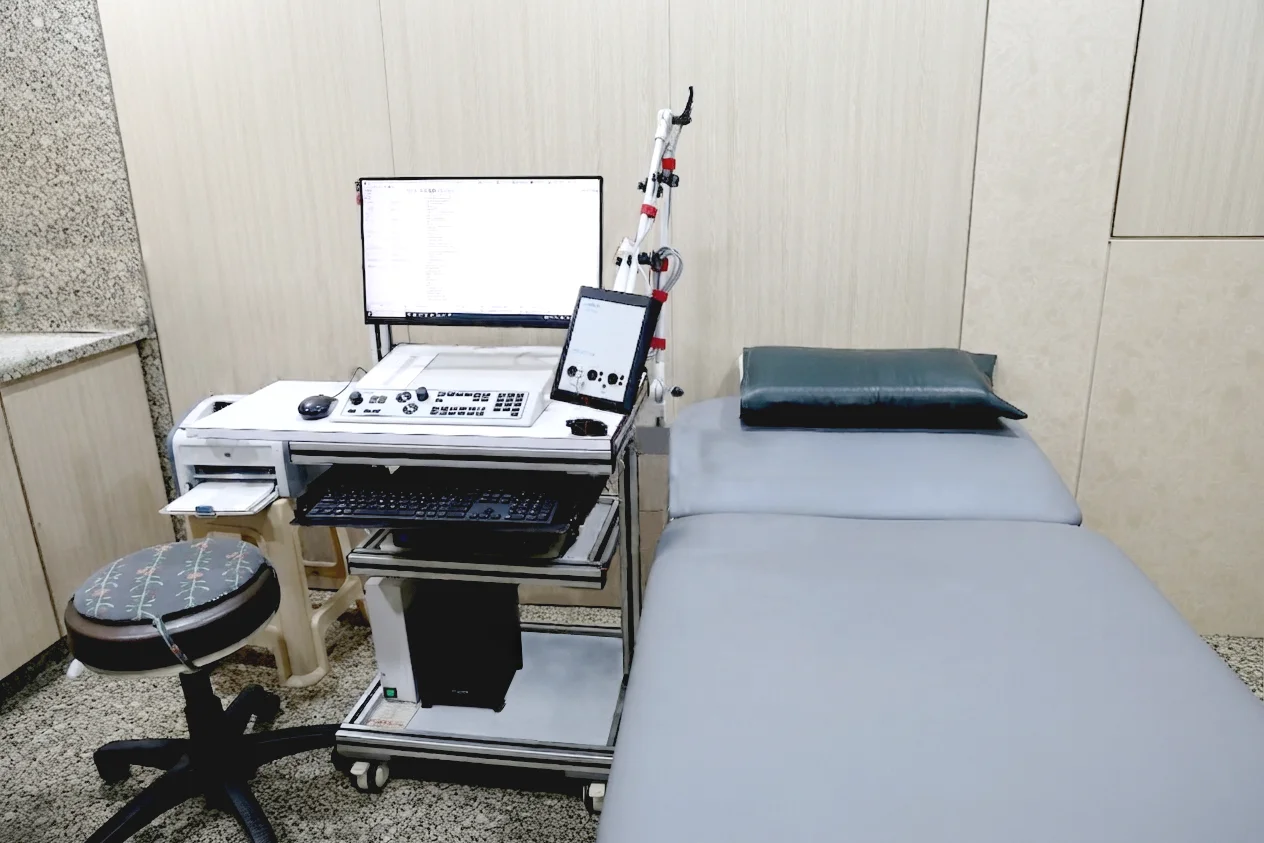
Electromyograph: The Machine

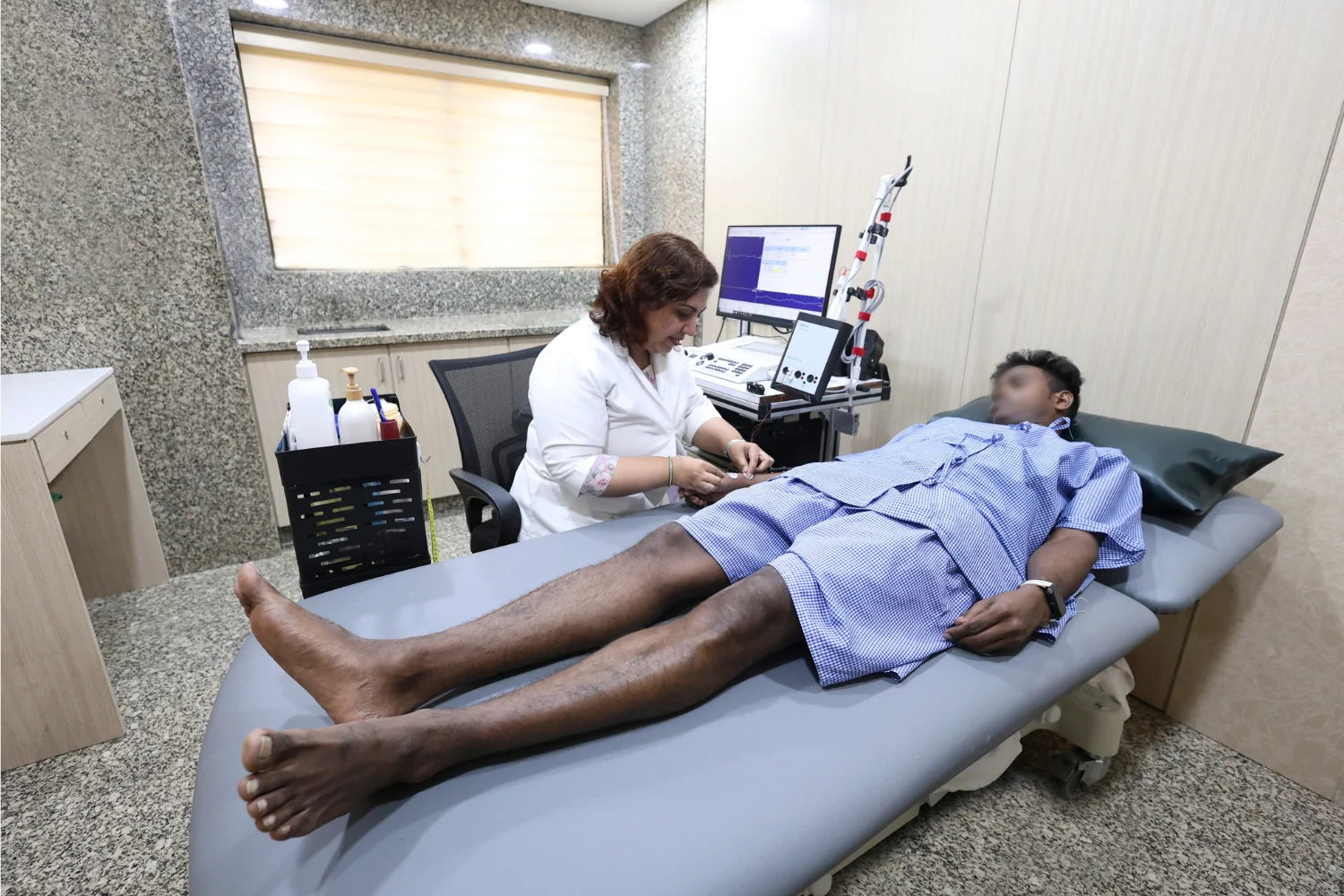
Electroneuromyography & Nerve Conduction Study (EMG & NCS), also known as Electrodiagnosis, is an assessment of a patient by a physician using a series of tests to establish an accurate diagnosis of a presenting clinical problem that suggests a neuromuscular disorder.

It is an extension of the clinical examination to assess the functional status of the peripheral neuromuscular system and is useful in the diagnosis of:

Peripheral Neuropathies

Cranial Neuropathies

Radiculopathies

Neuromuscular Junction Effects

Myopathies

Nerve Injuries

Plexopathies

Anterior Horn Cell Diseases

What EMG & NCS Can Determine

Accurate localization of the site (Nerve, Plexus, Root, Muscle, AHC)

Determining the extent (localized, widespread, multifocal)

Identifying the predominant pathophysiology (demyelinating, axonal or both)

Objective quantification of the severity (mild, moderate, severe)

Documents progress of lesion

Intra-operative assessment (for trauma)

Types of Studies

Nerve Conduction Studies (NCS): A method of measuring changes in a peripheral nerve by stimulating it electrically and recording the action potential generated.

• Sensory nerve conduction studies

• Motor nerve conduction studies

Electroneuromyography: A method of studying the electrical activity of a muscle by placing a needle electrode within it and observing:

• The spontaneous activity in the muscle at rest

• The action potentials (Motor Unit Action Potentials) generated by voluntary contraction of the muscle

  • Nerve conduction studies and Electroneuromyography for assessing nerve, muscle, root and plexus disorders in adults
  • Neuromuscular diseases in Paediatrics
  • Assessment of Birth brachial plexus injuries
  • Specialized tests for Neuromuscular Junction Disorders
  • Provocative tests for Channelopathies
  • Tests for evaluating & prognosticating traumatic nerve/plexus involvement in adults
  • Assistance in EMG guided Botulinum toxin injections
  • Studies to assess erectile dysfunction & pelvic floor study
  • Visual evoked potentials (VEP)
  • Somatosensory evoked potentials (SSEP)
  • Brainstem auditory evoked potentials (BAEP) for determining hearing in children

Visual Evoked Potentials (VEP): Test the Optic Pathway

  • Provides the most sensitive means of detecting subclinical lesions of the optic nerve
  • May enable a diagnosis of Multiple Sclerosis (MS) to be made at an earlier time
  • Detects abnormalities with compressive lesions of the anterior visual pathways
  • In pediatric age group, flash VEP may be used as a screening test for the visual pathway

Brainstem Auditory Evoked Potentials (BAEP): Test the Auditory Pathway

  • Proven useful in the diagnosis of Multiple Sclerosis
  • Used as a screening test for early detection of acoustic neuromas
  • Useful in the assessment of comatose patients
  • Useful screening test for hearing in the pediatric age group including neonatal screening

Somatosensory Evoked Potentials (SSEP): Test Spinal Cord Function

  • Helps in detection and localization of lesions of the central somatosensory pathways
  • In MS, may reveal subclinical lesions thus aiding in early diagnosis
  • In patients with definite MS, the incidence of SSEP abnormality is about 80%

Nerve Conduction Studies (NCS)

  • Performed using surface electrodes
  • The "shocks" given are in milliamperes and are quite bearable
  • The stimulus is local and does not travel all over the body
  • Can be done very safely even in newborns & pregnant women
  • The motor conduction stimulus feels like a tap and causes movement of the area being stimulated
  • May be contraindicated in patients with Pacemakers

Needle EMG Examination

  • Done using fine disposable electrodes which are solid pins but thin and very sharp
  • No shocks are given
  • The needle is inserted just into the muscle for a few seconds
  • Patient is asked to contract the muscle and the activity is displayed on monitor and loudspeaker
  • The number of muscles examined depends on the working diagnosis
  • Should be avoided in patients with bleeding disorders, on anticoagulants, or with local infection

How the referring Doctor can help:

  • The working diagnosis or differential diagnosis should be stated in the referral note
  • It helps to customize the procedure
  • Relevant reports and supportive radiography should be sent with the patient
  • If the patient is HBsAg or HIV positive, has a pacemaker, or is on anticoagulants, the Electromyographer must be alerted

Bombay Hospital Department of Clinical Neurophysiology offers a 2-year certificate course in Electrodiagnostic medicine (Electroneuromyography and Evoked Potential study).

Accreditation: Bombay Hospital and Medical Research Centre, Mumbai

Who is eligible: Post-MBBS / MD candidates

About the Program

Aim: To train doctors in the field of Clinical Neurophysiology, to develop expertise in mastering the techniques of the various studies performed integrated with clinical diagnostic skills. On completion, the physician would be an independent "clinical neurophysiologist."

Training Curriculum

  • Nerve conduction studies (NCS)
  • Somatosensory evoked potential studies (SSEP)
  • Visual evoked potential studies (VEP)
  • Brainstem Auditory evoked potential studies (BAEP)
  • Repetitive nerve stimulation test
  • Blink reflex
  • Needle electromyography (NEE / EMG)
  • Single fibre EMG test
  • EMG guided botulinum injection therapy
  • Pediatric EDx studies

Faculty

• Dr K A Mansukhani – Department Head & Program Director

• Dr Alika Sharma – Associate Consultant & Program Coordinator

• Dr Priyanka Chavan – Junior Consultant & Program Coordinator

The course was started in 2008 and till date 15 doctors have completed the course and are practicing in different cities across the country.

Contact: emgdept.bh@gmail.com | 022-40511374

Frequently Asked Questions - EMG & NCS

EMG (Electromyography) is used to diagnose neuromuscular disorders including peripheral neuropathies, radiculopathies, myopathies, nerve injuries, and neuromuscular junction disorders.

The needle EMG uses fine disposable electrodes which are thin and sharp. There is minimal discomfort, and no shocks are given during the needle examination.

Yes, nerve conduction studies can be done very safely on pregnant women as well as newborns.

Needle EMG should be avoided in patients with bleeding disorders, those on anticoagulants, and when there is local infection. Nerve conduction studies may be contraindicated in patients with pacemakers.

NCS (Nerve Conduction Studies) uses surface electrodes and electrical stimulation to measure nerve function. EMG uses needle electrodes inserted into muscles to study muscle electrical activity. Both are usually done together for a complete assessment.

Yes, Bombay Hospital offers a 2-year certificate course in Electrodiagnostic medicine (EMG & Evoked Potentials) for post-MBBS/MD candidates. Contact emgdept.bh@gmail.com for details.

List of Consultants

K.A. Mansukhani

Dr. K.A. Mansukhani

MBBS

Electroneuromyography

Alika Sharma

Dr. Alika Sharma

MBBS, MD

Electroneuromyography

Priyanka Chavan

Dr. Priyanka Chavan

MD

Electroneuromyography

Lajita Balakrishnan

Dr. Lajita Balakrishnan

MD

Electroneuromyography

Book Appointment Book Appointment