Frequent Urination at Night: Why Does It Happen?

Introduction

Frequent urination at night can happen when your body produces too much urine, your bladder struggles to store or empty it, or sleep problems keep waking you. Evening drinks and medicines can contribute. Known as nocturia, this symptom affects both men and women. Repeated bathroom trips can leave you tired the next day. Understanding your pattern helps you identify useful changes and know when to seek care.

What Does Nighttime Urination Mean?

Nocturia means waking during your main sleep period to pass urine, with sleep or the intention to sleep afterwards. It differs from bedwetting, which happens while you remain asleep.

An occasional trip may follow a large evening drink. A persistent change or repeated awakenings deserves attention.

During a Urology assessment, doctors ask: are you passing large amounts each time, or small amounts with urgency? This helps guide the investigation.

What Are the Common Causes?

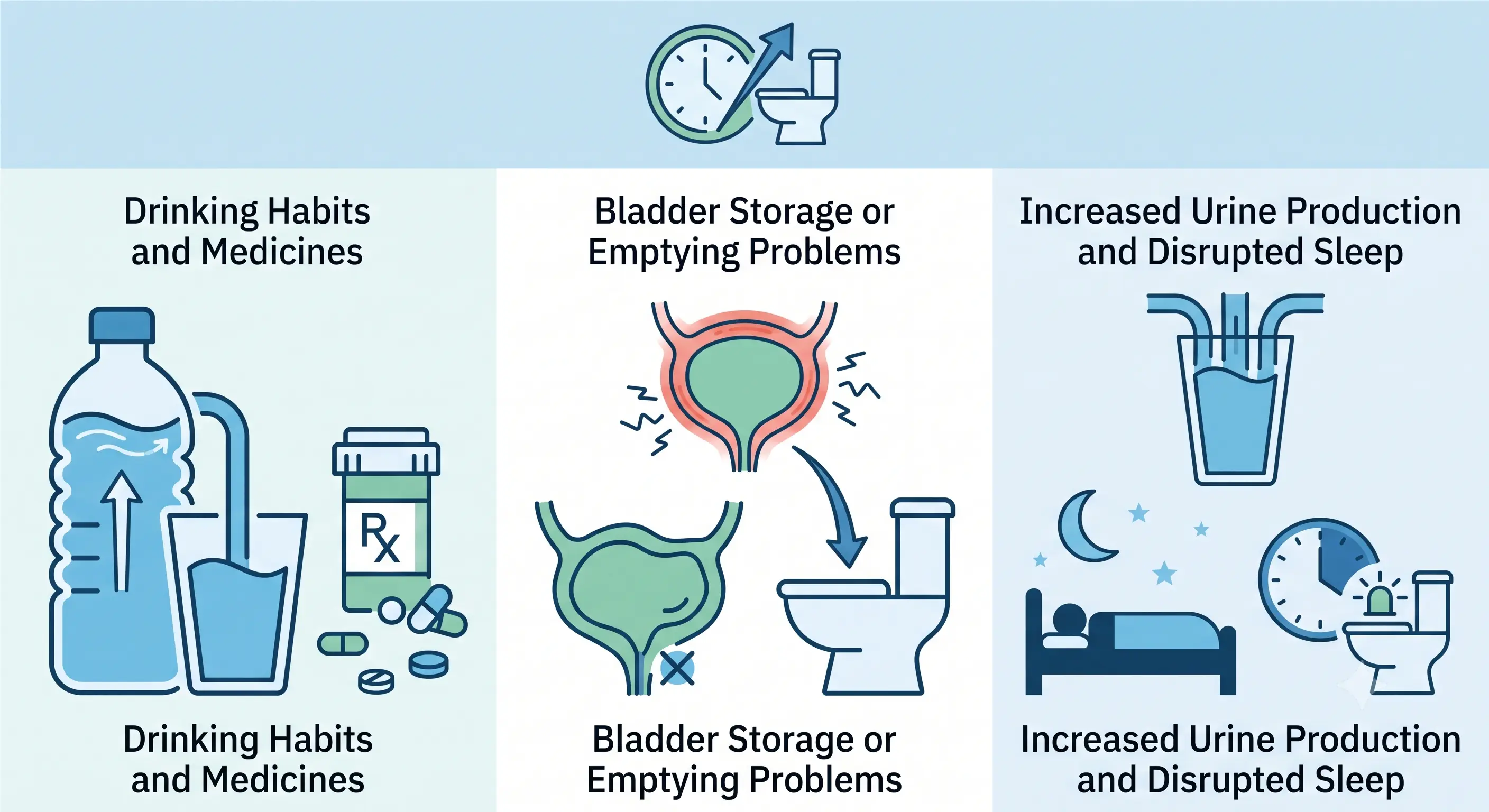
Common causes of frequent urination at night explained by an experienced urologist in Mumbai
  • Drinking Habits and Medicines

    Large late drinks increase the amount your kidneys must process. Caffeine and alcohol may worsen urinary symptoms or disturb sleep. Diuretics, or water tablets, increase urine output, so their timing matters.

  • Bladder Storage or Emptying Problems

    Overactive bladder causes sudden urgency, sometimes with leakage. Urinary infections may cause burning and frequent small amounts. An enlarged prostate can restrict urine flow in men, leaving urine behind after a bathroom visit.

  • Increased Urine Production and Disrupted Sleep

    Diabetes can increase urine output during both day and night. Age-related hormonal changes may increase overnight urine production. Fluid from swollen legs can return to circulation when you lie down.

    Sleep apnoea can contribute too. Sometimes another sleep problem wakes you first, and you visit the toilet because you are awake.

Which Symptom Patterns Matter?

These patterns offer clues, but cannot confirm a diagnosis.

What You Notice Possible Explanation What to Record
Large amounts day and night Increased urine production, including possible diabetes Thirst, drinks, urine amounts
Small amounts with urgency Bladder storage problems Urgency, leakage, daytime trips
Weak stream or incomplete emptying Possible urinary obstruction Straining and stream changes
Nighttime trips with snoring A sleep-related contribution Awakenings and daytime sleepiness

A Urology consultation should consider these differences before recommending treatment.

Book an appointment if symptoms persist, worsen, or interrupt sleep. Blood in urine needs prompt assessment. Seek urgent care if you cannot pass urine or have fever with back pain and urinary symptoms.

How Do Doctors Find the Cause?

Your doctor reviews symptoms, medical history, medicines, fluid intake, and sleep. A bladder diary covering several days can make the appointment more useful.

Record:

  • When, what, and how much you drink.
  • When you urinate and the amount passed.
  • Bedtime, awakenings, and final waking time.
  • Urgency, leakage, burning, or discomfort.

For example, three large nighttime amounts suggest a different pattern from three small amounts with urgency.

At a urology hospital in Mumbai, tests may include urine testing, blood glucose, kidney function tests, or ultrasound to check bladder emptying. Not everyone needs a scan or cystoscopy, a camera examination of the bladder.

How Is Frequent Nighttime Urination Treated?

Urology treatment depends on what causes the symptom.

  • Bladder infection: prescribed antibiotics when appropriate.
  • Overactive bladder: bladder training, suitable pelvic floor support, or medicines.
  • Prostate-related obstruction: medicines or a procedure in selected cases.
  • Excess urine production: review of fluid habits, medicines, and underlying conditions.
  • Sleep apnoea or diabetes: treatment coordinated with the relevant clinician.

Some people need treatment for several contributing problems.

Meeting a urology surgeon in Mumbai does not mean surgery is necessary. Ask what the proposed treatment addresses and how the doctor will measure improvement. Treating an obstruction may not resolve symptoms caused partly by sleep problems.

What Can You Change at Home?

Try these steps:

  • Spread drinks across the day and avoid large amounts near bedtime.
  • Reduce evening caffeine and alcohol.
  • Empty your bladder before sleeping.
  • Keep consistent sleeping and waking times.
  • Ask whether your medicine schedule affects urine production.

Do not severely restrict water. Hydration needs vary with activity, weather, and medical conditions. Ask your doctor about fluids if you have heart or kidney disease.

Discuss persistent ankle swelling and whether leg elevation could help. Do not stop or reschedule prescribed medicines yourself. Record whether changes improve bathroom frequency and sleep.

Consultation at Bombay Hospital, Mumbai

If your search for the best urologist in Mumbai starts with persistent nighttime trips, focus on qualifications, relevant experience, and clear explanations. Explore Bombay Hospital’s Urology service and book a consultation. Bring your bladder diary, medicine list, and previous reports. Explain how symptoms affect sleep and daily activities so the clinician can plan your assessment.

Frequently Asked Questions

Bladder problems, medicines, sleep disorders, or increased urine production can contribute. Reducing evening drinks does not address every cause.

Yes, if it happens regularly, is new, or affects your sleep. Associated symptoms also matter.

Yes. Nighttime urination is not limited to prostate problems. Women can experience bladder, sleep-related, and other causes.

When comparing options for the top hospital for urology in Mumbai, check specialist qualifications, appropriate testing, follow-up, and coordination with other departments when needed.

Treatment may reduce trips and improve rest. Results depend on the cause, and several contributing conditions may need attention.

Conclusion

Nighttime urination can reflect bladder problems, increased urine production, or disrupted sleep. Track your symptoms, review your habits, and seek assessment when the pattern persists. Finding the cause gives you a clearer treatment plan and a better opportunity to sleep comfortably.

Send us a message

Have any questions? We are ready to help.

List of Consultants

D.D. Gaur

Dr. D.D. Gaur

MS

Urologist

R.K. Garg

Dr. R.K. Garg

MS

Urologist

S.W. Thatte

Dr. S.W. Thatte

MS, M.CH

Urologist

J.N. Kulkarni

Dr. J.N. Kulkarni

MS, M.CH

Urologist

Umesh Oza

Dr. Umesh Oza

MS, M.CH

Urologist

Prashant Pattnaik

Dr. Prashant Pattnaik

MS, M.CH

Urologist

Mukund Andankar

Dr. Mukund Andankar

MS, M.CH

Urologist

H.M. Punjani

Dr. H.M. Punjani

MS

Urologist

Dhaval Gosalia

Dr. Dhaval Gosalia

MS, MCh ( Urology)

Urologist

Varun Gunavanthe

Dr. Varun Gunavanthe

MS, M.CH

Urologist

Deepak M. Gupte

Dr. Deepak M. Gupte

MS, M.CH

Urologist

Book Appointment Book Appointment