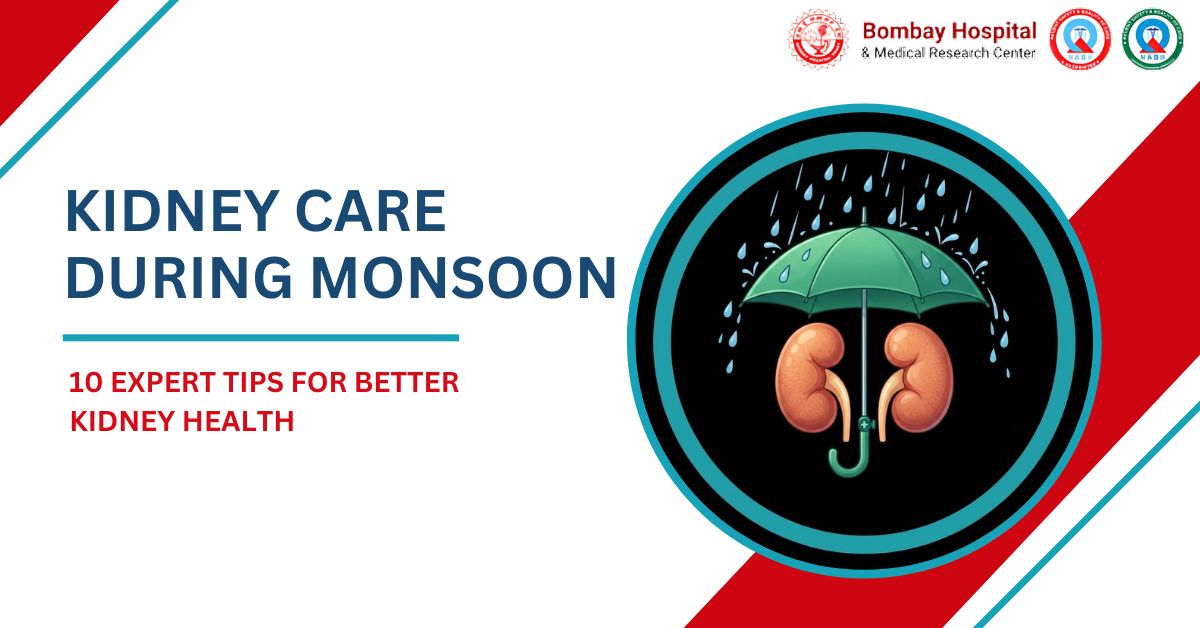
Introduction
Monsoon brings welcome rain but also increases the risk of infections, contaminated food, and
unsafe drinking water. These seasonal changes can affect your kidneys, especially if you have
diabetes, high blood pressure, kidney stones, or chronic kidney disease (CKD).
Many people drink less water during the monsoon because they do not feel thirsty. This can lead
to dehydration, urinary tract infections (UTIs), kidney stones, and even acute kidney injury.
Following a few simple habits can help protect your kidneys and keep them healthy throughout the
rainy season.
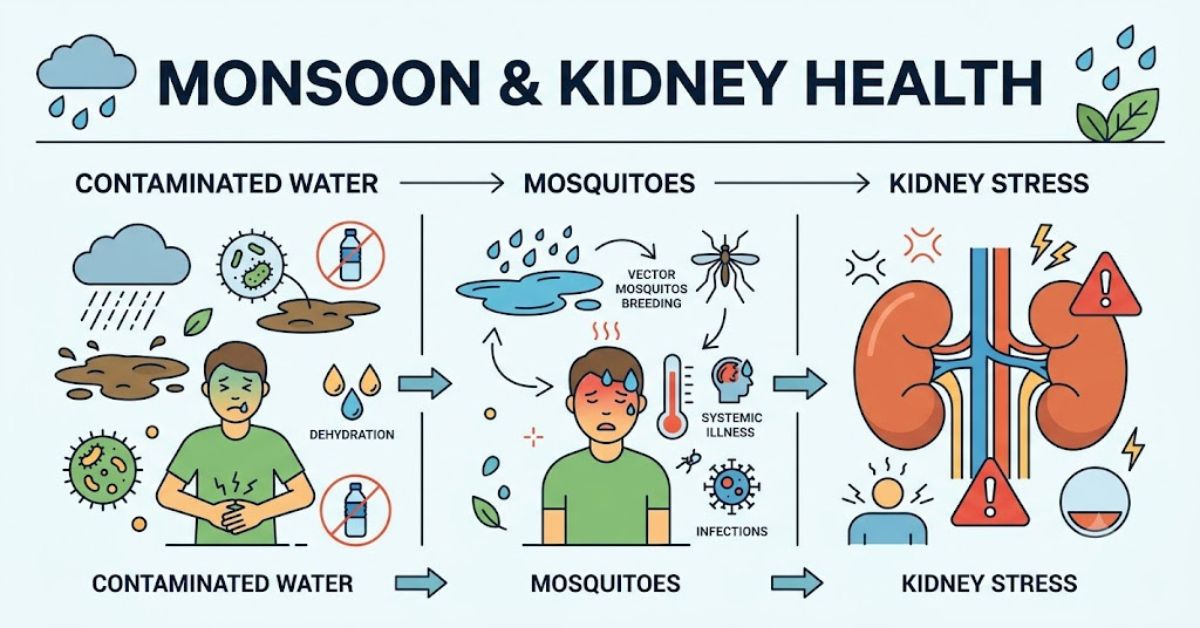
Why Does Monsoon Affect Kidney Health?
During monsoon, bacteria, viruses, and parasites spread more easily through contaminated
food
and water. Reduced water intake and mosquito-borne diseases can also increase the risk
of kidney
problems.
People at higher risk include:
- People with CKD
- People with diabetes or high blood pressure
- Older adults
- Dialysis patients
- People with kidney stones or recurrent UTIs
Understanding these risks helps you take timely steps to protect your kidneys.
1. Stay Hydrated Even If You Do Not Feel Thirsty
Many people drink less water during monsoon, but your kidneys still need enough fluids to remove
waste and maintain normal function.
Low water intake may increase the risk of:
- Kidney stones
- Urinary tract infections
- Concentrated urine
- Reduced kidney function
Drink water regularly throughout the day. If you have CKD, follow the fluid intake advised by
your nephrologist.
Quick Tip: Pale yellow urine usually indicates good hydration.
2. Protect Yourself from Monsoon Infections
Monsoon diseases such as dengue, malaria, leptospirosis, and food poisoning can affect kidney
function if left untreated.
Protect yourself by:
- Drinking boiled or filtered water
- Eating freshly cooked food
- Washing fruits and vegetables
- Avoiding stagnant water
- Using mosquito protection
Seek medical care if you develop fever, swelling, weakness, or reduced urine output.
3. Choose a Kidney-Friendly Diet
A healthy diet helps support kidney function and lowers the risk of infections during monsoon.
Choose:
- Fresh vegetables
- Apples and pears
- Whole grains
- Homemade soups
- Lean protein
Limit:
- Processed foods
- Street food
- Foods high in salt
- Sugary drinks
People with CKD should follow a diet recommended by their nephrologist.
4. Do Not Ignore Symptoms of a UTI
UTIs are more common during monsoon and can spread to the kidneys if not treated early.
Watch for:
- Burning during urination
- Frequent urination
- Cloudy urine
- Fever
- Lower back pain
If symptoms persist, consult a nephrology doctor
Mumbai for timely treatment.
5. Control Diabetes and High Blood Pressure
Diabetes and hypertension are major
causes of kidney disease. Poor control during the monsoon
can increase the risk of kidney damage.
Protect your kidneys by:
- Checking blood sugar regularly
- Monitoring blood pressure
- Taking medicines on time
- Eating a balanced diet
- Staying physically active
6. Avoid Self-Medication
Frequent use of painkillers, antibiotics, or herbal medicines without medical advice can damage
your kidneys.
If you have CKD, diabetes, hypertension, or are over 60, consult your doctor before taking any
medication.
7. Stay Active and Maintain Good Hygiene
Daily exercise and good hygiene help reduce the risk of infections and support kidney health.
Follow these habits:
- Exercise for 30 minutes daily
- Wash your hands regularly
- Wear dry clothes
- Keep your feet clean and dry
- Drink safe, filtered water
8. Eat Safe and Hygienic Food
Food contamination is common during monsoon and can lead to dehydration and kidney injury.
To stay safe:
- Eat freshly prepared meals
- Wash fruits and vegetables
- Avoid stale food
- Limit street food
- Drink boiled or filtered water
9. Get Regular Kidney Check-ups
Kidney disease often develops without early symptoms. Routine screening helps detect problems
before they become serious.
Regular check-ups are recommended if you have:
- Diabetes
- High blood pressure
- Kidney stones
- Family history of kidney disease
- Recurrent UTIs
10. Consult a Nephrologist Without Delay
Do not ignore signs of kidney disease, including:
- Blood in urine
- Swelling of the feet or face
- Reduced urine output
- Frequent UTIs
- High creatinine levels
Early consultation with a top nephrologist Mumbai or an experienced nephrology doctor in Mumbai
can help protect your kidney function and prevent complications.
Monsoon Kidney Care Checklist
Use this simple checklist to protect your kidneys during the rainy season:
- ✓ Drink adequate clean water every day.
- ✓ Eat freshly cooked and hygienically prepared food.
- ✓ Reduce salt, processed foods, and sugary beverages.
- ✓ Protect yourself from mosquito-borne diseases such as dengue and malaria.
- ✓ Maintain good personal hygiene.
- ✓ Do not ignore symptoms of a urinary tract infection.
- ✓ Monitor blood sugar and blood pressure regularly.
- ✓ Avoid taking painkillers or antibiotics without medical advice.
- ✓ Stay physically active even during rainy days.
- ✓ Schedule routine kidney health check-ups if you are at higher risk.
Expert Nephrology Care in Mumbai at Bombay Hospital
Bombay Hospital Mumbai has been a trusted name in healthcare
since 1952, offering advanced
treatment across multiple specialties, including Nephrology. The Department of
Nephrology
provides comprehensive care for chronic kidney disease, kidney infections, acute kidney injury,
dialysis, diabetic kidney disease, and other kidney disorders.
If you are looking for a top nephrologist or a trusted
nephrology hospital in Mumbai, Bombay
Hospital offers expert diagnosis and personalised kidney care.
Book an appointment to get in touch with our Nephrology
specialists today.