Introduction
Do you often experience coughing at night, wheezing, or difficulty breathing while doing daily
activities? These symptoms may be linked to bronchial asthma, a condition that affects the
airways and makes breathing difficult. Asthma can affect people of all ages and may interfere
with sleep, exercise, and daily routines if not managed properly. Understanding the symptoms,
causes, diagnosis, and treatment options can help you take timely action and improve your
respiratory health.
What Is Bronchial Asthma?
Bronchial asthma is a chronic condition that causes inflammation and narrowing of the airways.
When your airways become sensitive, exposure to certain triggers can cause the muscles around
them to tighten and increase mucus production. This reduces airflow and makes breathing
difficult.
During an asthma episode, you may experience coughing, wheezing, chest tightness, or shortness
of breath. The severity of symptoms can vary from person to person. Some people may experience
occasional symptoms, while others may require regular medical care.
A consultation with a Pulmonologist
can help identify the severity of asthma and create a
suitable management plan based on your symptoms.
What Happens During an Asthma Attack?
During an asthma attack, your airways react strongly to certain triggers. The muscles
surrounding the airways tighten, the airway lining becomes inflamed, and excess mucus may block
normal airflow.
This can lead to:
- Difficulty breathing
- Chest tightness
- Continuous coughing
- Wheezing sounds while breathing
- Trouble speaking in severe episodes
Understanding your triggers and following the treatment plan advised by your doctor can help
reduce the frequency and intensity of asthma attacks.
What Are the Common Symptoms of Bronchial Asthma?
The symptoms of bronchial asthma may not always appear the same way in every person. Common
signs include:
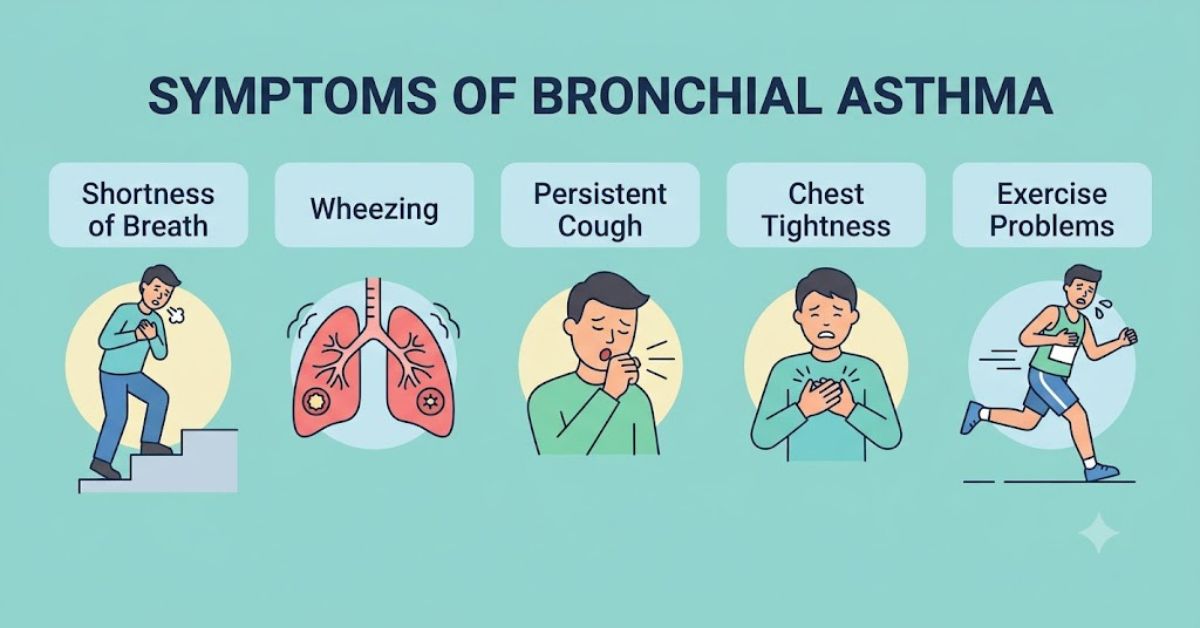
1. Shortness of Breath
Feeling breathless after physical activity, climbing stairs, or exposure to certain
triggers can
be a sign of asthma. Some people may feel they cannot take a deep breath or get enough
air.
2. Wheezing
Wheezing is a whistling sound that occurs while breathing due to narrowed airways. It is
one of
the commonly recognised symptoms of asthma.
3. Persistent Cough
A dry cough that continues for several days or becomes worse at night and early morning
may
indicate airway sensitivity linked with asthma.
4. Chest Tightness
Many people with asthma describe a feeling of pressure or tightness in their chest, especially
during an asthma flare-up.
5. Breathing Problems During
Exercise
Some individuals notice breathing difficulty only during or after exercise. This is known as
exercise-induced asthma.
If you experience repeated breathing difficulties, consulting a pulmonologist Mumbai can help
determine whether your symptoms are related to asthma or another respiratory condition.
What Causes Bronchial Asthma?
Bronchial asthma does not have one single cause. It can develop due to a combination of genetic
factors, environmental exposure, and airway sensitivity.
1. Allergens
Common allergens that may trigger asthma include:
- Dust mites
- Pollen
- Pet dander
- Mould
- Cockroach allergens
2. Air Pollution
Exposure to smoke, vehicle emissions, and polluted air can irritate the airways and worsen
asthma symptoms. People living in areas with high pollution levels may
notice increased
breathing difficulties.
3. Respiratory Infections
Viral infections, especially during childhood, can affect airway sensitivity and trigger asthma
symptoms in some individuals.
4. Family History
People with a family history of asthma, allergies, or other allergic conditions may have a
higher risk of developing asthma.
5. Workplace Exposure
Regular exposure to chemicals, dust, fumes, or industrial materials may increase the chances of
developing work-related asthma.
How Is Bronchial Asthma Diagnosed?
A proper diagnosis helps differentiate asthma from other conditions that may cause breathing
problems. A doctor may evaluate:
- Your symptoms and medical history
- Breathing patterns
- Lung function
Common tests include:
Spirometry Test
Spirometry measures how much air you can breathe in and out and how quickly you can exhale. It
helps doctors understand how well your lungs are functioning.
Peak Flow Test
This test measures how strongly you can push air out of your lungs and helps monitor asthma
control.
Allergy Testing
If allergies are suspected as triggers, allergy tests may help identify specific substances
causing symptoms.
A best pulmonologist in mumbai can guide you through proper evaluation and recommend suitable
treatment based on your condition.
How Is Bronchial Asthma Treated?
Asthma treatment focuses on controlling symptoms, reducing asthma attacks, and improving
breathing quality.
Inhaler-Based Treatment
Inhalers are commonly used for asthma management. They may include:
- Controller inhalers to reduce airway inflammation
- Reliever inhalers for quick symptom relief during breathing difficulties
Lifestyle Management
You can support asthma control by:
- Avoiding known triggers
- Maintaining healthy indoor air quality
- Following prescribed medications regularly
- Monitoring symptoms
Regular follow-ups with a respiratory specialist help track your condition and adjust treatment
when needed.
Why Choose Bombay Hospital for Bronchial Asthma Care?
Bombay Hospital offers specialised Pulmonary Medicine care for
bronchial asthma, breathing
disorders, and lung conditions. With expert specialists, advanced diagnostics, and support from
departments like Cardiology, Neurology, Oncology, and more, patients
receive
comprehensive
healthcare under one roof. Those searching for a pulmonologist near me in Mumbai can consult
experienced specialists for accurate diagnosis and personalised asthma care.