Introduction
Have you started moving your phone farther away to read messages? Do your eyes feel tired after working on a laptop for a few hours? These changes are common after the age of 40, but they should not always be ignored.
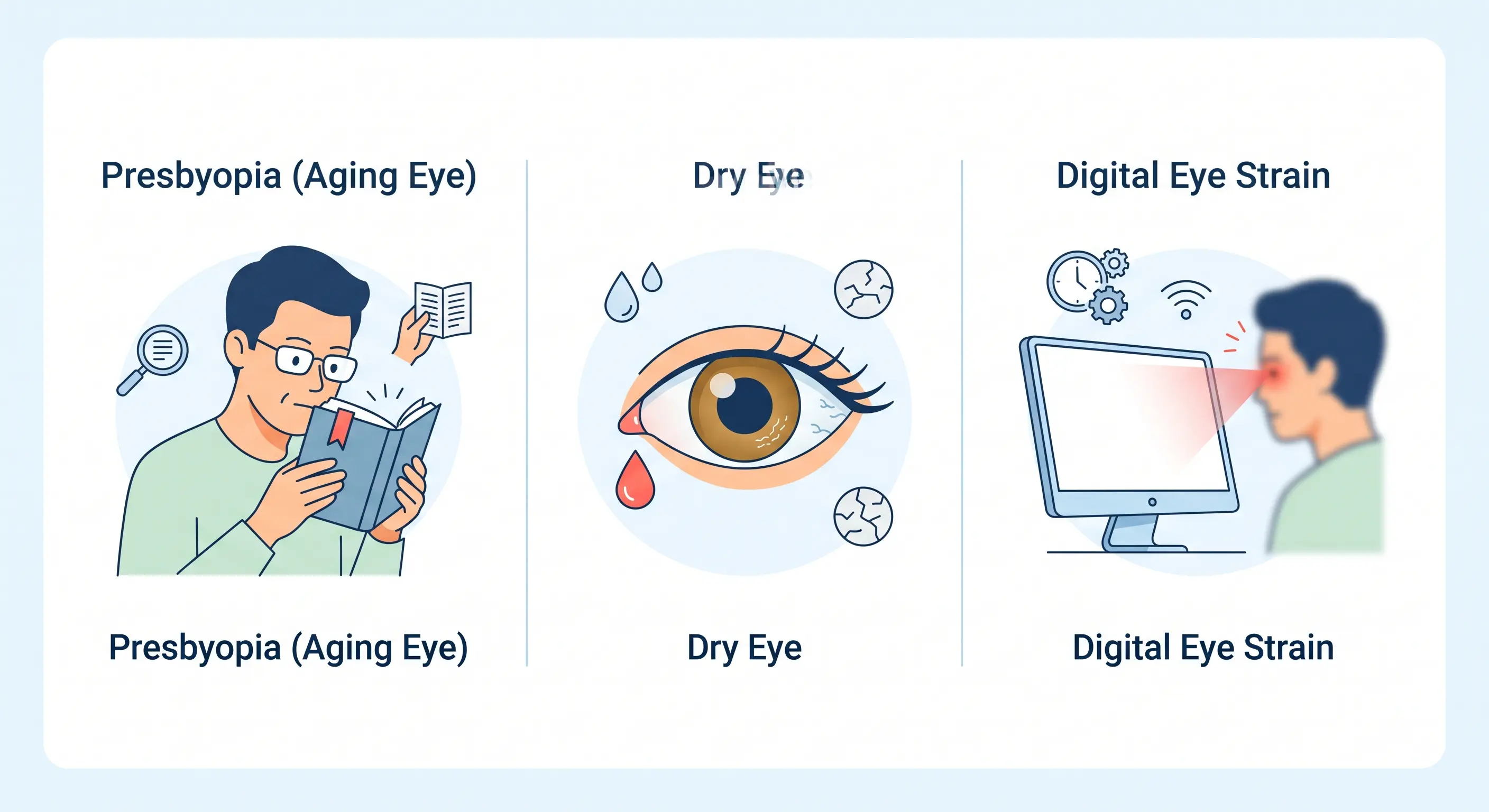
As you age, your eyes naturally undergo changes that can affect focusing ability, comfort, and overall vision quality. Some changes are simple age-related concerns, while others may indicate conditions that need medical attention. Presbyopia, cataracts, glaucoma, dry eyes, and retinal problems are some common concerns seen after 40.
Understanding these changes can help you take timely action and protect your vision for the future.
Why Does Vision Change After 40?
After 40, the structures inside your eyes gradually change. The natural lens of the eye becomes less flexible, making it harder to focus on nearby objects. This condition is called presbyopia and is one of the most common vision changes during this stage of life.
Other factors that can affect your eyesight include:
- Reduced tear production causing dry eyes
- Changes in the eye lens leading to cataracts
- Increased risk of glaucoma
- Diabetes-related changes affecting the retina
- Long hours of screen exposure causing eye strain
These changes do not mean that vision loss is unavoidable. Regular eye examinations can help identify problems early and guide proper treatment.
Common Eye Problems After 40
1. Presbyopia: Difficulty Seeing Nearby Objects
If you struggle to read small text, hold your phone farther away, or need brighter light for reading, presbyopia may be the reason.
Presbyopia occurs because the eye lens loses flexibility with age, reducing its ability to focus on nearby objects. It usually becomes noticeable around the 40s.
Common signs include:
- Difficulty reading books or mobile screens
- Eye strain during close-up work
- Headaches after reading
- Blurred near vision
Treatment options may include reading glasses, progressive lenses, contact lenses, or other solutions depending on your eye condition.
2. Dry Eyes and Eye Strain
Dry eye is another common concern after 40. It happens when your eyes do not produce enough tears or when tears evaporate too quickly.
You may experience:
- Burning sensation
- Redness
- Irritation
- Feeling of something inside the eye
- Temporary blurred vision
People who spend long hours on computers or smartphones may notice these symptoms more often. Following the 20-20-20 rule, blinking regularly, and using doctor-recommended lubricating drops can help manage discomfort.
3. Cataracts and Blurred Vision
A cataract develops when the natural lens of your eye becomes cloudy. It usually progresses slowly, and many people notice vision changes only when daily activities become difficult.
Common symptoms include:
- Cloudy or blurred vision
- Difficulty driving at night
- Increased sensitivity to headlights
- Faded colour perception
- Frequent changes in glasses power
Cataract treatment depends on how much it affects your daily routine. When vision problems interfere with reading, driving, or work, an ophthalmologist may recommend cataract surgery.
4. Glaucoma: A Condition That Needs Early Detection
Glaucoma can damage the optic nerve and may progress without noticeable symptoms in the early stages. This is why regular eye screening becomes important after 40.
Risk factors include:
- Family history of glaucoma
- Diabetes
- High eye pressure
- Long-term steroid use
During an eye examination, doctors may check eye pressure, optic nerve health, and visual field changes to detect glaucoma early.
5. Diabetic Eye Problems
If you have diabetes, your eyes need extra attention. High blood sugar levels can affect the small blood vessels in the retina and may lead to diabetic eye problems.
Possible symptoms include:
- Blurred vision
- Dark spots in vision
- Difficulty focusing
- Sudden vision changes
Regular retinal screening can help detect changes before they become serious.
What Eye Tests Are Important After 40?
Many eye conditions do not show symptoms in the beginning. A complete eye examination helps identify problems that may otherwise go unnoticed.
Your eye checkup may include:
- Vision power testing
- Eye pressure measurement
- Retina evaluation
- Lens examination
- Optic nerve assessment
Visiting an experienced ophthalmology hospital Mumbai can help you access proper diagnostic facilities and expert guidance for age-related vision concerns.
When Should You See an Eye Specialist?
Some vision changes require immediate attention. Do not ignore symptoms such as:
- Sudden loss of vision
- New flashes of light
- Increase in floaters
- Severe eye pain
- Persistent blurred vision
- Difficulty seeing clearly despite updated glasses
Early consultation can help identify the cause and prevent further complications.
How to Choose the Right Eye Specialist After 40?
Choosing the right doctor is important when dealing with age-related eye problems.
Look for an ophthalmologist with experience in diagnosing and treating conditions such as cataracts, glaucoma, retinal problems, and vision changes related to aging.
Many patients looking for the best ophthalmologist in Mumbai consider factors such as medical experience, advanced diagnostic facilities, treatment options, and patient care approach.
A consultation with an experienced ophthalmology doctor in Mumbai can help you understand whether your vision changes are normal age-related changes or signs of an underlying eye condition.
Patients often compare specialists before making a decision, especially when searching for the top 5 ophthalmologist Mumbai based on expertise, services, and reputation.
FAQs
Blurry near vision after 40 is often caused by
presbyopia, which is a common age-related change. Still, a complete eye examination is recommended to rule out other problems.
The frequency depends on your eye health, medical history, and risk factors. Regular examinations help detect problems early.
Eye exercises may reduce strain caused by prolonged screen use, but they cannot prevent conditions like cataracts, glaucoma, or presbyopia.
Cataracts become more common with increasing age. They usually develop slowly and may require treatment when they start affecting daily activities.
Sudden vision loss, severe eye pain, flashes of light, new floaters, or major changes in vision require prompt medical evaluation.
Conclusion
Eye changes after 40 are common, but understanding them helps you take better care of your vision. Conditions like presbyopia, dry eyes, cataracts, glaucoma, and diabetic eye problems can be managed more effectively when detected early.
Regular eye examinations, healthy lifestyle habits, and timely advice from an experienced ophthalmologist can help protect your eyesight. If you notice changes in your vision, do not wait for the problem to worsen. Schedule an eye checkup and take the right steps toward maintaining healthy vision.