High blood pressure affects millions of adults and can quietly increase your risk of heart attack,
stroke, and other serious complications. Many people overlook how everyday habits influence their blood
pressure until readings start creeping upward. Recognizing and changing these habits early gives you
control over your health and helps prevent long‑term issues.
This article explains common lifestyle choices that raise blood pressure, offers practical steps you can
take today, and points you toward quality medical help. If you’re wondering when to see a cardiologist
in Mumbai or how lifestyle changes can support your heart, read on for clear, actionable
insights.
Why Your Daily Habits Matter for Blood Pressure
Your body responds to what you eat, how active you are, how well you sleep, and how you
handle
stress. These factors influence your arteries, heart function, hormone levels, and blood
flow.
Over time, what seems like a normal routine can push your blood pressure higher and make
your
heart work harder.
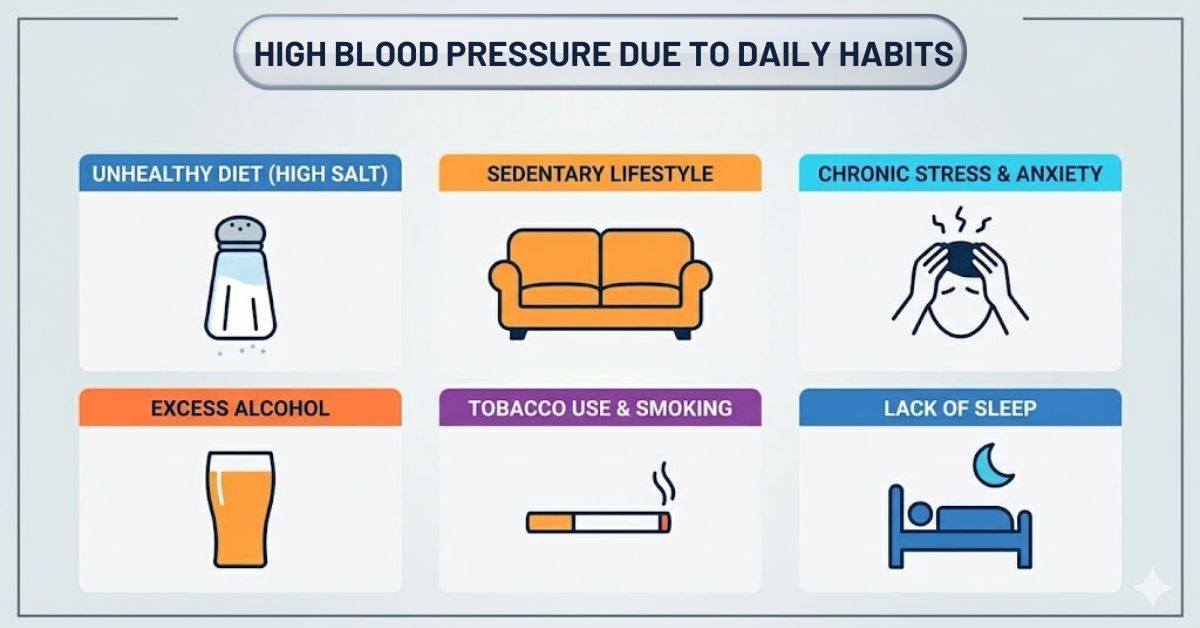
Understanding these links makes prevention possible. Below are the most common daily
habits
linked to rising blood pressure, how they affect your health, and simple steps you can
take to
change them.
1. Eating Too Much Salt and Processed Foods
Fresh foods offer nutrients your body needs, but ultra‑processed foods often contain hidden salt
and unhealthy fats. High sodium intake makes your body hold onto water, which increases blood
volume and puts extra pressure on blood vessels.
Common culprits: packaged snacks, instant noodles,
pickles, papad, packaged soups, and restaurant foods.
What you can do:
- Choose home‑cooked meals more often.
- Rinse canned foods to reduce salt.
- Swap salty condiments for herbs and spices.
- Track daily sodium until you understand your patterns.
Small shifts in your diet can produce measurable improvements in blood pressure within weeks.
2. Sitting Too Much and Skipping Exercise
Movement matters. A sedentary lifestyle encourages your blood pressure to rise because your
heart and blood vessels become less flexible. Physical activity improves circulation and lowers
stress hormones that can spike your pressure.
Try this:
- Walk briskly for 20 to 30 minutes a day.
- Use stairs instead of elevators.
- Stand up every hour during long periods of sitting.
- If you live in Mumbai, consider walks along Marine Drive or open spaces in your
neighbourhood.
You don’t need a gym membership, consistent daily movement helps your heart more than short
bursts of intense exercise.
3. Ongoing Stress Without Management
Daily stress triggers your body’s “fight or flight” mechanisms. Hormones like adrenaline
and
cortisol
rise, temporarily pushing up your blood pressure. When this happens every day, your
cardiovascular system remains in a heightened state.
What works:
- Pause for short breathing exercises throughout the day.
- Set aside time for a calming activity, whether reading or listening to music.
- Talk about stressors with friends, family, or a counsellor.
If stress feels out of control, consulting a mental health professional can give you tools to
manage long‑term tension and help stabilize blood pressure.
4. Poor Sleep Patterns
Lack of quality sleep interferes with the body’s natural recovery, including blood pressure
regulation. When you miss restful sleep, your heart and arteries don’t get a break, and hormone
balances that support lower pressure are disrupted.
Make sleep work for you:
- Follow a consistent sleep schedule.
- Keep your room quiet and cool.
- Avoid screens and caffeine before bedtime.
Simple sleep habits can significantly impact your pressure readings and how you feel during the
day.
5. Drinking Too Much Alcohol and Smoking
Alcohol and smoking affect your cardiovascular system directly. Alcohol can raise heart rate and
cause your blood vessels to constrict, leading to higher pressure readings. Smoking damages the
lining of your arteries, speeding up plaque buildup and restricting blood flow.
Steps you can take:
- Limit alcohol to recommended levels or reduce it further.
- If you smoke, develop a quit plan with professional support.
- Replace cigarettes with healthier routines, like short walks or chewing sugar‑free gum.
Cutting back on these habits enhances your heart health and lowers your long‑term risk.
6. Lack of Routine Monitoring
Without tracking your blood pressure, you can’t know how daily habits affect your body.
Measurement helps you see trends and shows you when lifestyle changes are working or when you
need medical support.
Tips for monitoring:
- Use a home blood pressure monitor regularly.
- Log your readings.
- Share patterns with your doctor, especially if readings stay high.
Measurements are most meaningful when taken at the same time each day under similar conditions.
When to Seek Expert Care
If lifestyle changes don’t bring improvements, or if your readings stay consistently above
normal, it’s time to seek professional help. A qualified cardiologist in Mumbai can assess your
condition and recommend targeted treatment. This may include medications, personalized lifestyle
plans, or diagnostic procedures like the PAMI
procedure for advanced assessment if needed.
One trusted option for expert care is Bombay Hospital Mumbai.
With a strong history of medical service and a dedicated Cardiology department, patients
receive skilled evaluation and ongoing management for blood pressure and heart health.
Book Appointments by phone or email. If you’re concerned
about rising blood pressure, reaching out early gives you clarity and direction.
FAQs about High Blood Pressure and Daily Habits
If you are actively managing high blood pressure, take readings at least once daily and
share them with your doctor.
Yes. Chronic stress elevates hormones that can keep your blood pressure higher than
normal over time.
Regular moderate activity improves heart efficiency and circulation and is linked to
lower pressure over weeks and months.
Home readings are reliable when taken with a validated monitor and proper technique.
If your readings are consistently above normal ranges or lifestyle changes aren’t
helping, professional evaluation is advised.
Conclusion
Simple changes in your daily habits make a real difference in managing blood pressure. Awareness and
consistency are your strongest tools. If you notice ongoing elevation despite efforts, seeking
expert care, such as from a qualified cardiologist in
Mumbai at Bombay Hospital
Mumbai ensures you
get the right support for your heart health.