Introduction
Many people believe heart artery blockage causes only severe chest pain, but the condition can
develop silently for years. Early symptoms such as chest discomfort, breathlessness, unusual
fatigue, or reduced stamina may indicate reduced blood flow to the heart. Identifying these
signs at the right time can help prevent serious complications. Understanding the warning
symptoms, diagnosis process, and treatment options can help you make better decisions about your
heart health.
Understanding Blocked Heart Arteries and Why Early Detection
Matters
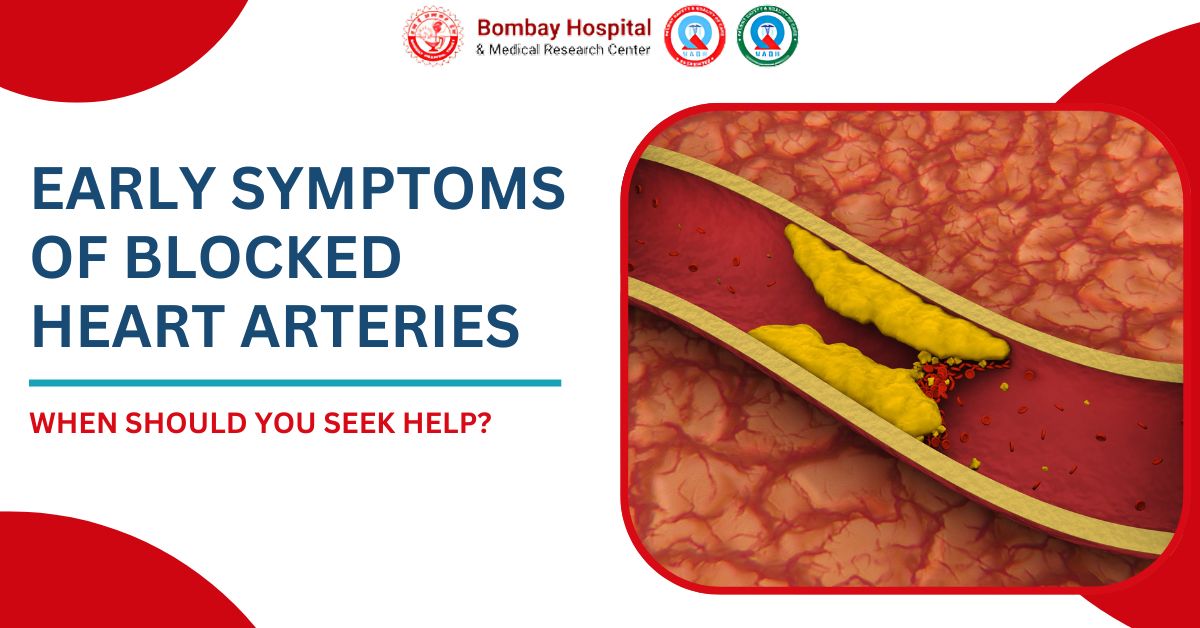
Your heart receives oxygen-rich blood through coronary arteries. When cholesterol, fatty
deposits, and other substances build up inside these arteries, they become narrow and restrict
blood flow. This condition is known as coronary artery disease. Blocked arteries can affect your
heart’s ability to work properly. If the blockage becomes severe, it may lead to chest pain,
heart attack, or other complications.
Regular evaluation by a heart
specialist is important, especially if you have risk factors such
as diabetes, high blood pressure, high cholesterol, smoking habits, obesity, or a family history
of heart disease. A specialised cardiology evaluation helps doctors
identify risks early and
recommend suitable preventive measures or treatment options.
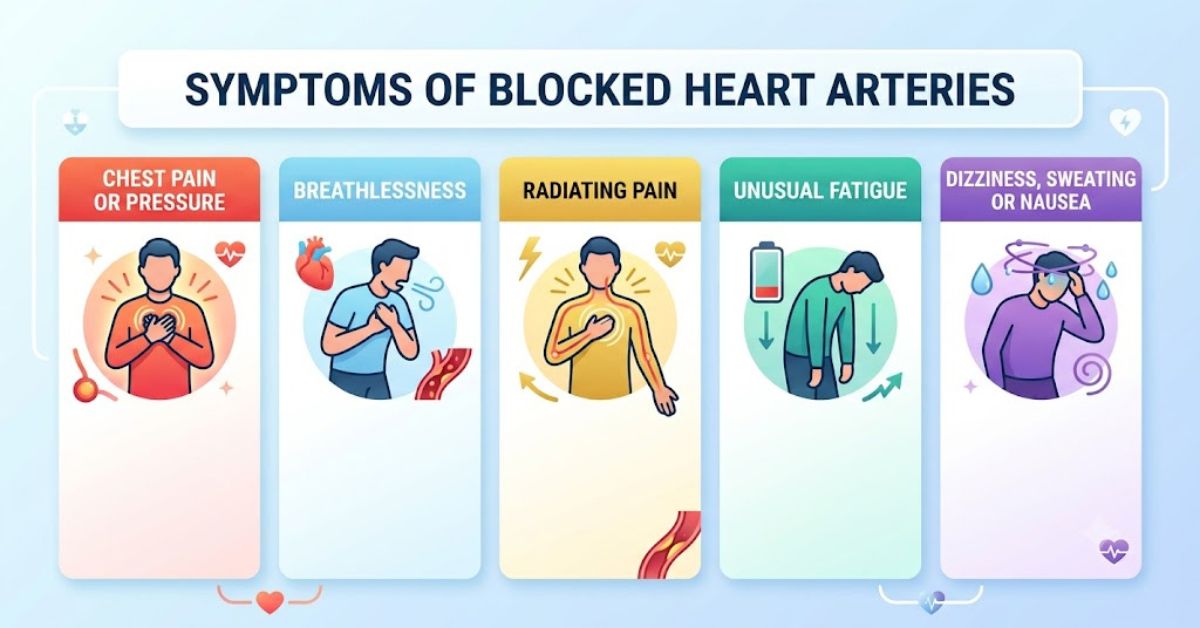
What Are the Early Symptoms of Blocked Heart Arteries?
1. Chest Pain or
Pressure
Chest discomfort is one of the most common warning signs of blocked heart arteries. You
may
experience:
- Pressure or heaviness in the chest
- Tightness or squeezing sensation
- Burning discomfort
- Pain during walking, exercise, or stress
Some people notice that the discomfort improves after resting. Even if the pain feels
mild,
repeated episodes should not be ignored.
2. Breathlessness During Daily
Activities
When your heart does not receive enough blood supply, it may struggle to meet your body’s oxygen
requirements. This can result in breathlessness while:
- Walking short distances
- Climbing stairs
- Performing routine activities
Unexplained breathing difficulty can be an early sign that your heart needs evaluation.
3. Pain Spreading Beyond the
Chest
Heart-related discomfort may not always remain in the chest. The pain can spread to:
- Left arm
- Shoulders
- Neck
- Jaw
- Back
If these symptoms appear with chest discomfort, sweating, or weakness, immediate medical
attention is important.
4. Unusual Fatigue and Reduced
Exercise Ability
Feeling tired after normal activities may sometimes indicate reduced heart function. If you
notice that you cannot perform activities that were previously easy, it may be time to consult a
cardiac specialist.
5. Dizziness, Sweating, or
Nausea
Some people experience less typical symptoms, including dizziness, cold sweating, nausea, or
weakness. These signs may occur without severe chest pain, especially in women, older adults,
and people with diabetes.
Can Heart Artery Blockage Occur Without Symptoms?
Yes, heart artery blockage can sometimes develop without noticeable symptoms. This is known as
silent coronary artery disease. People with diabetes, high cholesterol, uncontrolled blood
pressure, or a strong family history of heart disease may have a higher risk of silent blockage.
Regular heart health screening can help detect problems before symptoms become serious. A
consultation with a qualified cardiologist in Mumbai can help assess your risk factors and
suggest appropriate tests based on your health condition. Patients looking for a top
cardiologist in Mumbai can access advanced cardiac evaluation and treatment services at Bombay
Hospital under experienced medical teams.
How Is Heart Artery Blockage Diagnosed?
When you visit a cardiac specialist, the doctor may
recommend tests based on your symptoms and
medical history.
Common diagnostic methods include:
- Electrocardiogram (ECG)
An ECG records the electrical activity
of your heart and
helps identify abnormal heart
patterns.
- Echocardiogram
This test evaluates heart structure, movement, and pumping function.
- Stress Test
A stress test checks how your heart performs during physical activity.
- CT Coronary Angiography
This imaging test provides detailed pictures of coronary arteries and helps identify
narrowing or blockage.
- Coronary Angiography
This procedure provides detailed information about artery blockages and helps doctors
decide the most suitable treatment approach.
Does Every Heart Blockage
Require a Stent?
Not every blockage requires a heart stent. Treatment depends on:
- Location of the blockage
- Severity of narrowing
- Symptoms
- Heart function
- Overall health condition
Some patients may improve with medicines, lifestyle changes, and regular monitoring. In cases
where blood flow is significantly affected, angioplasty with stent placement may be recommended.
Many patients search for heart stent price before
undergoing treatment. The cost depends on
factors such as the type of stent, hospital facilities, medical requirements, and the complexity
of the procedure. Your doctor can provide accurate guidance after evaluating your condition.
Why Timely Cardiac Evaluation
Matters
Ignoring early symptoms can delay diagnosis and increase the risk of serious heart problems.
Timely consultation allows doctors to identify risk factors, perform necessary investigations,
and create a personalised treatment plan. Choosing a trusted cardiology hospital Mumbai provides
access to experienced specialists, advanced diagnostic facilities, and complete cardiac care
under one roof.
Patients can book a consultation by contacting the hospital
directly for cardiac evaluation and treatment guidance.