Advanced Spine Surgery & Spine Specialist Care at Bombay Hospital, Mumbai

Introduction

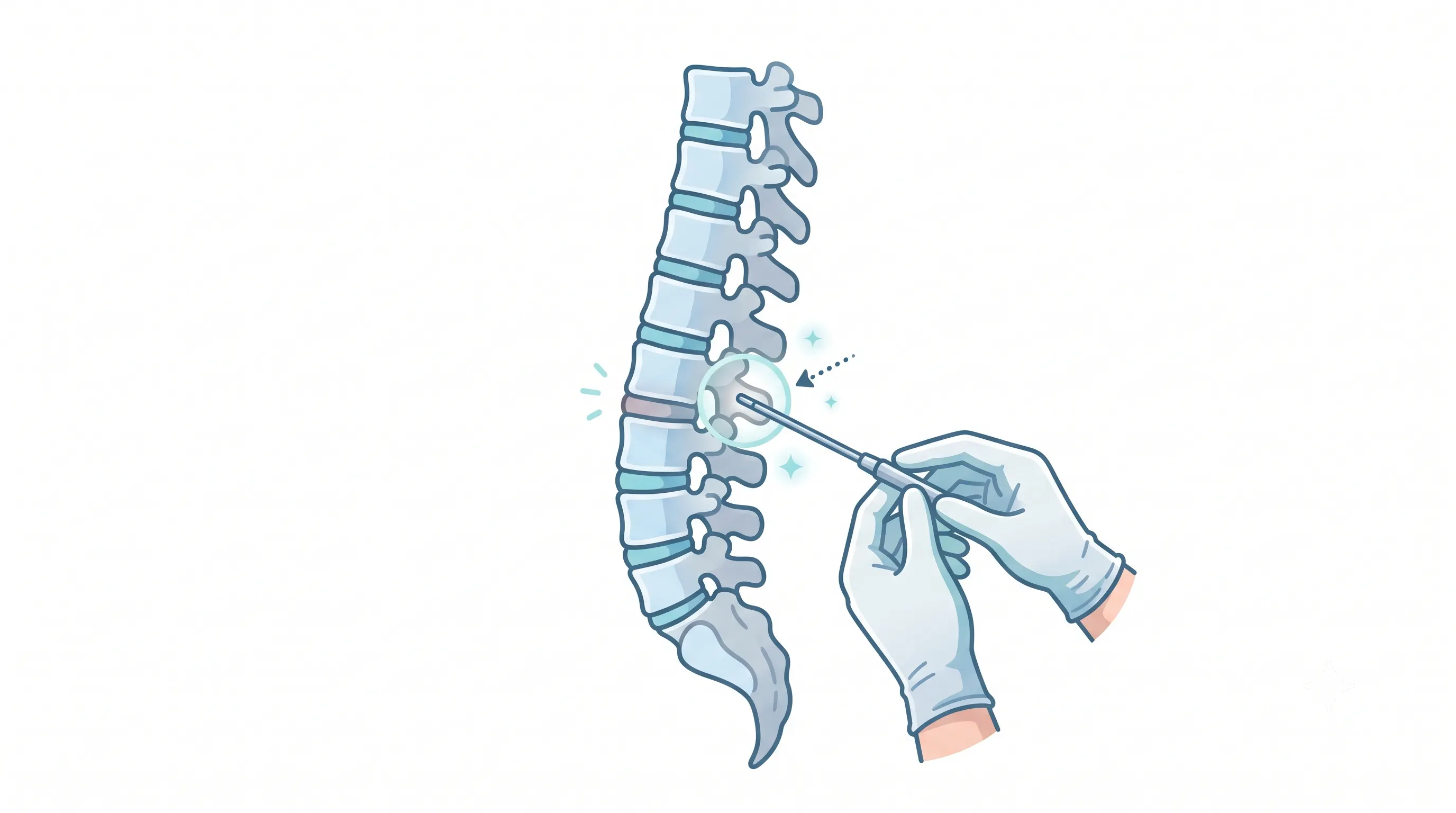
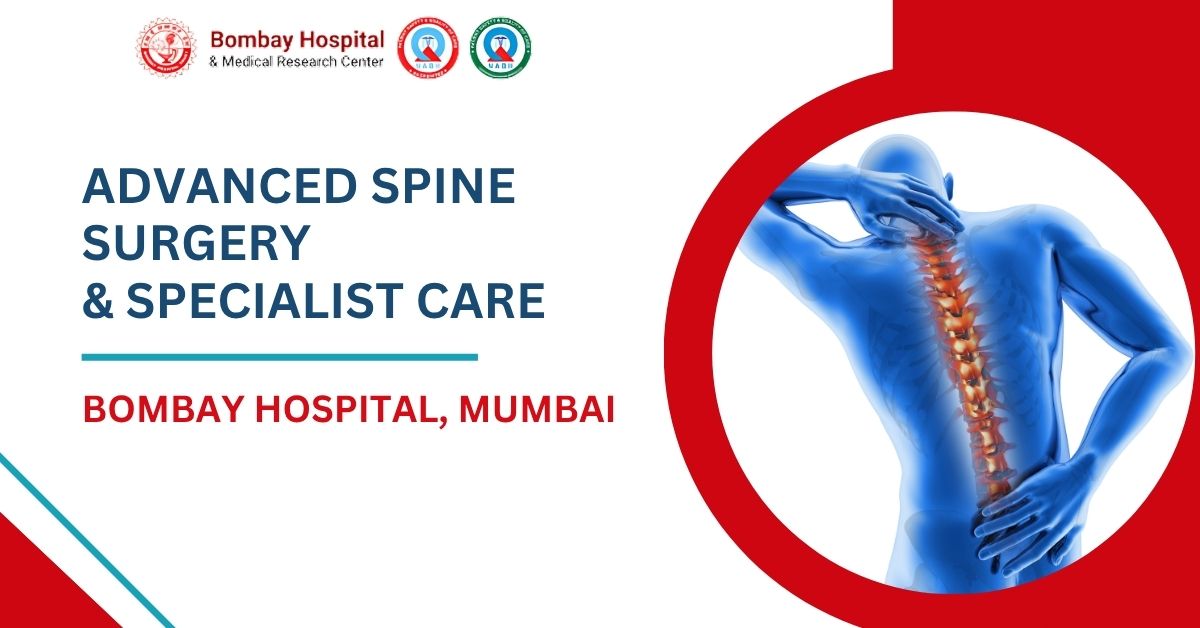
Bombay Hospital & Medical Research Centre provides comprehensive evaluation and treatment for back pain, neck pain, slipped disc, sciatica, cervical spine disorders, spinal stenosis, scoliosis, spinal deformity and complex spinal conditions through its dedicated spine-surgery services in South Mumbai.

The hospital brings together experienced Spine surgeons in Mumbai with expertise ranging from non-operative decision-making and Microscopic Decompression to Minimally Invasive Spine Surgery, Endoscopic Spine Surgery, Cervical Spine Surgery, Scoliosis Correction, Spinal Fusion, Navigation-Assisted Surgery, Complex Reconstruction and Revision Spine Surgery.

Bombay Hospital has a longstanding institutional history of treating spinal disorders and offers the infrastructure of a major tertiary-care hospital, including advanced imaging, operating theatres, intensive and postoperative care, navigation systems, microscopes, C-arm imaging and multidisciplinary support.

The objective is not simply to perform spine surgery. It is to identify which patients actually require an operation, which patients can be treated without surgery, and which procedure is most appropriate when surgery becomes necessary.
Comprehensive Spine Care at Bombay Hospital

Patients may seek evaluation for:

  • Lower back pain
  • Neck pain
  • Slip disc / Herniated disc
  • Sciatica
  • Disc bulge
  • Lumbar Canal stenosis
  • Cervical Spondylosis
  • Cervical Radiculopathy
  • Cervical Myelopathy
  • Hand numbness and walking imbalance
  • Spondylolisthesis
  • Spinal Instability
  • Adolescent Scoliosis
  • Adult Scoliosis
  • Kyphosis and Spinal deformity
  • Spinal Fractures
  • Spinal Infections
  • Spinal Tumours
  • Persistent pain after previous spine surgery
  • Failed or recurrent spine surgery problems

The treatment pathway may range from observation, medication, physiotherapy and rehabilitation to injections, decompression, disc surgery, fusion or complex reconstruction depending upon the diagnosis.

Minimally Invasive Spine Surgery in Mumbai

Minimally Invasive Spine Surgery in Mumbai at Bombay Hospital

Minimally invasive spine surgery (MISS) uses focused surgical corridors to reduce unnecessary disruption of muscles and surrounding tissues while achieving the required decompression or stabilisation.Depending on the condition, minimally invasive procedures may include:

  • Microdiscectomy
  • Endoscopic / Micro-Endoscopic Discectomy
  • Minimally Invasive Decompression
  • Lumbar Canal Decompression
  • MISS-TLIF
  • Minimally Invasive Fusion
  • Navigation-Assisted instrumentation

The important principle is that minimally invasive does not simply mean a smaller incision. The operation must still adequately treat the underlying neurological or structural problem.

Slip Disc & Sciatica Treatment in Mumbai at Bombay Hospital

A slipped or herniated disc can compress a spinal nerve and cause:

  • Lower-back pain
  • Leg pain
  • Sciatica
  • Tingling
  • Numbness
  • Muscle weakness

Many patients with a slip disc or sciatica do not require surgery. Treatment may include medication, physiotherapy, activity modification and selected injections. Surgery may become appropriate when severe or persistent nerve pain continues despite treatment, when neurological weakness progresses, or when clinically important nerve compression is present.

Cervical Spine Surgery & Cervical Myelopathy/ Bombay Hospital

Bombay Hospital provides specialist evaluation for cervical spine disorders including:

  • Cervical spondylosis
  • Cervical disc prolapse
  • Arm pain and radiculopathy
  • Hand numbness
  • Hand weakness
  • Cervical spinal stenosis
  • Cervical myelopathy
  • Walking imbalance
  • Spinal-cord compression

Progressive hand clumsiness, dropping objects, weakness or walking imbalance can indicate Cervical Myelopathy and warrant specialist evaluation.Depending on the pathology, treatment may include conservative management, cervical decompression, fusion or Cervical Disc Replacement.

Scoliosis & Spinal Deformity Surgery/Bombay Hospital

Bombay Hospital provides evaluation and treatment for:

  • Adolescent idiopathic scoliosis
  • Adult scoliosis
  • Degenerative scoliosis
  • Kyphosis
  • Complex spinal deformity
  • Sagittal and coronal imbalance

Not every scoliosis requires surgery.Treatment planning depends on:

  • Age
  • Remaining growth
  • Curve magnitude
  • Progression
  • Spinal balance
  • Neurological status
  • Functional limitation
  • Curve flexibility

Selected patients may be treated with observation or bracing, while progressive or significant deformity may require surgical correction.

Lumbar Canal Stenosis / Bombay Hospital

Lumbar spinal stenosis can cause:

  • Leg heaviness
  • Pain while walking
  • Numbness
  • Weakness
  • Reduced walking distance

Some patients notice improvement when sitting or bending forward.Treatment depends on symptoms, neurological examination and imaging and may range from physiotherapy and medication to decompression or fusion where instability is present.

Spine Fusion, Spondylolisthesis & Spinal Instability/Bombay Hospital

Spine fusion is not required for every slipped disc or stenosis. It may be considered when there is:

  • Structural Instability
  • Spondylolisthesis
  • Significant deformity
  • Selected recurrent disease
  • Certain cases requiring extensive decompression

Patients should understand why fusion is required, which spinal levels are involved, and whether decompression alone is a reasonable alternative.

Navigation & Robotic-Assisted Spine Surgery/ Bombay Hospital

Navigation and robotic technologies can assist surgeons with planning and implant placement in selected procedures. Potential applications include:

  • Complex spinal anatomy
  • Minimally invasive fusion
  • Spinal deformity
  • Revision surgery
  • Instrumentation

These technologies assist the surgeon; they do not independently decide or perform the operation.

Complex & Revision Spine Surgery /Bombay Hospital

Persistent or recurrent symptoms after previous spine surgery require careful diagnosis before another operation is considered.

Possible causes may include:

  • Recurrent disc herniation
  • Residual nerve compression
  • Adjacent-segment disease
  • Non-union
  • Instability
  • Implant-related problems
  • Progressive deformity

Spine Surgery Second Opinion at Bombay Hospital

A second opinion can be particularly useful when:

  • Spine fusion has been advised
  • Multiple spinal levels are being operated
  • Cervical spinal-cord surgery is planned
  • Scoliosis surgery has been recommended
  • Revision surgery is being considered
  • Two doctors have suggested different procedures
  • You are uncertain whether surgery is necessary
  • You want to compare minimally invasive versus conventional surgery

A meaningful second opinion should answer:

  • What is the exact diagnosis?
  • Does surgery need to be done now?
  • What happens if treatment is delayed?
  • Are non-operative options still reasonable?
  • Is fusion required?
  • Is the proposed extent of surgery appropriate?

Why Choose Bombay Hospital for Spine Care?

Bombay Hospital combines specialist spine expertise with the infrastructure of a major tertiary-care hospital. Dedicated spine-surgery services

  • Advanced MRI and CT imaging
  • Operating microscopes
  • Navigation systems
  • C-arm imaging
  • Neurophysiological monitoring
  • Critical-care and postoperative support
  • Physiotherapy and rehabilitation
  • Multidisciplinary medical and surgical specialties

This enables treatment ranging from common slipped-disc and nerve-compression problems to complex deformity, reconstruction, spinal tumour and revision procedures.

Need expert advice for a spine condition? Consult a spine specialist at Bombay Hospital

Frequently Asked Questions - Bombay Hospital

No. Many patients recover without surgery. Surgery is considered when symptoms, neurological findings and imaging identify significant persistent nerve compression or neurological deterioration.

Persistent back or neck pain, leg or arm pain, progressive numbness or weakness, difficulty walking, spinal deformity or a recommendation for surgery are reasonable indications for specialist assessment.

No. Suitability depends on the underlying pathology, anatomy and surgical objective.

Yes. Cervical spinal-cord compression can cause hand clumsiness, stiffness, weakness and walking imbalance.

No. Treatment may involve observation, bracing or surgery depending on age, curve progression and severity.

No. The surgeon performs the operation. Robotic or navigation systems are tools that may assist planning and instrumentation.

A second opinion may be particularly useful before fusion, deformity correction, cervical spinal-cord surgery, multilevel surgery or revision surgery.

Look for training and experience that match your specific diagnosis, hospital infrastructure, transparent communication and willingness to discuss both surgical and non-surgical alternatives.

Conclusion

Bombay Hospital, Mumbai offers comprehensive spine care, from non-surgical treatment to advanced minimally invasive and complex spine surgery. With specialist expertise, advanced technology and multidisciplinary support, treatment is planned according to each patient’s diagnosis and individual needs.

For persistent or complex spine problems, consult a spine specialist at Bombay Hospital for evaluation and appropriate treatment guidance.

Send us a message

Have any questions? We are ready to help.

List of Consultants

Arvind Kulkarni

Dr. Arvind Kulkarni

MD, D'ORTHO., FCPS

Spine Surgeon

Vishal Kundnani

Dr. Vishal Kundnani

MS, FASSI, FNUS, FNAMS

Spine Surgeon

Zahir Abbas Merchant

Dr. Zahir Abbas Merchant

MBBS, MS

Spine Surgeon

Aakash Jain

Dr. Aakash Jain

M.S. Orthopaedics (AIIMS R), MCh. Spine Surgery (AIIMS R), Clinical Observership in Spine Surgery QMC, Nottingham

Spine Surgeon

Book Appointment Book Appointment