Introduction
Finding extra hair on your pillow, comb, or shower drain can be concerning. While losing some hair every day is part of the natural growth cycle, sudden or excessive hair fall may indicate an underlying problem. Hair loss can happen due to genetics, nutritional deficiencies, hormonal changes, stress, or scalp conditions. Understanding the reason behind your hair loss helps you choose the right treatment and prevent further damage.
This blog explains the common causes of hair loss, how doctors diagnose the condition, available treatment options, and when you should consult a specialist in dermatology for expert guidance.
Is Hair Fall Normal or a Sign of Hair Loss?
Hair follows a natural cycle that includes growth, rest, and shedding. Losing around 50 to 100 hair strands daily can be normal. The concern begins when you notice:
- Sudden increase in hair shedding
- Visible scalp areas
- Thinning hair density
- Receding hairline
- Patchy bald spots
- Persistent scalp itching or irritation
Hair loss is not always caused by one factor. A detailed evaluation helps identify whether the problem is related to genetics, lifestyle, nutrition, hormones, or scalp health.
A consultation with a qualified hair specialist can help detect the cause early and prevent progression.
Common Causes of Hair Loss
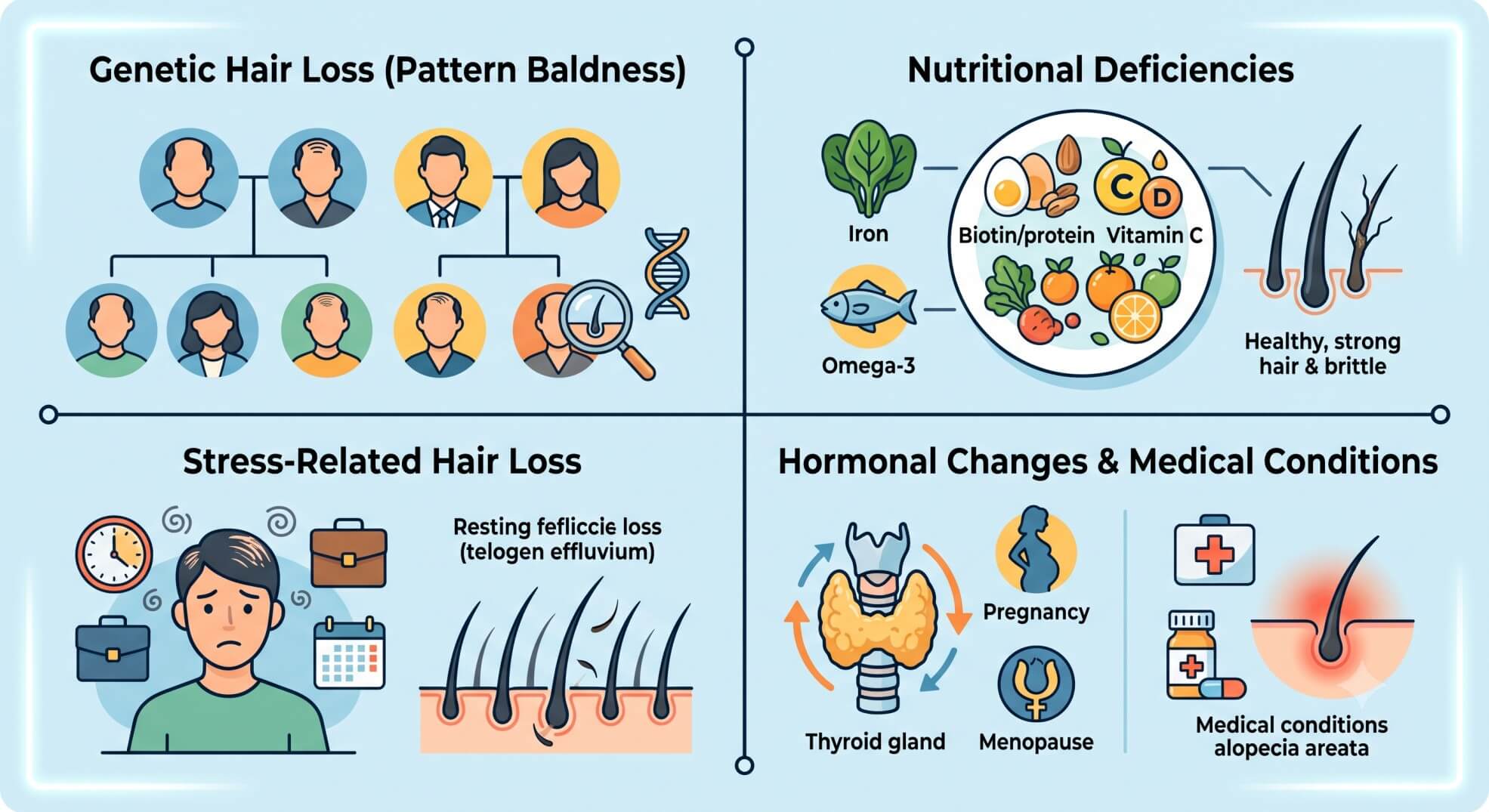
1. Genetic Hair Loss or Pattern Baldness
Genetic factors are among the most common causes of long-term hair thinning. This condition is known as androgenetic alopecia and affects both men and women.
In men, it commonly appears as a receding hairline or thinning at the crown area. Women may notice widening of the central hair parting or overall thinning of hair volume.
Early diagnosis is important because treatment can help slow down hair loss and maintain existing hair growth.
2. Nutritional Deficiencies
Your hair follicles require proper nutrition to function normally. Deficiencies of essential nutrients can weaken hair structure and increase shedding.
Common nutritional factors linked with hair loss include:
- Low iron levels
- Vitamin D deficiency
- Vitamin B12 deficiency
- Lack of protein intake
- Zinc deficiency
People following restrictive diets, experiencing rapid weight loss, or having poor eating habits may develop increased hair fall.
A doctor may recommend blood tests to identify deficiencies and suggest appropriate dietary changes or supplements.
3. Stress-Related Hair Loss
Stress can affect the normal hair growth cycle. Conditions like telogen effluvium may cause excessive shedding several weeks or months after physical or emotional stress.
Common triggers include:
- Severe illness
- Surgery
- High fever
- Major lifestyle changes
- Emotional stress
In many cases, treating the underlying trigger helps restore normal hair growth. If shedding continues, a dermatologist can evaluate other possible causes.
4. Hormonal Changes and Medical Conditions
Hormonal changes can significantly affect hair health. Conditions such as thyroid disorders, polycystic ovary syndrome (PCOS), pregnancy-related hormonal changes, and menopause may contribute to hair thinning.
Women experiencing irregular periods, acne, increased facial hair growth, or sudden hair thinning may require evaluation for hormonal imbalance.
Managing the underlying medical condition often plays an important role in improving hair growth.
5. Scalp Conditions
A healthy scalp supports healthy hair growth. Conditions affecting the scalp can weaken hair follicles and increase shedding.
Common scalp-related causes include:
- Dandruff
- Seborrheic dermatitis
- Scalp psoriasis
- Fungal infections
- Scalp inflammation
A dermatology specialist can examine your scalp and recommend appropriate treatment based on the condition.
Types of Hair Loss That Require Medical Attention
Alopecia Areata
Alopecia areata causes sudden, patchy hair loss when the immune system affects hair follicles. It may appear as small bald patches on the scalp or other body areas.
Telogen Effluvium
This condition causes increased hair shedding after stress, illness, hormonal changes, or nutritional problems. Identifying the trigger helps manage the condition effectively.
Androgenetic Alopecia
This is hereditary hair loss caused by genetic sensitivity of hair follicles. It is one of the most common forms of permanent hair thinning.
A proper diagnosis helps doctors decide which treatment approach may provide the best results.
How Dermatologists Diagnose Hair Loss
Hair loss treatment starts with understanding the reason behind the condition. During a consultation, a doctor may evaluate:
- Your medical history
- Family history of hair loss
- Hair shedding pattern
- Scalp condition
- Diet and lifestyle habits
- Previous treatments
Doctors may also perform:
- Scalp examination
- Hair pull test
- Trichoscopy or dermoscopy
- Blood tests for nutritional and hormonal factors
Choosing an experienced specialist is important because different types of hair loss require different treatment plans.
Many patients searching for the best dermatologist in Mumbai look for doctors who provide complete evaluation, accurate diagnosis, and personalised hair care solutions.
Hair Loss Treatment Options
Treatment depends on the cause, severity, and stage of hair loss. Common options include:
Medications
Doctors may prescribe medicines that help reduce hair loss and support hair growth. These should only be used under medical supervision.
PRP Hair Treatment
Platelet-rich plasma (PRP) therapy uses components from your own blood to support hair follicle activity. It is commonly used for selected cases of hair thinning.
Hair Transplant
For advanced pattern baldness, hair transplant procedures may help restore hair density by transferring healthy hair follicles to thinning areas.
Nutritional Support
If deficiencies are identified, improving diet and correcting nutrient levels can support better hair health.
A reputed dermatology hospital Mumbai provides access to trained specialists and diagnostic facilities required for managing different hair conditions.
When Should You Consult a Dermatologist?
You should seek professional advice if you experience:
- Hair fall lasting for several months
- Sudden heavy shedding
- Bald patches
- Scalp redness or pain
- Hair loss with hormonal symptoms
- Rapid thinning of hair
Early consultation helps identify the cause and improves the chances of successful management. Patients often search for a dermatologist Navi Mumbai or experienced hair specialist because they want reliable diagnosis and treatment close to their location.
Choosing the Right Hair Specialist in Mumbai
Selecting a qualified dermatologist is important for safe and effective hair loss treatment. A good specialist focuses on diagnosis rather than offering one solution for every patient.
Some people search for a celebrity dermatologist Mumbai because of public recommendations, while others compare options such as a top 5 dermatologist in Mumbai list before making a decision. The right choice should depend on medical expertise, experience in treating hair conditions, and the quality of patient care. Hospitals such as Bombay Hospital Mumbai provide specialised healthcare services with experienced medical professionals and advanced diagnostic support.
Frequently Asked Questions About Hair Loss
Sudden hair loss can occur due to stress, illness, hormonal changes, nutritional deficiencies, or scalp conditions. A dermatologist can help identify the exact cause.
Some types of hair loss can improve with timely treatment, especially when the underlying cause is identified early. Results depend on the condition and treatment approach.
Yes, deficiencies of nutrients like iron, vitamin D, vitamin B12, and protein can contribute to increased hair shedding.
PRP may help improve hair thickness and growth in suitable candidates. A doctor can determine whether it is appropriate based on your hair condition.
You should
consult a dermatologist if hair fall is sudden, excessive, persistent, or associated with scalp problems or visible thinning.
Conclusion
Hair loss can result from multiple factors, including genetics, nutrition, stress, hormones, and scalp conditions. Finding the exact cause is the first step toward effective treatment. A professional evaluation from an experienced dermatologist can help you understand your condition and choose the right solution. If you notice persistent hair fall or thinning, timely medical guidance can help protect your hair health and improve long-term outcomes.