Weight gain can happen for many reasons, including changes in diet, physical activity, stress,
sleep patterns, and hormonal health. But what if your weight keeps increasing despite following
healthy habits? In some cases, thyroid problems may be affecting your metabolism and making
weight management difficult.
The thyroid gland plays an important role in controlling energy use, metabolism, and several
body functions. When thyroid hormone levels are low, it can slow down metabolism and contribute
to weight gain. Understanding the signs of thyroid-related weight changes can help you take
timely action.
This blog explains how thyroid problems affect weight, common symptoms, causes, diagnosis,
treatment options, and when you should consult an Endocrinology specialist.
How Does the Thyroid Cause Weight Gain?
The thyroid gland produces hormones called T3 and T4, which regulate how your body uses energy.
These hormones influence your metabolic rate, digestion, temperature regulation, and overall
energy levels.
When the thyroid gland becomes underactive, it can lead to hypothyroidism. In this condition,
the body burns fewer calories, which may result in gradual weight gain. Thyroid-related weight
gain is not only caused by increased fat storage. Changes in metabolism and fluid retention can
also contribute to changes on the weighing scale.
Many people search for answers because they gain weight even after improving their diet and
exercise routine. In such situations, checking thyroid hormone levels with guidance from a
thyroid
specialist mumbai can help identify whether a hormonal imbalance is responsible.
Signs Your Weight Gain May Be Due to Thyroid Problems
Weight gain caused by thyroid imbalance usually appears with other symptoms. Recognising these
signs can help you decide when medical evaluation is needed.
- Unexplained Weight Gain
One of the most common signs of hypothyroidism
is gradual weight gain without major changes in food intake or lifestyle. If you notice that
losing weight has become difficult despite regular exercise and a balanced diet, thyroid
function may need evaluation.
- Constant Fatigue and Low Energy
Thyroid hormones influence energy
production. Low thyroid levels can make you feel tired, sluggish, or less active throughout
the day.
- Feeling Cold More Often
People with an underactive thyroid may
experience increased sensitivity to cold because thyroid hormones help regulate body
temperature.
- Hair Fall and Dry Skin
Low thyroid hormone levels can affect skin
moisture and hair growth. Dry skin, brittle hair, and increased hair fall may occur along
with other thyroid symptoms.
- Constipation and Digestive Changes
A slower metabolism can reduce
digestive activity, leading to constipation or changes in bowel habits.
- Mood Changes and Difficulty Concentrating
Thyroid imbalance may affect
brain function and emotional health. Some people experience low mood, reduced concentration,
or difficulty staying mentally active.
Thyroid Weight Gain vs Normal Weight Gain
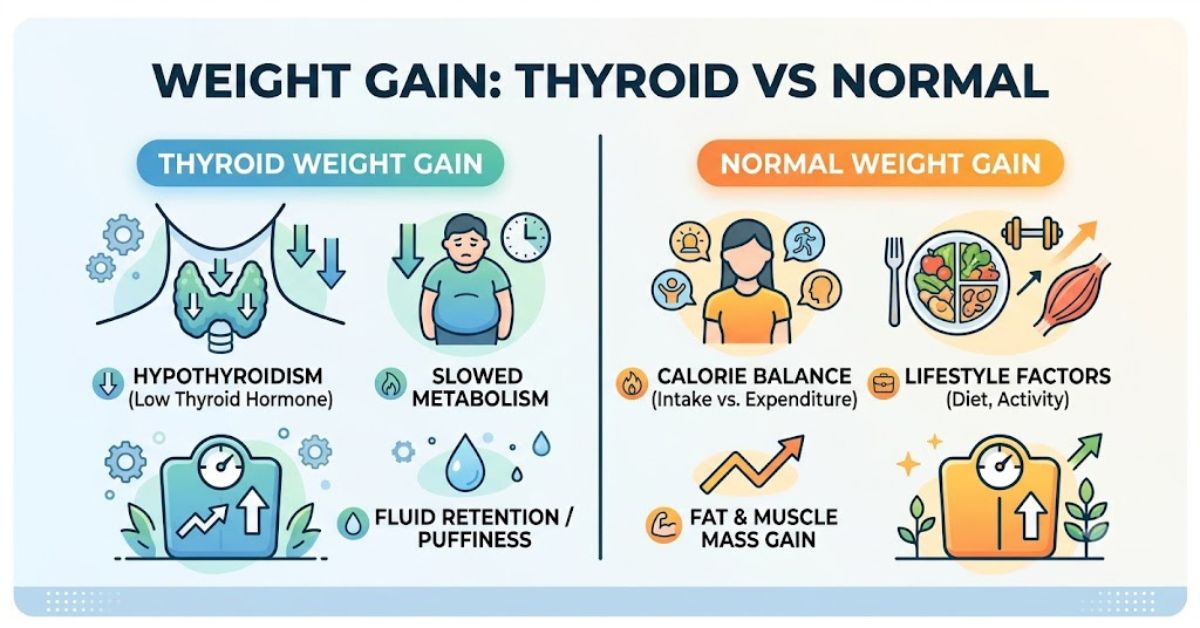
Many people wonder whether their weight gain is related to thyroid problems or lifestyle
factors.
| Thyroid-related weight gain |
Lifestyle-related weight gain |
| Often occurs with fatigue and low energy |
Usually linked with excess calorie intake or reduced activity |
| May include cold sensitivity and dry skin |
Usually does not involve hormonal symptoms |
| Can occur despite healthy lifestyle changes |
Often improves with diet and exercise adjustments |
| Requires thyroid hormone evaluation |
Managed mainly through lifestyle modifications |
Understanding these differences can help you decide whether you need a medical evaluation.
What Causes Thyroid-Related Weight Gain?
Several conditions can affect thyroid hormone production and contribute to weight changes.
Hypothyroidism
Hypothyroidism occurs when the thyroid gland does not produce enough hormones. It is one of the
most common thyroid conditions associated with weight gain.
Hashimoto’s Thyroiditis
Hashimoto’s thyroiditis is an autoimmune condition where the immune system affects thyroid
function. Over time, it can reduce hormone production.
Iodine Imbalance
Iodine is required for thyroid hormone production. An imbalance in iodine levels can affect
normal thyroid function.
Hormonal Changes
Pregnancy, ageing, and certain medical conditions can influence thyroid health and increase the
risk of thyroid imbalance.
How Doctors Diagnose Thyroid-Related Weight Gain
Weight gain alone does not confirm a thyroid disorder. Doctors evaluate your symptoms, medical
history, and test results before making a diagnosis.
An endocrinologist may recommend:
- Thyroid Stimulating Hormone (TSH) test
- Free T3 and Free T4 hormone tests
- Thyroid antibody tests when autoimmune thyroid disease is suspected
- Thyroid ultrasound in selected cases
A detailed assessment helps identify whether thyroid imbalance is contributing to weight changes
or if other factors are involved.
Patients looking for the best endocrinologist in mumbai should choose a specialist who can
provide complete evaluation of thyroid disorders, hormonal conditions, and metabolic concerns.
How Are Thyroid-Related Weight Problems Treated?
Treatment depends on the type and severity of thyroid disorder.
For hypothyroidism, doctors may prescribe thyroid hormone replacement medication to restore
normal hormone levels. Regular monitoring through blood tests helps ensure that treatment
remains suitable.
Lifestyle changes also support thyroid health and weight management, including:
- Eating a balanced diet
- Maintaining regular physical activity
- Getting adequate sleep
- Managing stress levels
- Following prescribed medication schedules
Weight improvement may take time because the body needs time to adjust after hormone levels
return to normal.
Bombay Hospital Mumbai provides specialised healthcare
services across multiple departments. For
patients requiring surgical evaluation for specific thyroid conditions, consultation with an
endocrinology surgeon in mumbai may be recommended based on medical assessment.
When Should You Consult a
Thyroid Specialist?
You should consider consulting a doctor if you experience:
- Unexplained weight gain
- Persistent tiredness
- Hair loss
- Irregular menstrual cycles
- Cold intolerance
- Constipation
- Neck swelling or thyroid enlargement
Early evaluation can help identify thyroid problems before symptoms affect your daily life.
A qualified Endocrinology
specialist can assess hormone levels and provide guidance based on
your individual health needs. Patients searching for the top hospital for endocrinology in
mumbai can consult top 5 endocrinologists for thyroid
disorders, hormonal problems, diabetes
management, and metabolic conditions.