Slip Disc Treatment & Surgery | Orthopedic Doctor Mumbai

Introduction

A slip disc can cause lower back pain, leg pain, numbness, tingling, or muscle weakness. These symptoms may affect your walking, sleep, work, and daily activities. Many people recover with medicines, physiotherapy, and gradual activity changes without surgery. An operation is considered only when symptoms, nerve function, and imaging findings support it. This guide explains slip disc treatment, when surgery may be needed, and how a specialist helps you choose the safest option.

What Is a Slip Disc?

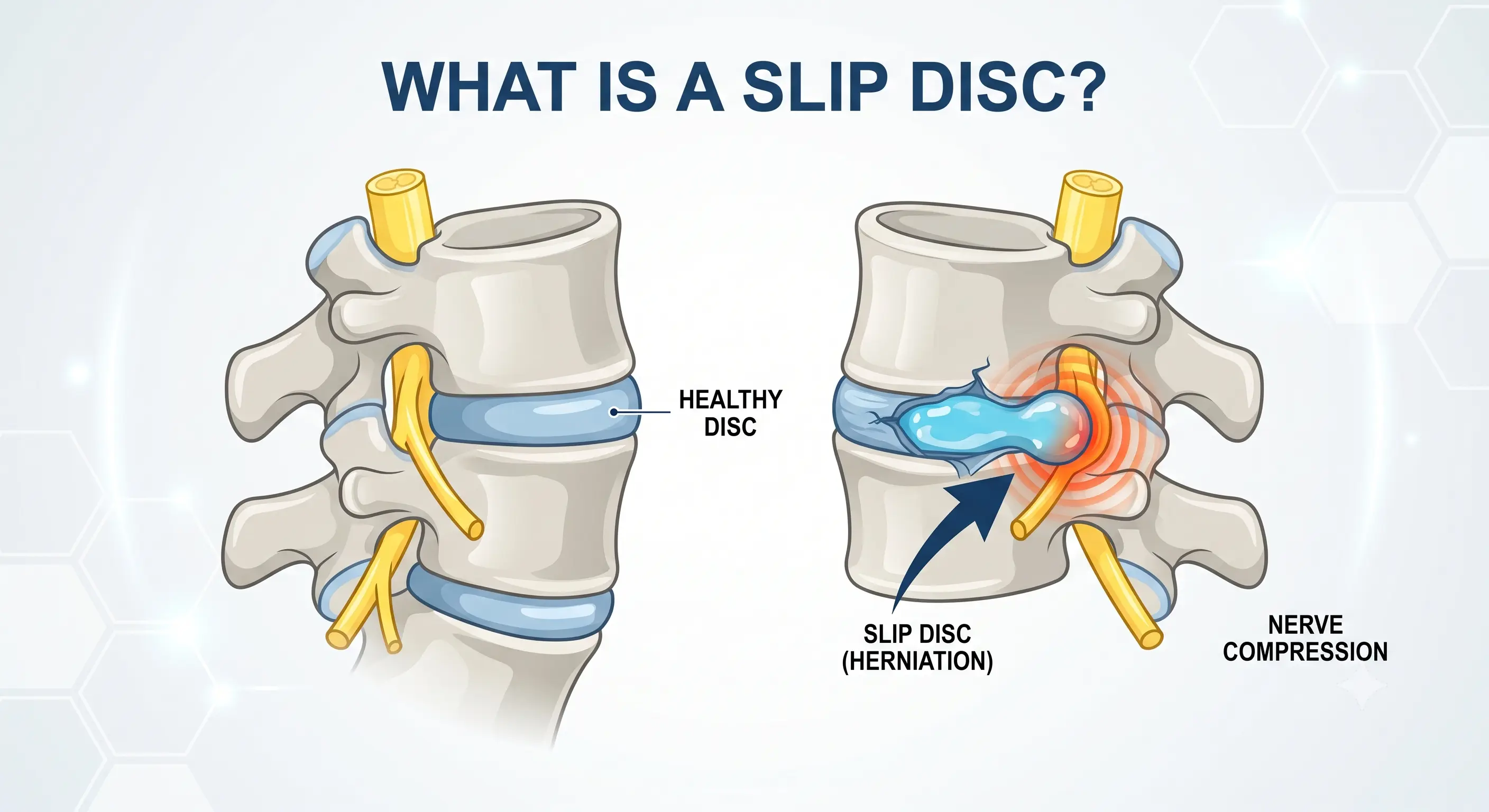
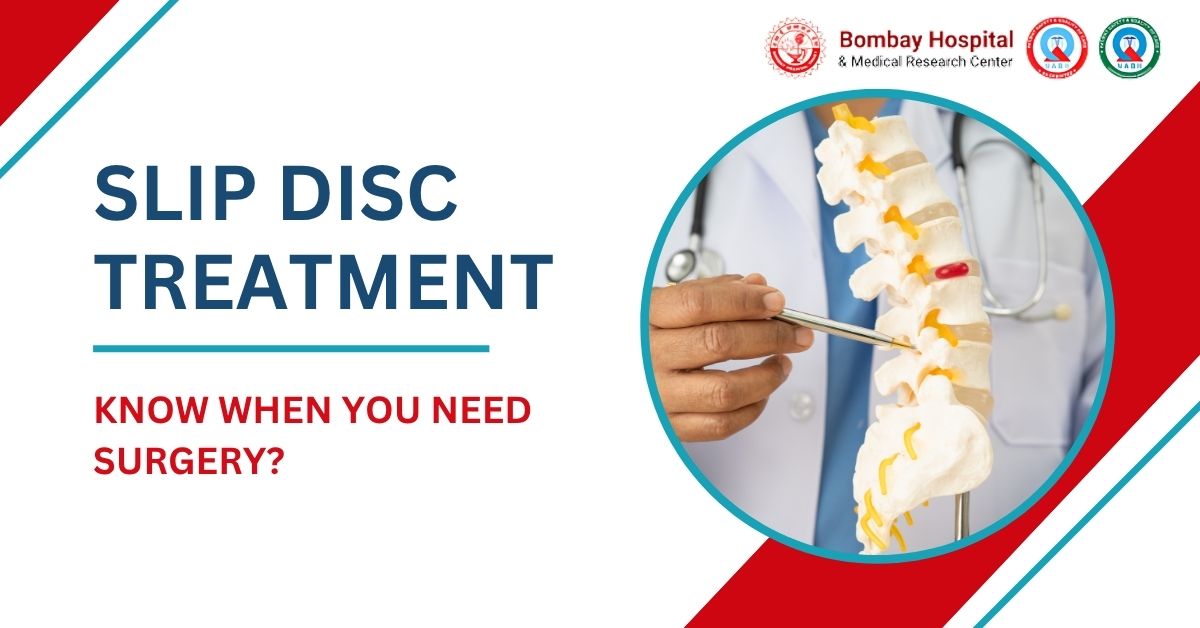
What is slip disc explained by an orthopedic doctor at Bombay Hospital Mumbai.

People commonly use “slip disc” to describe a slipped, herniated, or prolapsed disc. Your spine contains small bones called vertebrae. Soft discs between these bones act as cushions and allow movement. When the outer layer of a disc weakens or tears, its inner material may bulge outward.

The bulging disc can irritate or compress a nearby nerve. This may cause:

  • Pain in the lower back or neck
  • Sciatica, with pain moving into the buttock and leg
  • Numbness or pins and needles
  • Muscle weakness in the leg, foot, arm, or hand
  • Difficulty standing, bending, walking, or lifting

A disc bulge on an MRI does not always explain your symptoms. Some people have disc changes without pain. Your doctor must compare the scan with your symptoms, physical examination, and nerve function before recommending treatment.

Does Every Slip Disc Need Surgery?

No. Most people begin with non-surgical care. Your treatment plan depends on the location of the disc, the severity of nerve pressure, your strength, and how long your symptoms have continued.

Early orthopedic treatment patients receive may include:

  • Medicines prescribed for pain or inflammation
  • Short-term activity modification
  • Supervised physiotherapy
  • Gentle walking and movement
  • Heat or cold therapy
  • Posture and lifting guidance
  • An injection around an irritated nerve in selected cases

Avoid prolonged bed rest because it can reduce muscle strength and delay your return to normal activity. Your physiotherapist may guide you through core strengthening, hip exercises, nerve mobility work, and a gradual return to bending and lifting.

Exercises should match your condition. A movement that helps one person may worsen another person’s nerve irritation. Do not begin forceful stretching, heavy gym workouts, or spinal manipulation without professional advice.

How Is a Slip Disc Diagnosed?

A consultation begins with a detailed history. Your doctor may ask:

  • When did the pain start?
  • Does it travel into your arm or leg?
  • Do you have numbness or weakness?
  • Which activities make it worse?
  • Can you walk, climb stairs, or perform your usual work?

During the examination, the doctor checks your posture, walking pattern, reflexes, muscle power, sensation, and specific movements.

An MRI gives a detailed view of the discs, nerves, and other soft tissues. It may be recommended when pain continues despite treatment, weakness develops, symptoms are severe, or an injection or operation is under consideration. X-rays cannot show the disc itself, but they may reveal alignment changes, arthritis, or other bone problems.

An orthopedic doctor in Mumbai explains whether the MRI finding matches the side and location of your pain. This prevents unnecessary treatment based on a scan alone.

When Might You Need Surgery?

Surgery may be discussed when non-surgical care does not provide enough relief or when nerve function is getting worse. Common reasons include:

  • Severe leg or arm pain that limits normal activities
  • Persistent disabling sciatica despite suitable treatment
  • Increasing muscle weakness
  • Difficulty lifting the foot or gripping objects
  • Numbness that affects movement or balance
  • MRI-confirmed nerve compression that matches your symptoms

The AAOS states that surgery may be considered for disabling leg pain that continues after a period of non-surgical care. The exact timing varies from person to person. Worsening weakness requires an earlier review and should not be delayed simply to complete a fixed treatment period.

Some symptoms need urgent medical assessment. New difficulty passing urine, loss of bladder or bowel control, numbness around the inner thighs or genital area, or rapidly worsening weakness can suggest cauda equina syndrome. Prompt treatment can reduce the risk of lasting nerve damage.

What Types of Surgery Are Used?

The most common procedure for a nerve-compressing lumbar disc is a microdiscectomy or discectomy. The surgeon removes the disc fragment pressing on the nerve while leaving most of the disc in place.

Selected patients may qualify for endoscopic discectomy, which uses a camera and a smaller access route. Decompression may be needed when bone, thickened tissue, or another narrowing also reduces space around the nerve. Spinal fusion is not routinely required for a simple disc herniation. It is considered only in selected cases involving instability or another structural problem.

Surgery usually aims to relieve nerve-related leg or arm pain. It may not fully resolve long-standing back pain when no active nerve compression exists. Your orthopedic surgeon Mumbai specialist should explain the expected benefit, possible risks, alternatives, and recovery plan before you make a decision.

What Can You Expect After Surgery?

Many patients begin walking soon after a discectomy. The return to driving, desk work, physical work, exercise, and sports depends on the procedure, nerve health, general fitness, and job demands.

Follow-up care may include:

  • Wound care instructions
  • Gradual walking
  • Physiotherapy when advised
  • Restrictions on lifting and bending
  • Exercises to rebuild strength
  • Review of numbness or weakness

Pain that suddenly worsens, fever, wound discharge, new weakness, or bladder problems needs prompt contact with your surgical team.

How Can You Protect Your Spine?

A slip disc can recur, so long-term habits matter. Maintain a healthy weight, strengthen your core and hip muscles, take regular breaks from sitting, and use safe lifting techniques. Bend your knees instead of rounding your back when lifting. Increase gym or sports activity gradually rather than returning to full intensity at once.

Do not smoke, since smoking can affect disc health and healing. If your work involves driving, desk sitting, or manual lifting, ask a physiotherapist to help you adjust your posture and work routine.

Choosing Orthopaedic Care in Mumbai

People often search for the best orthopedic hospital Mumbai or the top 10 orthopedic doctor Mumbai when they develop severe back pain. Online lists may help you begin your research, but a ranking cannot replace a proper examination.

Look for a centre that offers:

  • Experienced spine and orthopaedic specialists
  • MRI review and neurological assessment
  • Physiotherapy and rehabilitation support
  • Pain management options
  • Surgical second opinions
  • Clear explanations of benefits and risks
  • Follow-up after treatment

The right orthopedic treatment plan should match your symptoms, examination, lifestyle, and recovery goals. An orthopaedic doctor at a reliable orthopedic hospital in Mumbai will explain when surgery is useful and when it is reasonable to continue non-surgical care.

Frequently Asked Questions

Yes. Many people improve as inflammation settles and the body gradually reduces the disc material irritating the nerve. Physiotherapy and activity guidance can support recovery.

Not automatically. The level shown on MRI matters only when it matches your symptoms and examination. Surgery depends on pain, weakness, nerve compression, and response to treatment.

Gentle walking is often suitable if it does not increase leg pain, numbness, or weakness. Start with short distances and follow your doctor’s guidance.

Severe or prolonged nerve compression can cause lasting problems, especially when weakness or bladder symptoms develop. Early assessment is important when neurological symptoms appear.

A second opinion can help you understand the diagnosis, alternatives, expected results, and urgency. It is especially useful when your symptoms and MRI findings do not seem to match.

Conclusion

A slip disc does not automatically mean you need an operation. Your symptoms, nerve strength, examination, MRI findings, and response to treatment guide the decision. Many patients improve with structured non-surgical care, while surgery can help when disabling nerve pain persists or weakness progresses. Consult an orthopedic specialist in Mumbai for an individual assessment and a clear treatment plan. With timely care and consistent rehabilitation, you can work towards safer movement and a return to daily activities.

Send us a message

Have any questions? We are ready to help.

List of Consultants

H.R. Jhunjhunwala

Dr. H.R. Jhunjhunwala

BSc., MBBS, D.ORTH, MS ORTH

Orthopaedic Surgeon

M.L. Saraf

Dr. M.L. Saraf

MBBS, MS

Orthopaedic Surgeon

Nilen Shah

Dr. Nilen Shah

MBBS, MS (Orth), D Orth, MCH

Orthopaedic Surgeon

Parag Munshi

Dr. Parag Munshi

MBBS, MS, DNB

Orthopaedic Surgeon

Hemant Bhandari

Dr. Hemant Bhandari

M.S. M.Sc. (Ortho, London)

Orthopaedic Surgeon

Hetal Chiniwala

Dr. Hetal Chiniwala

MS, DNB, D.Ortho

Orthopaedic Surgeon

Sujit N. Kordey

Dr. Sujit N. Kordey

MS, MCh Orth (Liverpool)

Orthopaedic Surgeon

Ashish Agarwal

Dr. Ashish Agarwal

MBBS, MS, DNB

Orthopaedic Surgeon

Girish Dewnany

Dr. Girish Dewnany

MBBS, MS, MCH, FRCS(LON.)

Orthopaedic Surgeon

Neilesh Talwalkar

Dr. Neilesh Talwalkar

MBBS, MS, DNB

Orthopaedic Surgeon

Pradeep Nemade

Dr. Pradeep Nemade

MBBS, MS, DNB

Orthopaedic Surgeon

Aditya Khemka

Dr. Aditya Khemka

MBBS, MS

Orthopaedic Surgeon

Atul Bhaskar

Dr. Atul Bhaskar

MS, DNB, MCH

Orthopaedic Surgeon

Muddassir Javed

Dr. Muddassir Javed

MBBS, MS Orthopaedic

Orthopaedic Surgeon

Book Appointment Book Appointment