Rheumatoid Arthritis vs Osteoarthritis: What Is the Difference?

Introduction

Not every joint pain has the same cause. A person with knee pain after walking may have Osteoarthritis, while someone with swollen finger joints and long-lasting morning stiffness may have Rheumatoid Arthritis. Although both conditions affect joints, their causes, symptoms, and treatments are different.

Understanding the difference between Rheumatoid Arthritis and Osteoarthritis can help you recognise symptoms early, seek the right medical advice, and protect your joint health. This guide explains their causes, symptoms, diagnosis, treatment options, and when you should consult a specialist.

Rheumatoid Arthritis vs Osteoarthritis: Difference

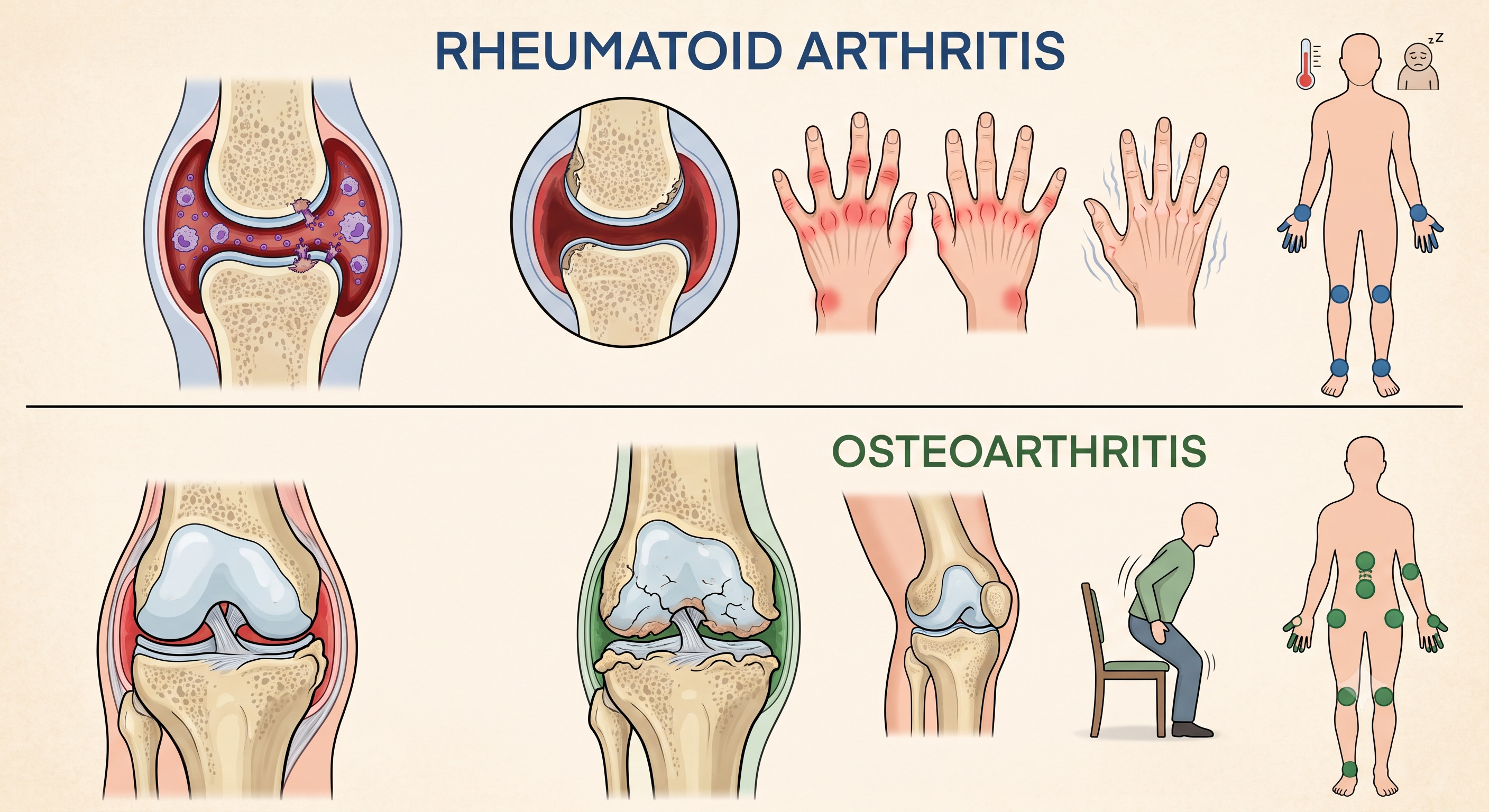
Feature Rheumatoid Arthritis Osteoarthritis
Main cause Autoimmune inflammation Cartilage breakdown due to wear and tear
Joint problem Immune system attacks joint lining Cartilage between bones becomes damaged
Commonly affected joints Fingers, wrists, feet, knees Knees, hips, spine, fingers
Pain pattern Pain with swelling and prolonged stiffness Pain often increases with activity
Morning stiffness Usually lasts longer Usually improves faster
Treatment focus Controlling inflammation and preventing damage Managing pain and improving mobility

What Is Osteoarthritis?

Osteoarthritis is the most common type of arthritis. It occurs when the cartilage that protects the ends of bones gradually wears down. When this protective layer becomes thinner, bones may rub against each other, causing pain, stiffness, and reduced movement.

Osteoarthritis commonly affects weight-bearing joints such as the knees, hips, and spine. It may develop due to ageing, previous injuries, excess weight, or repeated stress on joints.

Common symptoms include:

  • Knee or hip pain during movement
  • Stiffness after sitting for a long time
  • Swelling around affected joints
  • Difficulty climbing stairs or walking
  • Cracking sounds during joint movement

For example, a person who develops knee pain while walking but feels better after resting may have symptoms linked with Osteoarthritis. Early assessment can help manage discomfort and maintain mobility.

What Is Rheumatoid Arthritis?

Rheumatoid Arthritis is an autoimmune disease where the body's immune system mistakenly attacks the lining of joints. This creates inflammation that can damage cartilage and bones if it remains uncontrolled.

Unlike Osteoarthritis, Rheumatoid Arthritis is not caused only by ageing or physical stress. It can affect younger adults as well as older people.

Common symptoms include:

  • Swollen and painful joints
  • Morning stiffness lasting more than 30 minutes
  • Pain affecting both sides of the body
  • Fatigue and weakness
  • Warmth around affected joints

For example, persistent swelling in both hands along with morning stiffness may need evaluation by a rheumatology specialist.

How Can You Identify the Difference Between Rheumatoid Arthritis and Osteoarthritis?

Rheumatoid Arthritis vs Osteoarthritis difference symptoms explained by rheumatologist in Mumbai

Many people confuse these conditions because both cause joint pain. The pattern of symptoms often provides important clues.

  • Joint Involvement
    Osteoarthritis usually affects joints that experience more pressure, such as knees, hips, and the lower back.
    Rheumatoid Arthritis often affects smaller joints like fingers and wrists. It commonly involves similar joints on both sides of the body.
  • Pain and Stiffness Pattern
    Osteoarthritis pain usually increases with activity and improves with rest.
    Rheumatoid Arthritis often causes stiffness after waking up, and the discomfort may continue even when the joint is not being used.
  • Inflammation
    Swelling and warmth are more commonly linked with Rheumatoid Arthritis because inflammation plays a major role in the condition.
    Osteoarthritis can also cause swelling, but it usually develops due to joint damage rather than immune-related inflammation.

How Are Rheumatoid Arthritis and Osteoarthritis Diagnosed?

A correct diagnosis is important because both conditions require different treatment approaches.

A doctor may evaluate:

  • Your symptoms and medical history
  • Physical examination of affected joints
  • Blood tests for inflammation and autoimmune markers
  • X-rays or other imaging tests

For Rheumatoid Arthritis, tests such as rheumatoid factor and anti-CCP antibodies may support diagnosis.

For Osteoarthritis, imaging studies can help identify cartilage loss and joint changes.

Consulting an experienced specialist helps avoid self-diagnosis and ensures that treatment matches your condition.

Treatment Options for Arthritis

Treatment depends on the type of arthritis, severity of symptoms, and overall health.

Osteoarthritis Treatment

Management may include:

  • Weight management
  • Physiotherapy
  • Strengthening exercises
  • Pain-relieving medicines
  • Joint injections in selected cases
  • Surgical options for advanced joint damage

Rheumatoid Arthritis Treatment

Treatment focuses on reducing inflammation and preventing joint damage. Doctors may recommend:

  • Disease-modifying medicines
  • Regular monitoring
  • Blood tests
  • Lifestyle changes
  • Long-term follow-up care

A rheumatologist can guide you through treatment decisions based on your symptoms and test results.

When Should You Consult a Rheumatologist?

You should consider medical advice if you experience:

  • Joint swelling lasting several weeks
  • Morning stiffness that does not improve
  • Pain in multiple joints
  • Difficulty performing daily activities
  • Unexplained tiredness along with joint symptoms

Finding the right specialist is an important step in managing long-term joint health. A trusted Rheumatology hospital Mumbai can provide access to experienced rheumatologists, advanced diagnostic support, and personalised treatment plans for conditions such as Rheumatoid Arthritis, Osteoarthritis, and autoimmune joint disorders. When looking for arthritis care, patients often search for terms like rheumatologist in Mumbai, top rheumatologist Mumbai, or best rheumatology doctors Mumbai to find specialists based on their qualifications, clinical experience, treatment approach, and patient care services.

Lifestyle Support for Better Joint Health

Medical treatment plays an important role, but daily habits also support joint function.

Regular movement, maintaining a healthy weight, adequate sleep, and a balanced diet can support overall health. Some people include healthy hydration habits such as detox water as part of their daily wellness routine.

People with Rheumatoid Arthritis may also need monitoring of other health conditions. If blood sugar concerns are present, consultation with a diabetologist can help manage overall health along with arthritis care.

Consultation With a Rheumatology Specialist

Joint pain that continues for weeks should not be ignored. Identifying whether your symptoms are due to Rheumatoid Arthritis, Osteoarthritis, or another condition is the first step towards receiving appropriate care. Patients looking for top 3 rheumatologist in mumbai and top 5 rheumatologist in mumbai should consider factors such as clinical experience, diagnostic approach, and personalised treatment plans.

Early consultation can help reduce discomfort, improve joint function, and support better long-term outcomes.

Frequently Asked Questions

No. Osteoarthritis happens mainly due to cartilage damage, while Rheumatoid Arthritis occurs because of immune system-related inflammation.

Rheumatoid Arthritis commonly causes more visible swelling because it involves inflammation of the joint lining.

Age-related changes cannot always be prevented, but maintaining a healthy weight, staying active, and avoiding repeated joint injuries may reduce risk.

Yes. In some cases, Rheumatoid Arthritis can affect areas such as the skin, eyes, lungs, and heart, which is why regular medical follow-up is important.

Consult a rheumatologist if you have persistent joint swelling, prolonged morning stiffness, multiple joint pain, or symptoms affecting your daily activities.

Conclusion

Rheumatoid Arthritis and Osteoarthritis may appear similar because both cause joint discomfort, but their causes and treatments are different. Osteoarthritis mainly involves cartilage damage, while Rheumatoid Arthritis involves immune-related inflammation.

Understanding your symptoms and getting an accurate diagnosis can help you choose the right treatment approach. If joint pain, swelling, or stiffness is affecting your routine, consult a qualified arthritis specialist for proper evaluation and guidance.

Send us a message

Have any questions? We are ready to help.

List of Consultants

Varsha Bagul

Dr. Varsha Bagul

MD

Rheumatologist

Mamta Venkatesh

Dr. Mamta Venkatesh

MD

Rheumatologist

Pranav R. Chickermane

Dr. Pranav R. Chickermane

D.M. (Rheumatology), S.C.E. Rheumatology (RCP, UK), D.N.B. (Pediatrics)

Clinical Immunology & Rheumatology

Book Appointment Book Appointment