Introduction
Hair shedding can increase after crash dieting, skipped meals, illness, or a long period of poor nutrition. The answer is yes: a poor diet can contribute to hair loss when it causes low protein, iron, zinc, vitamin B12, vitamin D, or other nutrient levels. Yet diet is not the only possible cause. Genetics, hormones, thyroid disease, scalp conditions, medicines, and stress can also affect your hair. This guide explains how nutrition influences the hair cycle, which foods support healthy growth, and when you should seek professional advice.
Can a poor diet really cause hair loss?
Your hair follicles need energy and nutrients to produce new strands. When your body receives too few calories or lacks key nutrients, it may shift more follicles into a resting phase. Increased shedding may appear two or three months after a crash diet, rapid weight loss, high fever, surgery, or severe stress. This pattern is often temporary, but recovery takes time.
A poor diet can also make existing hair loss more noticeable. For example, a person with hereditary thinning may shed more hair after months of low protein intake. Improving meals can support recovery, but it will not treat every form of hair loss. A proper assessment helps identify the real cause.
Eating habits that may trigger excessive shedding
Certain habits place your hair at higher risk:
- Eating very little to lose weight quickly
- Avoiding protein-rich foods
- Following a juice-only or detox diet
- Skipping meals because of a busy schedule
- Removing entire food groups without a replacement plan
- Eating mostly packaged foods with few fresh ingredients
- Ignoring appetite loss after illness
- Following a vegan diet without planning vitamin B12 sources
If you recently lost weight rapidly and now notice hair on your pillow or in the shower, review what changed in your meals. Hair shedding is often delayed, so the trigger may have occurred weeks earlier.
Nutrients your hair needs
Protein
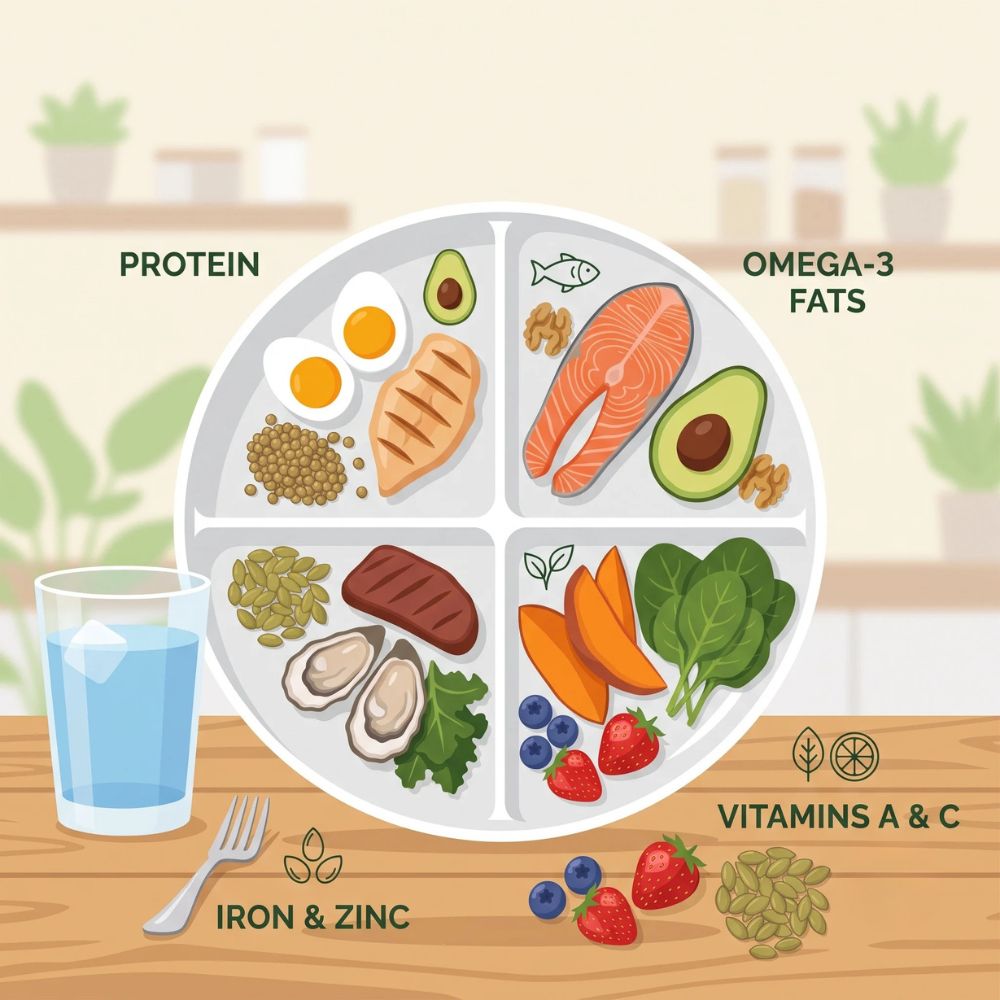
Hair is mainly made of keratin, a protein. Low protein intake can lead to weak strands, slow growth, and diffuse thinning. Include eggs, fish, chicken, milk, curd, paneer, tofu, soy, dal, beans, and chickpeas in your meals. Try to add one protein source to breakfast, lunch, and dinner instead of eating most of it in one meal.
Iron
Iron helps red blood cells carry oxygen to tissues, including hair follicles. Iron deficiency may occur with heavy periods, low iron intake, poor absorption, or certain medical conditions. Symptoms can include tiredness, pale skin, breathlessness, and increased shedding.
Choose lean meat, fish, eggs, lentils, beans, spinach, sesame seeds, and iron-fortified grains. Add amla, guava, citrus fruit, tomatoes, or capsicum to plant-based meals because vitamin C helps the body absorb iron. Tea and coffee taken close to meals may reduce iron absorption.
Zinc
Zinc supports tissue repair and normal follicle function. Meat, seafood, dairy, pumpkin seeds, nuts, chickpeas, and beans provide zinc. High-dose supplements can cause side effects and may interfere with copper absorption, so food should be your first source unless a clinician recommends otherwise.
Vitamin D
Vitamin D is involved in several functions within the skin and hair follicle. Low levels are reported in some hair-loss conditions, but a low test result does not prove that vitamin D caused your shedding. Your doctor can decide whether testing or treatment is appropriate.
Vitamin B12 and folate
Vitamin B12 and folate support red blood cell formation and cell growth. Deficiency can occur in people who avoid animal foods, have digestive absorption problems, or take certain medicines. Include dairy, eggs, fish, meat, fortified foods, leafy greens, beans, and citrus fruit. People following a strict vegan diet may need a reliable B12 supplement under professional guidance.
Healthy fats and other vitamins
Omega-3 fats from fish, walnuts, chia seeds, and flaxseeds support a balanced eating pattern. Vitamin C supports collagen production and iron absorption. Selenium and vitamin A are needed in small amounts, but excessive supplements can be harmful. More is not always better for hair.
What should you eat in a day for healthier hair?
A practical meal pattern may look like this:
- Breakfast: vegetable omelette or paneer with whole-grain toast
- Lunch: dal, roti or rice, vegetables, salad, and curd
- Snack: fruit with nuts or roasted chickpeas
- Dinner: fish, tofu, chicken, or beans with vegetables
- Fluids: water through the day, based on thirst and medical needs
This approach gives your body regular energy and a range of nutrients. It is more useful than relying on a single “hair vitamin” or restrictive plan.
Why detox diets may worsen hair shedding
A short detox diet may remove protein, healthy fats, and essential calories. Juice cleanses and extreme fasting can trigger the same nutritional stress that causes temporary shedding. Your liver and kidneys already process waste through normal body functions. A balanced plan with vegetables, whole grains, pulses, protein, and water supports health without cutting out essential foods.
If you have diabetes or insulin resistance, a best diabetes dietitian in Mumbai can help you manage blood sugar while meeting your protein and micronutrient needs. A detox plan by a dietitian in Mumbai should never leave you weak, hungry, or deficient. Be cautious of any detox diet doctor who promises instant hair regrowth or claims one cleanse can correct every health problem.
When should you consult a professional?
Speak with a dermatologist or dietitian Mumbai professional if shedding continues for more than three months, bald patches appear, or your scalp becomes painful, itchy, or scaly. Also seek care if hair loss occurs with fatigue, unexplained weight change, irregular periods, acne, increased facial hair, or cold intolerance. During an assessment, your clinician may review your recent diet, weight changes, illness, medicines, family history, and menstrual pattern. Depending on your symptoms, tests may include a complete blood count, ferritin, thyroid markers, vitamin B12, or vitamin D.
A dietitian in Mumbai can then adjust your meals to suit your health conditions, food preferences, budget, and routine. A dermatologist can check for hereditary, hormonal, inflammatory, or autoimmune causes that require medical treatment.
Frequently asked questions
It often can when the trigger is corrected, but regrowth may take several months. Hair growth is gradual, so early improvement may appear as reduced shedding rather than immediate thickness.
No. Low protein, zinc, vitamin B12, vitamin D, and inadequate calories may also contribute. Testing is more reliable than guessing from symptoms.
No. True
biotin deficiency is uncommon. High-dose biotin may interfere with some thyroid and heart-related blood tests.
Yes. Dal, beans, soy, tofu, paneer, curd, milk, nuts, and seeds can provide protein when included regularly and in suitable portions.
Arrange an evaluation for sudden shedding, smooth bald patches, scalp inflammation, eyebrow loss, or hair loss that continues despite improved nutrition.
Conclusion
Your meals can influence hair strength and shedding, but nutrition is only one part of the picture. Eat balanced meals with enough protein and iron, avoid crash diets and unverified supplements,
and consult a qualified dietitian or dermatologist for persistent or sudden hair loss. Contact Bombay Hospital Mumbai to schedule a personalized consultation and take the right steps towards healthier hair.