Why Does My Knee Hurt When Climbing Stairs?

Introduction

Knee pain while climbing stairs often occurs because bending the knee increases pressure between the kneecap and thigh bone. The pain may come from kneecap irritation, weak muscles, arthritis, tendon strain, or a meniscus injury. Where you feel the pain and whether it is worse going up or down can provide useful clues. This guide explains the possible causes, steps you can take, and when you should seek medical care.

Why Does Climbing Stairs Trigger Knee Pain?

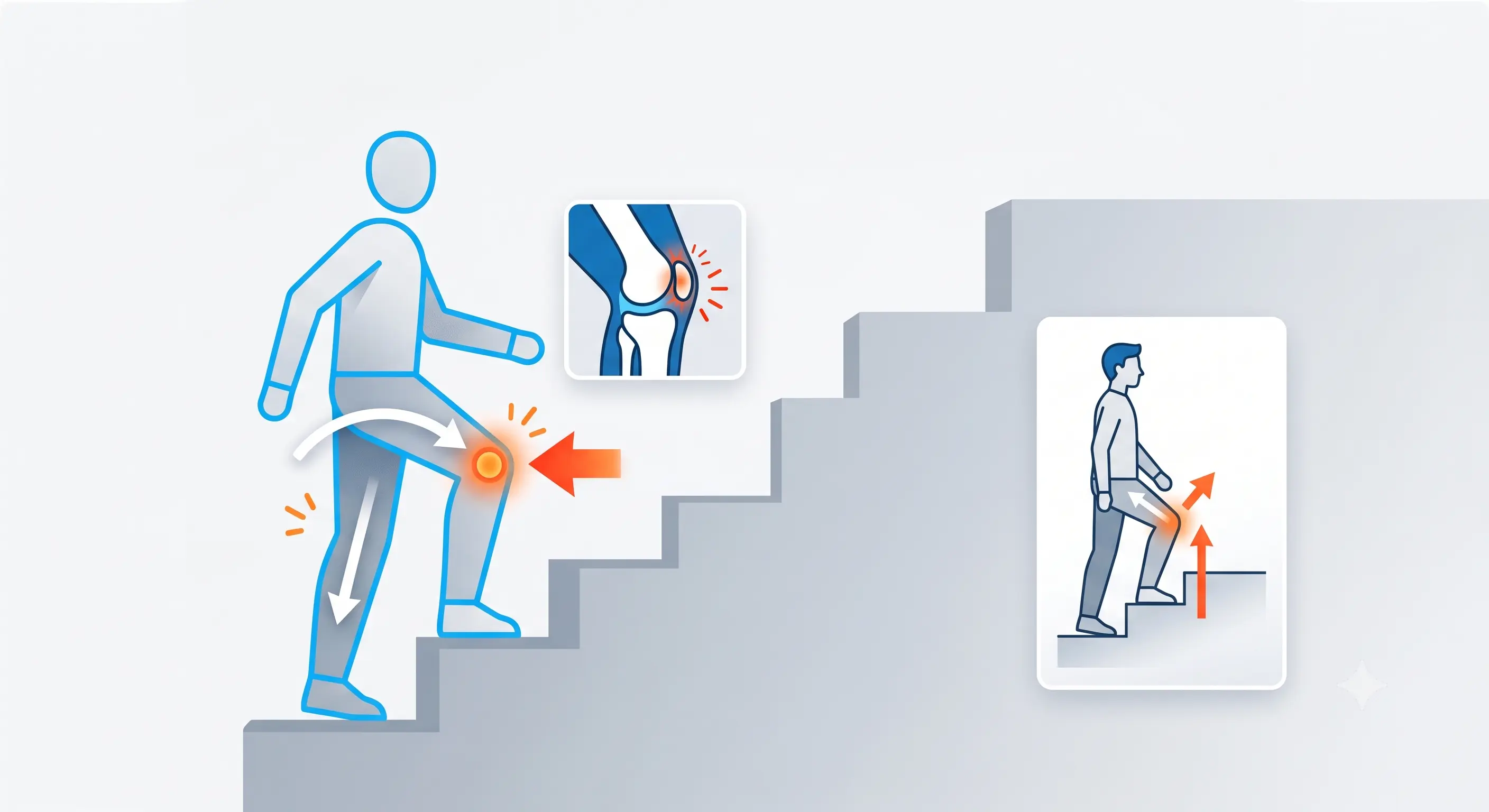
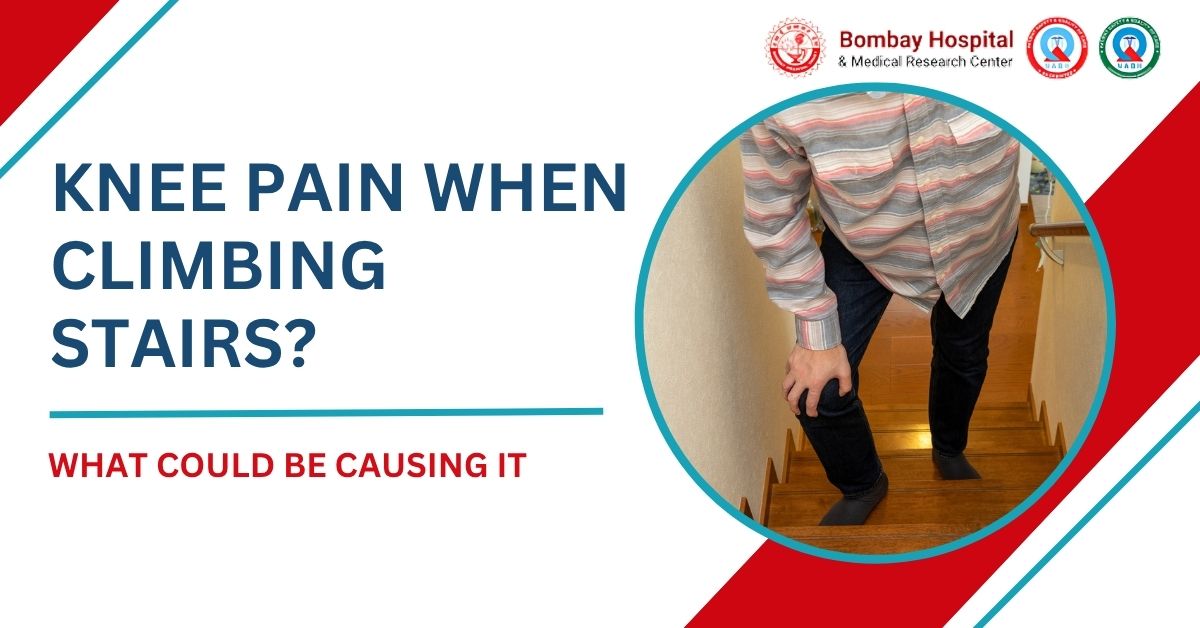
Knee pain while climbing stairs treatment by an orthopedic knee specialist in Mumbai.

Your knee bends under load each time you step up. The quadriceps pull on the kneecap to lift your body. Going down requires these muscles to control your body as it lowers. Pain may develop when the kneecap does not move smoothly, muscles lack strength, or tissues inside the joint become irritated.

Is the Pain Worse Going Up or Down Stairs?

Pain while going upstairs may relate to weak thigh muscles, patellar tendon irritation, or difficulty producing force. Pain while going downstairs often becomes more noticeable with patellofemoral pain because pressure behind the kneecap increases as the knee bends.

Pain in both directions can occur with kneecap problems or arthritis. These patterns offer clues, but they cannot confirm a diagnosis.

Common Causes of Knee Pain on Stairs

Pain pattern Possible cause Other clues
Pain around or behind the kneecap Patellofemoral pain syndrome Worse with squatting, running, or prolonged sitting
Pain below the kneecap Patellar tendinitis Often follows running, jumping, or increased training
Pain along the inner or outer joint line Meniscus injury Swelling, catching, locking, or pain after twisting
Pain with stiffness and reduced movement Knee osteoarthritis Worse after rest or prolonged activity
Gradual pain after changing exercise Overuse or muscle imbalance Tight muscles, weakness, or no clear injury

Patellofemoral pain often causes a dull ache at the front of the knee during stairs, squats, running, or prolonged sitting. Activity changes and therapeutic exercises can often improve it. Osteoarthritis becomes more likely when pain occurs with stiffness, swelling, reduced movement, or grinding. Locking or repeated giving way may suggest a mechanical problem.

What Can You Do at Home?

Temporarily reduce painful stair climbing, deep squats, jumping, and lunges. Gentle walking, swimming, or stationary cycling may help you remain active if symptoms do not increase. Use a handrail and take one step at a time during a flare-up. Apply a wrapped cold pack for 15 to 20 minutes if the knee feels swollen. A physiotherapist can select exercises after assessing your movement.

You can also explore our practical guide to managing knee pain at home with expert tips and exercises.

When Does Knee Pain Need Medical Attention?

Arrange an assessment if pain lasts longer than one or two weeks, keeps returning, or limits walking and daily tasks. Seek prompt medical care if:

  • You cannot place weight on the leg.
  • The knee looks deformed after an injury.
  • Swelling develops soon after a fall or twist.
  • The joint becomes hot and red, especially with fever.
  • The knee locks or repeatedly gives way.
  • Pain or swelling continues to worsen.

An orthopedic surgeon in Mumbai can determine whether the problem involves the kneecap, cartilage, tendon, ligament, or bone.

How Is the Cause Diagnosed and Treated?

The doctor will ask about your pain, activities, past injuries, swelling, and locking. The examination checks tenderness, movement, strength, alignment, walking, and stability. An X-ray may be advised for suspected arthritis or bone changes. MRI can help assess selected meniscus, ligament, tendon, or cartilage injuries. Not every patient needs imaging.

Treatment may include activity changes, physiotherapy, strengthening, weight management, suitable pain relief, a brace, or an injection. Surgery is usually considered for significant structural damage or symptoms that continue despite suitable non-surgical care.

Orthopaedic Consultation at Bombay Hospital Mumbai

Bombay Hospital provides care for joint pain, arthritis, sports injuries, and fractures through its Orthopedic services. Its orthopaedic facilities include imaging support, non-surgical treatment, surgery when required, and physiotherapy.

Patients seeking an orthopedic hospital Mumbai can visit Bombay Hospital at New Marine Lines. An orthopedic surgeon in Mumbai can create a plan based on your diagnosis, health, and activity goals. Searches such as top 10 orthopedic doctor Mumbai, best orthopedic doctor Mumbai, or Ortho doctor mumbai may provide options. Check qualifications, knee-care experience, hospital support, and communication. Choosing an orthopedic hospital Mumbai with diagnostic and rehabilitation facilities can make follow-up easier. The Orthopedic team at Bombay Hospital can assess persistent stair-related pain.

Frequently Asked Questions

Stairs require deeper bending and place more pressure behind the kneecap. Mild irritation or weakness may hurt only during higher-load movement.

Clicking without pain or swelling is often harmless. Painful clicking, locking, swelling, or giving way needs an orthopaedic assessment.

Flat feet can affect leg alignment and kneecap movement. Selected patients may benefit from suitable footwear, exercise, or inserts.

Yes. Physiotherapy may improve strength, flexibility, kneecap control, and movement. Results depend on the cause and regular participation.

Not always. Doctors may use X-rays for suspected arthritis or bone problems and MRI for selected soft-tissue injuries.

Take the Next Step

Knee pain while climbing stairs may result from kneecap stress, weak muscles, arthritis, tendon irritation, or an injury. Notice where it hurts, which direction triggers it, and whether swelling, locking, or instability occurs. If the pain persists or affects your routine, consult an orthopaedic specialist. Early assessment and a focused treatment plan can help you move more comfortably and protect your knee function.

Send us a message

Have any questions? We are ready to help.

List of Consultants

H.R. Jhunjhunwala

Dr. H.R. Jhunjhunwala

BSc., MBBS, D.ORTH, MS ORTH

Orthopaedic Surgeon

M.L. Saraf

Dr. M.L. Saraf

MBBS, MS

Orthopaedic Surgeon

Nilen Shah

Dr. Nilen Shah

MBBS, MS (Orth), D Orth, MCH

Orthopaedic Surgeon

Parag Munshi

Dr. Parag Munshi

MBBS, MS, DNB

Orthopaedic Surgeon

Hemant Bhandari

Dr. Hemant Bhandari

M.S. M.Sc. (Ortho, London)

Orthopaedic Surgeon

Hetal Chiniwala

Dr. Hetal Chiniwala

MS, DNB, D.Ortho

Orthopaedic Surgeon

Sujit N. Kordey

Dr. Sujit N. Kordey

MS, MCh Orth (Liverpool)

Orthopaedic Surgeon

Ashish Agarwal

Dr. Ashish Agarwal

MBBS, MS, DNB

Orthopaedic Surgeon

Girish Dewnany

Dr. Girish Dewnany

MBBS, MS, MCH, FRCS(LON.)

Orthopaedic Surgeon

Neilesh Talwalkar

Dr. Neilesh Talwalkar

MBBS, MS, DNB

Orthopaedic Surgeon

Pradeep Nemade

Dr. Pradeep Nemade

MBBS, MS, DNB

Orthopaedic Surgeon

Aditya Khemka

Dr. Aditya Khemka

MBBS, MS

Orthopaedic Surgeon

Atul Bhaskar

Dr. Atul Bhaskar

MS, DNB, MCH

Orthopaedic Surgeon

Muddassir Javed

Dr. Muddassir Javed

MBBS, MS Orthopaedic

Orthopaedic Surgeon

Book Appointment Book Appointment