Introduction
Keeping your bones and joints strong becomes more important as you cross the age of 40. At this stage,
changes in bone density and joint flexibility can affect how you move, work, and enjoy daily life. Many
people start noticing stiffness, discomfort, or reduced mobility. This makes it vital to adopt habits
that support long‑term musculoskeletal health. In this blog, you will learn effective ways to protect
your bones and joints, practical lifestyle changes you can make, and when to consult specialists in orthopaedics for personalised care.
Understanding Bone and Joint Health After 40
As you grow older, the balance between bone loss and bone formation shifts. After 40, especially
in
women after menopause, bone density typically declines faster. Joints also experience wear
because the
cartilage cushioning the bones thins over time. If these changes go unnoticed, they may lead to
conditions such as osteoarthritis or fractures.
Recognising these early shifts empowers you to take action. With the right habits and
professional
guidance, you can protect your mobility and maintain strength well into later years.
1. Follow a Balanced Diet for Strong Bones
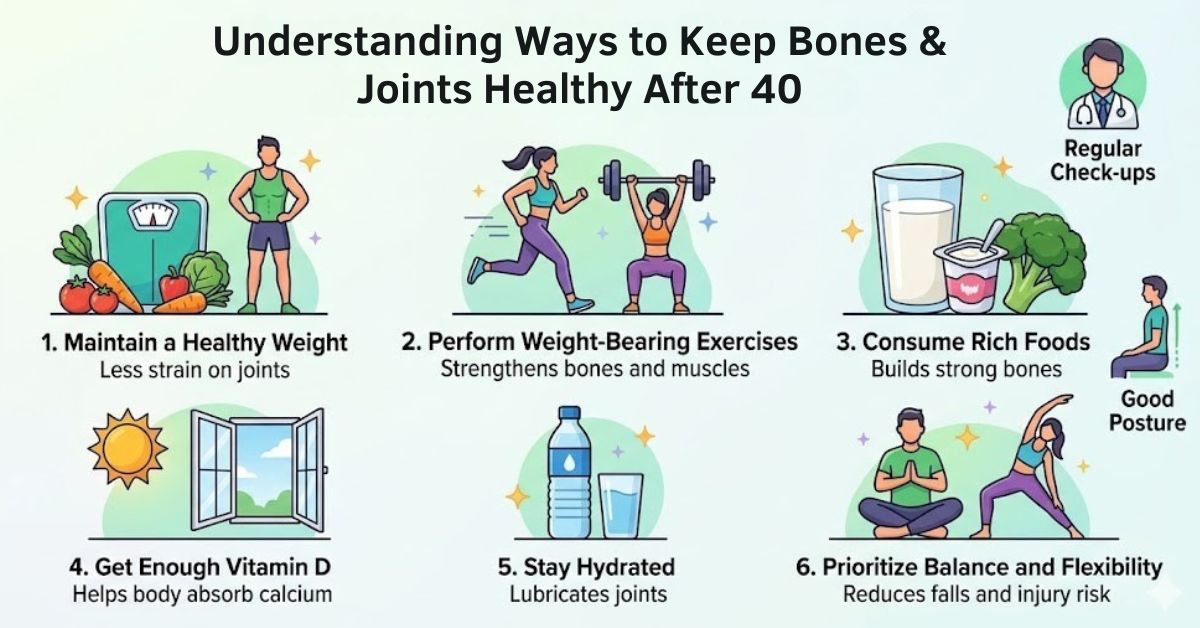
Your diet plays a central role in bone health. Nutrients like calcium and vitamin D are
essential because they support the structure and strength of bones. Lack of them can lead to
brittle bones and increase the risk of fractures.
Important nutrients include:
- Calcium: Found in milk, yogurt, cheese, tofu, and green leafy vegetables.
- Vitamin D: Crucial for calcium absorption; get it from sunlight and
fortified foods.
- Protein: Needed for bone repair and muscle strength.
Try simple habits like including a serving of dairy or fortified alternatives each day. Don’t
skip sunlight exposure for at least 10-15 minutes daily; this naturally improves vitamin D
levels.
2. Exercise Regularly to Maintain Bone Density and Joint
Flexibility
Physical activity is one of the most effective ways to protect your bones and joints. Activities
that put gentle stress on your bones encourage them to stay strong. At the same time, movement
helps keep joints flexible and muscles supportive.
Effective exercises for after 40:
- Weight‑bearing exercises: Walking, climbing stairs, or light jogging.
- Strength training: Body‑weight exercises or light resistance training.
- Joint mobility routines: Simple stretches or yoga sequences.
A combination of these routines can help you preserve bone density and reduce stiffness. Always
start gradually and stop if you feel sharp pain. If you need guidance, a specialist in
orthopaedics can help design a plan that suits your needs.
3. Maintain a Healthy Weight
Carrying extra weight places added stress on your joints, especially in the knees, hips, and
lower back. Over time, this can wear down cartilage, lead to joint discomfort, and speed up
degenerative changes.
Maintaining a healthy weight doesn’t mean extreme dieting. It means eating balanced meals,
monitoring portion sizes, and staying active. Even a modest weight reduction can make a
measurable difference in joint comfort and overall movement ease.
4. Avoid Harmful Habits That Weaken Bone
Some lifestyle choices directly weaken bone and joint health. Smoking, for instance, reduces
bone formation and slows healing. Excessive alcohol intake interferes with nutrient absorption
and bone metabolism. If you want to protect your long‑term bone strength, addressing these
habits is a powerful step.
5. Get Regular Health Screenings
Even if you feel fine, regular check‑ups help detect early changes in bone density or joint
function. A simple bone mineral density test (DEXA scan) can identify bone loss before symptoms
appear. Early diagnosis allows for timely lifestyle adjustments or medical therapy.
Your doctor may also recommend periodic blood work to check levels of calcium, vitamin D, and
markers of bone metabolism. This helps personalise your prevention plan.
6. Know When to Seek Professional Care
Sometimes lifestyle changes alone aren’t enough. If you have persistent joint pain, reduced
range of motion, or balance concerns, it’s time to speak with a specialist.
In Mumbai, one of the trusted names in musculoskeletal care is Bombay Hospital Mumbai. The
centre provides comprehensive diagnostic and treatment services in orthopaedics, helping
patients address arthritis, fractures, joint degeneration, and more.
When choosing care, look for trained experts who focus on evidence‑based treatment. Consulting
with the best orthopedic surgeon in Mumbai ensures you
receive appropriate evaluation, options
for conservative care, and surgical solutions if needed.
At Bombay Hospital, orthopaedic specialists work alongside rheumatologists and physiotherapists
to create personalised plans. Early professional input can significantly improve long‑term
outcomes and reduce the risk of complications.
Frequently Asked Questions
Most adults over 40 benefit from about 1000–1200 mg of calcium daily, depending on age
and medical history. Your doctor can recommend the exact amount after a health
assessment.
Yes. Regular, appropriate exercise improves joint lubrication and strengthens muscles
that support joints, reducing pain and slowing degeneration.
Not always. Joint pain can come from overuse, muscle imbalance, or injury. Persistent or
worsening pain warrants medical evaluation.
Supplements can help if your diet or sun exposure is insufficient. Discuss with your
doctor before starting supplements to ensure they match your needs.
Surgery is typically considered when pain limits daily functioning, conservative care
fails, or imaging shows advanced joint damage. A thorough evaluation with an orthopaedic
surgeon can determine the best path.
Conclusion
Protecting your bones and joints after 40 involves sensible nutrition, regular exercise, healthy
habits, and timely professional support. Paying attention to your body, tracking changes, and
partnering with knowledgeable specialists can help you maintain strength and mobility for years to
come. If questions arise or concerns grow, consulting the
expert orthopedic
surgeon in Mumbai at
Bombay Hospital Mumbai can give you clarity, confidence, and a personalized care plan.