Neurological disorders can affect anyone, regardless of age, and they can often be the silent cause of
various problems in everyday life. Early detection is key to managing these disorders effectively, and
the sooner you spot potential signs, the better the outcome. In this blog, we’ll explore the most
common
neurological disorders, their early warning signs, and the steps you should take if you or a
loved one
begins to notice these symptoms.
Why Early Detection of Neurological Disorders Matters
Neurological conditions such as Alzheimer’s, Parkinson’s, and multiple sclerosis can affect your
brain, nerves, and spinal cord. Left unchecked, these conditions can progress, leading to
permanent damage and reducing your quality of life. The good news? Catching them early can help
slow their progression and give you more options for managing the symptoms.
Recognizing the signs early can make all the difference, enabling timely intervention and better
treatment outcomes. If you notice any of these symptoms, consulting with a neurologist
in Mumbai can provide you with the expertise needed for a proper diagnosis and effective
treatment plan.
In this blog, we will discuss:
- Common warning signs of neurological disorders
- What actions you should take
- When to seek professional help
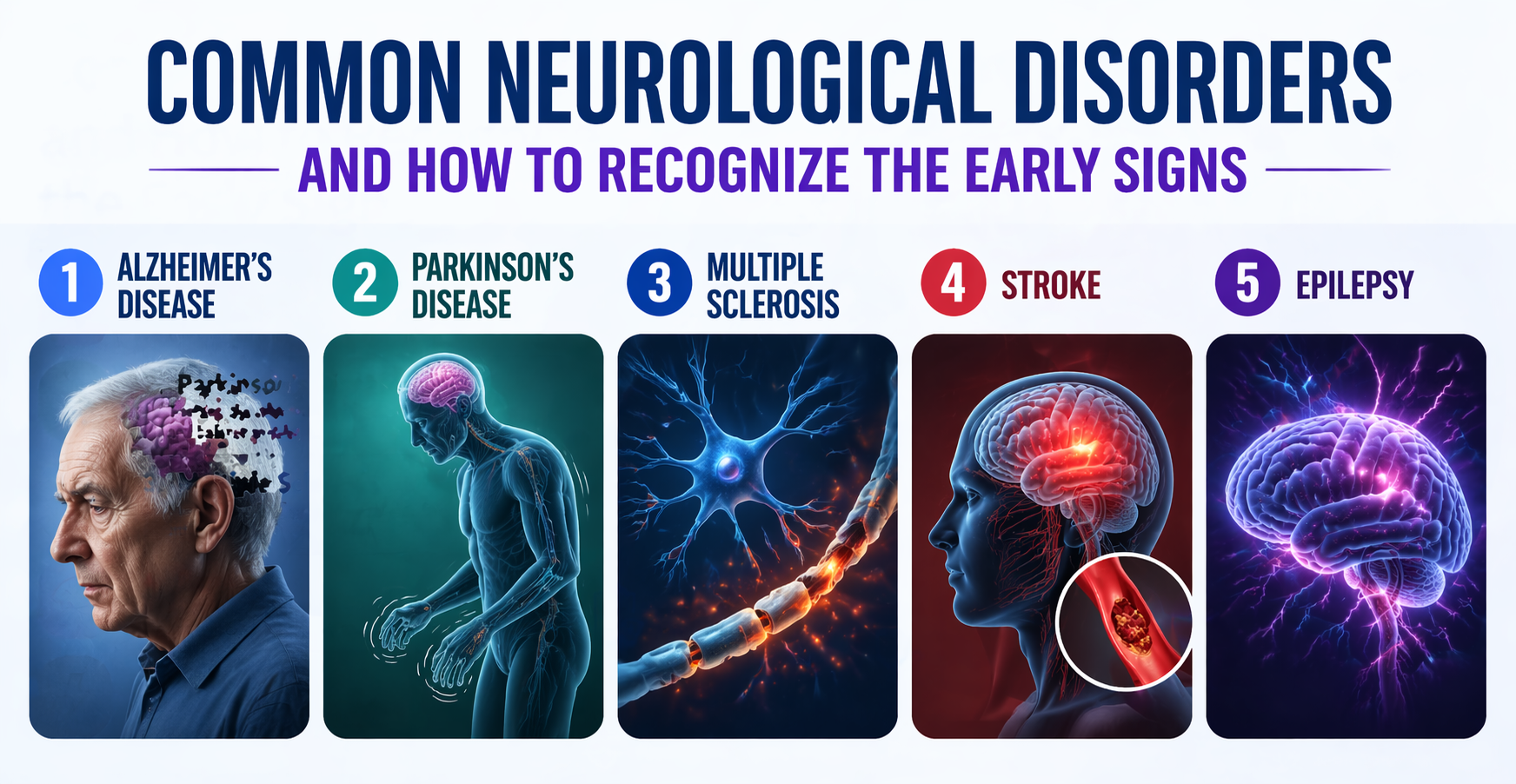
Common Neurological Disorders and How to Recognize the Early
Signs
1. Alzheimer’s Disease: More Than Just
Forgetfulness
Memory loss is one of the most common signs of Alzheimer’s disease, but it’s more than
just occasionally forgetting where you put your keys. Early symptoms can include:
- Memory lapses: Forgetting recently learned information, appointments, or names.
- Difficulty with daily tasks: Struggling with tasks you’ve done regularly, like
managing finances or driving.
- Disorientation: Getting confused about dates, places, and even the people around
you.
If these signs persist and interfere with daily activities, it’s time to consult with
a
neurologist. Early intervention can significantly improve the management of
symptoms.
2. Parkinson’s Disease: Beyond the Tremors
Parkinson’s disease affects your movement and can develop slowly over time. Common early
signs include:
- Tremors: Small, involuntary shaking or trembling in the hands or fingers.
- Slowness of movement: Difficulty in performing simple tasks, like standing up from a
chair or walking.
- Changes in handwriting: Often the writing becomes smaller and harder to read.
If you notice these symptoms, seek medical advice to begin treatment early. Managing
Parkinson’s through medication and physical therapy can greatly improve quality of life.
3. Multiple Sclerosis: A Disruption in
Communication
Multiple sclerosis (MS) is an autoimmune condition that disrupts communication between
the brain and the body. Early warning signs include:
- Numbness or weakness: Usually in one limb, or one side of the body.
- Vision problems: Blurred or double vision that comes and goes.
- Fatigue: Unexplained tiredness that doesn’t go away with rest.
Early diagnosis of the best
Neurologist allows for treatments that can
slow its progression and help manage
symptoms.
4. Stroke: Time is of the Essence
A stroke happens when blood flow to the brain is interrupted, and every second counts.
Early symptoms of a stroke include:
- Sudden numbness or weakness: Especially in the face, arm, or leg on one side of the
body.
- Confusion or trouble speaking: Difficulty understanding speech or forming sentences.
- Vision issues: Blurred or blackened vision in one or both eyes.
If you or someone else shows signs of a stroke, get medical help immediately. Early
intervention can significantly reduce the damage caused by a stroke.
5. Epilepsy: Recognizing the First Seizure
Epilepsy is characterized by recurrent seizures that disrupt normal brain activity. If
you experience:
- Brief episodes of confusion: You might blank out for a few seconds or have trouble
understanding where you are.
- Involuntary movements: Jerking movements of the arms or legs.
- Post-seizure confusion: Disorientation or difficulty recalling what happened.
If you or someone you know has a seizure, seek medical attention to get a proper
diagnosis and begin managing the condition effectively.
What You Can Do if You Spot Early Symptoms
Seek Professional Help
The first step is always to consult a doctor if you notice any of the above symptoms. A
healthcare provider, especially a neurologist, will conduct thorough tests to confirm
or rule out a neurological condition.
Track Symptoms
If you're experiencing symptoms or are concerned about someone else, start keeping track
of them. Note the frequency, duration, and severity of symptoms. This will help your
doctor make a more accurate diagnosis.
Be Proactive with Lifestyle Changes
While early intervention is crucial, lifestyle changes can also help in managing
neurological conditions:
- Exercise regularly: Staying active can improve brain health and
reduce the severity of symptoms in many neurological disorders.
- Eat a balanced diet: A healthy diet rich in antioxidants and
healthy fats can support brain function.
- Get adequate sleep: Poor sleep can exacerbate neurological
symptoms, so prioritize good sleep hygiene.
Know When to Call for Help
If you or someone you know is experiencing a stroke, severe seizure, or another acute
neurological event, don’t wait for the symptoms to pass. Call emergency services
immediately. Quick medical intervention can make a huge difference in recovery.
Bombay Hospital and Medical Research Centre is at the
forefront of neurological care.
The hospital has a long-standing reputation for excellence in treating a range of
neurological disorders, from stroke to neurodegenerative diseases.
Introduction for Consultation
The city has a long history of advanced healthcare services. Located in South Mumbai, the Bombay
Hospital and Medical Research Centre stands as one of the key medical institutions in the
country.
Today, it offers expertise across multiple specialties including Cardiology, Cardiovascular Thoracic Surgery, Endocrinology, Gastroentrology, Nephrology, Neurology, Neurosurgery, Paediatric Surgery, Plastic Surgery,
Pulmonary Medicine, Rheumatology, Speciality, Urology, and Oncology.
Patients can visit Bombay
Hospital in Mumbai. International patients can connect via marketing@bombayhospital.com.
Bombay Hospital
12, Vitthaldas Thackersey Marg, New Marine Lines,
Marine Lines, Mumbai, Maharashtra 400020.
FAQs
Memory problems, like forgetting recently learned information, are often the first
signs of Alzheimer’s. If memory loss affects daily life, it’s time to consult a
neurologist.
There is no cure for Parkinson’s disease, but treatment options, including medications
and physical therapy, can help manage symptoms and improve quality of life.
The signs of a stroke include sudden numbness or weakness, especially on one side of the
body, confusion, and difficulty speaking. Seek emergency medical help immediately if
you notice these symptoms.
Currently, there’s no known way to prevent multiple sclerosis, but early diagnosis and
treatment can help manage the disease and reduce its impact on your life.
Stay calm, clear the area to prevent injury, and call emergency services immediately.
Do not attempt to restrain the person or put anything in their mouth.
Take Action Today
If you notice any early warning signs of a neurological disorder, it’s essential to seek help. Early
diagnosis and treatment can significantly improve outcomes and help manage symptoms more
effectively. Don’t wait for the condition to worsen—take control of your health today.
For those in Mumbai, Bombay Hospital offers expert care in neurology
and neurosurgery. Whether you're concerned about memory loss,
movement issues, or other neurological symptoms, the team at Bombay Hospital is here to help.
Schedule your consultation now and take the first step toward a healthier, more informed future.