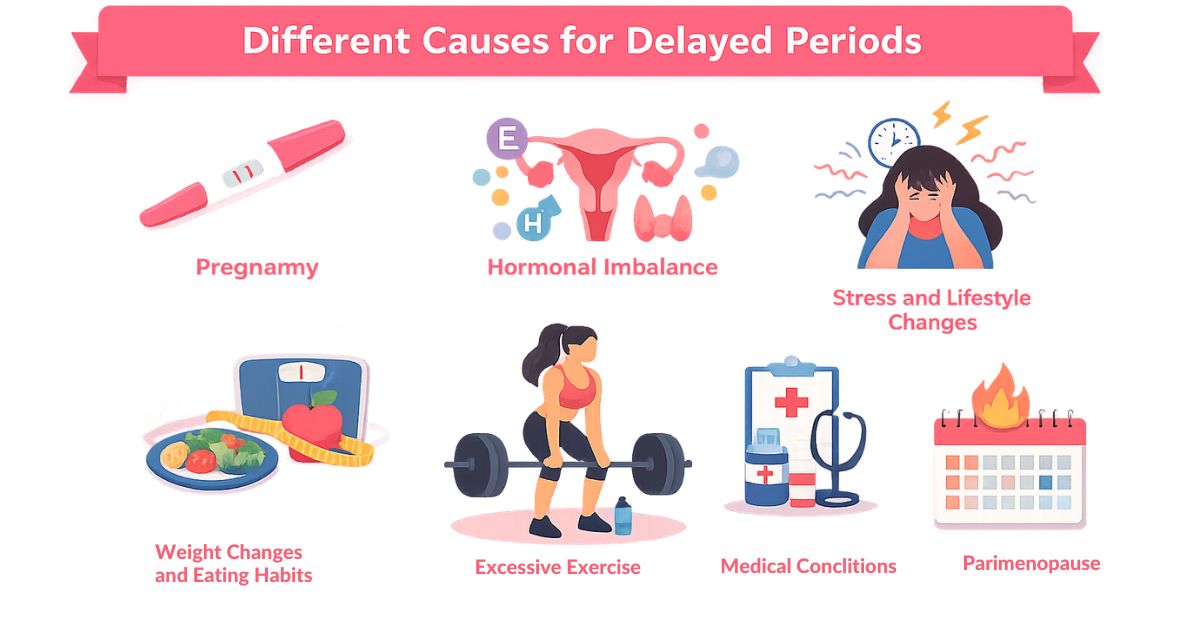
A delayed period can be stressful, especially when you are unsure why it is happening. While pregnancy
is often the first thought, there are many other reasons your cycle may change. Your menstrual cycle
reflects your overall health, so even small disruptions can affect it. Understanding the possible causes
helps you respond calmly and take the right steps. If you are experiencing frequent delays, seeking
expert gynaecology treatment in
Mumbai can help identify the underlying issue early.
This blog explains the common reasons for delayed periods, what they mean, and when you should seek
help.
1. Pregnancy
Pregnancy is one of the most common reasons for a missed or delayed period. If you are sexually
active and your period is late, this should be your first consideration.
- A fertilized egg attaches to the uterus lining and stops menstruation.
- Early signs include nausea, fatigue, and breast tenderness.
- A home pregnancy test can give a quick answer.
- Blood tests and ultrasound confirm the diagnosis.
Even if you use protection, pregnancy can still happen. If your period is late by more than a
week, testing is a good first step. If the result is unclear or you need guidance, consulting a gynaecologist
in Mumbai can help you understand the next steps and ensure proper care.
2. Hormonal Imbalance
Your menstrual cycle depends on a balance of hormones like estrogen and progesterone. Any
disruption can delay ovulation and your period.
- Conditions like Polycystic Ovary Syndrome (PCOS) often cause irregular cycles.
- Thyroid disorders can slow or speed up your cycle.
- Sudden weight changes affect hormone levels.
- Certain medications may interfere with hormone balance.
If your periods are frequently irregular, hormonal imbalance may be the reason. Blood tests help
identify the issue.
3. Stress and Lifestyle Changes
Stress does more than affect your mood. It directly impacts your menstrual cycle.
- High stress levels increase cortisol, which disrupts ovulation.
- Travel, poor sleep, or changes in routine can delay periods.
- Emotional stress from work or personal life plays a role.
Ask yourself: Have you been under pressure lately? Even short-term stress can delay your cycle
by a few days or weeks.
4. Weight Changes and Eating Habits
Your body needs a certain amount of fat and nutrients to maintain regular periods.
- Rapid weight loss can stop ovulation.
- Obesity may lead to irregular hormone production.
- Eating disorders like Anorexia nervosa affect menstrual health.
Maintaining a stable weight supports a regular cycle. Sudden changes often lead to delays.
5. Excessive Exercise
Regular exercise is good, but too much can affect your periods.
- Intense workouts reduce estrogen levels.
- Athletes often experience delayed or missed periods.
- Your body may prioritize energy for vital functions over reproduction.
If you have recently increased your workout intensity, this could be the cause.
6. Medical Conditions
Certain health conditions can interfere with your menstrual cycle.
- Thyroid disorders such as Hypothyroidism or hyperthyroidism
- Chronic illnesses like diabetes
- Uterine conditions such as fibroids or endometriosis
- Premature ovarian insufficiency
These conditions require medical evaluation. Delayed periods may be one of the early signs.
7. Birth Control and Medications
Hormonal contraceptives can change your cycle.
- Birth control pills may make periods lighter or irregular.
- Stopping pills can delay your next period.
- Emergency contraception may shift your cycle.
- Some medications affect hormone levels.
If you recently started or stopped birth control, a delay is common and often temporary.
8. Perimenopause
If you are in your late 30s or 40s, hormonal changes may signal the start of perimenopause.
- Periods may become irregular or delayed.
- You may notice hot flashes or mood changes.
- Ovulation becomes less predictable.
This is a natural phase, but guidance from a doctor helps manage symptoms.
Introduction for Consultation
Bombay Hospital and Medical Research Centre offers a wide range of specialties including
Cardiology, Cardiovascular Thoracic Surgery, Endocrinology, Gastroenterology, Nephrology,
Neurology, Neurosurgery, Paediatric Surgery, Plastic Surgery, Pulmonary Medicine, Rheumatology,
Speciality services, Urology, and Oncology.
You can book an
appointment by contacting the hospital
directly through phone or email. Early
consultation helps identify the exact cause of delayed periods and ensures timely care.
Bombay Hospital
12, Vitthaldas Thackersey Marg, New Marine Lines,
Marine Lines, Mumbai, Maharashtra 400020.
FAQs
A delay of up to 5–7 days can be normal due to stress or lifestyle changes. If it goes
beyond that, you should check for underlying causes.
Yes. Stress affects hormones that control ovulation. Even short-term stress can shift
your cycle.
Not always. Hormonal imbalance, stress, or illness may cause delays. If it continues,
consult a doctor.
Yes. Both underactive and overactive thyroid conditions affect menstrual cycles.
If your period is delayed for more than two weeks, happens frequently, or comes with
other symptoms, you should seek medical advice.
Conclusion
Delayed periods are common and often linked to everyday factors like stress, weight changes, or
hormonal shifts. At times, they may signal an underlying medical issue that needs attention. Paying
attention to your body and tracking your cycle helps you notice patterns early. If delays happen
often or feel unusual, getting a medical evaluation gives clarity and peace of mind. Taking timely
action supports both your reproductive health and overall well-being.