Introduction
Blood cancer does more than affect your blood cells. It can weaken the body's natural defense system and
make it difficult to fight infections. Many people with blood cancer experience repeated infections,
slow wound healing, persistent fever, or unusual tiredness because their immune system is no longer
working as it should. Understanding this connection helps patients and their families recognize symptoms
early and seek timely treatment.
Your immune system depends on healthy blood cells to protect you from bacteria, viruses, fungi, and
other harmful organisms. Blood cancers interfere with this process by affecting the bone marrow, blood
cells, and lymphatic system.
This blog explains how blood cancer weakens immunity, why infections become more common, ways to protect
yourself during treatment,
and when to consult an experienced Haemato
oncologist in Mumbai.
How Does the Immune System Normally Protect Your Body?
The immune system is your body's natural defense against disease. It is made up of the bone
marrow, white blood cells, lymph nodes, spleen, antibodies, and lymphatic vessels. These
components work together to identify harmful germs and destroy them before they cause illness.
Healthy bone marrow continuously produces:
- White blood cells that fight infections
- Red blood cells that carry oxygen
- Platelets that help stop bleeding
Among white blood cells, neutrophils, lymphocytes, B cells, and T cells play different roles in
protecting your body.
- Neutrophils attack bacteria and fungi.
- B cells produce antibodies that recognize harmful organisms.
- T cells destroy infected or abnormal cells.
- Plasma cells produce antibodies that provide long-term protection.
When blood cancer develops, this balanced system begins to break down.
Patients receiving care through Haemato oncology services are
often evaluated not only for cancer but also for changes in immune function because immunity
plays a major role in recovery and treatment success.
How Blood Cancer Weakens the Immune System
Blood cancers develop inside the blood, bone marrow, or lymphatic system. Unlike many
solid tumors, these cancers directly affect the cells responsible for protecting your
body.
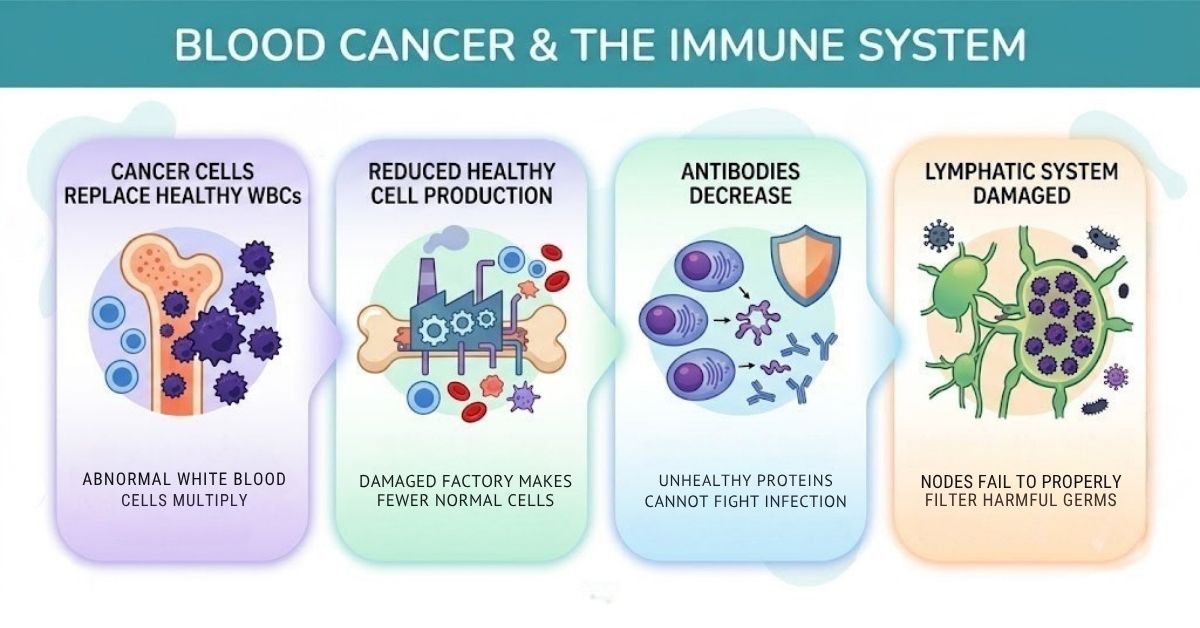
1. Abnormal White Blood Cells Replace Healthy
Ones
In leukemia, cancer cells multiply rapidly inside the bone marrow. These abnormal cells
crowd out healthy white blood cells. Although blood tests may show a high white blood
cell count, many of these cells cannot fight infection properly.
As healthy immune cells decrease, your body becomes more vulnerable to bacteria,
viruses, and fungal infections.
2. Bone Marrow Cannot Produce Enough Healthy Blood
Cells
Bone marrow acts like a factory that produces blood cells every day.
Blood cancer damages this factory by filling it with abnormal cells. As a result, the
production of healthy white blood cells, red blood cells, and platelets slows down.
This can lead to:
- Frequent infections
- Fatigue due to anemia
- Easy bruising
- Bleeding gums
- Slow healing
This is one of the main reasons why early diagnosis and blood cancer treatment in Mumbai
can improve outcomes before the immune system becomes severely compromised.
3. Antibody Production Falls
Multiple myeloma affects plasma cells, which normally produce
antibodies. Instead of producing healthy antibodies, cancerous plasma cells create
abnormal proteins that cannot protect the body against infections.
Patients may experience repeated chest infections, urinary tract infections, sinus
infections, or pneumonia because their immune system struggles to recognize harmful
organisms.
4. The Lymphatic System Stops Working
Properly
Lymphoma develops in lymphocytes and lymph nodes, which are important parts of the
immune system. When lymphoma spreads through lymph nodes, these structures become less
effective at filtering harmful organisms.
The body's ability to mount a normal immune response gradually decreases, increasing the
risk of infections. Different blood cancers affect immunity in different ways, but all
of them reduce the body's ability to defend itself.
Why Chemotherapy Can Further Reduce Immunity
Many people believe that only blood cancer weakens the immune system. The treatment itself can
also reduce immunity for a short period.
Chemotherapy destroys rapidly dividing cancer cells. At the same time, it also affects healthy
cells inside the bone marrow.
This often leads to neutropenia, a condition in which neutrophil levels become very low.
Neutrophils are one of the body's first lines of defense against bacterial infections.
When neutrophil levels drop:
- Even a minor infection can become serious.
- Fever may be the only warning sign.
- Hospital admission may be required.
- Antibiotics may need to be started immediately.
This is why doctors carefully monitor blood counts throughout treatment.
Patients receiving blood cancer treatment in Mumbai undergo regular Complete Blood Count (CBC)
tests to assess white blood cell levels and detect infection risks before complications develop.
Treatment plans are personalized by an experienced Haemato oncologist in Mumbai, who balances
effective cancer treatment with measures to protect the immune system.
Which Blood Cancers Affect Immunity the Most?
Although every blood cancer influences immunity, each does so differently.
Leukemia
- Replaces healthy white blood cells
- Weakens infection-fighting ability
- Reduces healthy blood cell production
Lymphoma
- Damages lymph nodes and lymphocytes
- Reduces immune response
- Increases susceptibility to viral and bacterial infections
Multiple Myeloma
- Reduces healthy antibody production
- Causes repeated respiratory infections
- Increases the risk of kidney complications and bone disease
Recognizing these differences helps doctors select the most appropriate treatment approach based
on the type of blood cancer and the patient's overall health.
Signs Your Immune System May Be Weak
Many people ignore early warning signs because they resemble common illnesses.
Watch for symptoms such as:
- Repeated fever
- Frequent cough or chest infections
- Mouth ulcers
- Slow healing wounds
- Persistent fatigue
- Night sweats
- Swollen lymph nodes
- Unexplained weight loss
- Recurrent urinary infections
- Skin infections
If these symptoms continue despite routine treatment, consult an experienced oncologist or cancer specialist in
Mumbai for a detailed evaluation.
A Complete Blood Count, peripheral smear, bone marrow biopsy, flow cytometry, and molecular
testing may be recommended to determine the underlying cause.
Can the Immune System Recover After Blood Cancer Treatment?
The answer is yes for many patients.
Recovery depends on several factors, including:
- Type of blood cancer
- Stage of disease
- Type of treatment received
- Age
- Overall health
- Bone marrow recovery
As treatment controls cancer, healthy bone marrow gradually begins producing normal blood cells
again. Some patients recover within weeks, while others may take several months after
chemotherapy or stem cell transplantation.
Doctors continue monitoring blood counts even after treatment because rebuilding immunity is an
important part of long-term recovery. One important aspect of cancer care is medical
oncology, where specialists use chemotherapy, targeted therapy, immunotherapy, and other
medicines to treat blood cancers while closely monitoring immune health throughout treatment.
How to Protect Yourself from Infections During Blood Cancer
Treatment
Although you cannot eliminate the risk of infection completely, you can take simple steps to
reduce it. These habits become even more important while receiving treatment because your immune
system may be temporarily weaker.
Follow these practical measures:
- Wash your hands with soap and water regularly.
- Avoid close contact with people who have a cold, flu, or other infections.
- Eat freshly cooked, nutritious food and avoid undercooked meat or unpasteurized dairy
products.
- Drink enough water to stay hydrated.
- Get adequate sleep every night.
- Maintain good oral hygiene to reduce the risk of mouth infections.
- Keep cuts and wounds clean until they heal.
- Follow your doctor's advice about recommended vaccinations.
- Never ignore a fever, even if it seems mild.
Early treatment of infections can prevent serious complications. Regular follow-up appointments
also allow doctors to monitor your recovery and adjust treatment whenever needed.
Why Early Diagnosis Can Improve Treatment Outcomes
Blood cancer often begins with symptoms that resemble common illnesses. Because of this, many
patients delay seeking medical attention.
Early diagnosis offers several advantages:
- Treatment can begin before the immune system becomes severely weakened.
- The risk of serious infections may be reduced.
- Doctors have more treatment options available.
- Recovery and quality of life often improve with timely care.
If you experience persistent fever, repeated infections, swollen lymph nodes, unusual bruising,
or ongoing fatigue, do not ignore these symptoms. Consulting a qualified oncologist Mumbai early
can make a meaningful difference in your treatment journey.
Consult a Haemato Oncology Specialist at Bombay Hospital
Mumbai
Blood cancer requires timely diagnosis, careful monitoring, and a treatment plan tailored to
each patient. At Bombay Hospital Mumbai,
patients receive comprehensive care from specialists experienced in Haemato oncology, supported
by advanced diagnostic facilities and a multidisciplinary team.
Whether you need an initial evaluation, a second opinion, or ongoing blood cancer treatment,
choosing an established oncology hospital Mumbai gives you access to modern investigations,
personalized treatment, supportive care, and long-term follow-up. If you are looking for an
experienced cancer doctor in Mumbai, early consultation can help you understand your diagnosis and begin
appropriate treatment without unnecessary delay.
Frequently Asked Questions
Blood cancer affects the production and function of healthy white blood cells, making it
harder for the body to fight bacteria, viruses, and fungi. Some treatments can
temporarily reduce immunity as well.
Yes. Many patients gradually regain normal immune function once treatment controls the
cancer and healthy bone marrow starts producing blood cells again. Recovery time varies
depending on the type of blood cancer and treatment received.
Leukemia, lymphoma, and multiple myeloma all weaken immunity, but they do so in
different ways. Your doctor can explain how your specific diagnosis affects your immune
system.
Repeated fever, frequent infections, slow-healing wounds, persistent fatigue, mouth
ulcers, swollen lymph nodes, and unexplained weight loss may indicate reduced immunity
and should be evaluated promptly.
Patients can
consult an experienced Haemato
oncologist at Bombay Hospital Mumbai for diagnosis, advanced investigations, &
comprehensive treatment. If you are searching online for the trusted oncologist in
Mumbai or top 10 oncologist Mumbai, choose a specialist based on expertise, experience,
and access to comprehensive cancer care rather than rankings alone.
Conclusion
Your immune system plays a central role in protecting you from infections every day. Blood cancer
disrupts this protection by affecting healthy blood cells, bone marrow, and the lymphatic system.
The disease itself, along with treatments such as chemotherapy, can increase your risk of
infections, making regular monitoring and timely medical care essential.
Recognizing early symptoms, understanding how blood cancer affects immunity, and following your
treatment plan can improve both safety and recovery. If you or a loved one experiences persistent
infections, unexplained fatigue, swollen lymph nodes, or other concerning symptoms, Early diagnosis
and appropriate treatment at a trusted oncology hospital Mumbai can help protect your immune system
and improve long-term outcomes.