Living with Parkinson's disease can change the way you work, communicate, and manage daily
responsibilities. You may notice slower typing, stiffness during meetings, hand tremors while writing,
or fatigue before the workday ends. These changes can feel stressful when you are trying to maintain
your career, income, and independence.
Many people continue working for years after a Parkinson’s diagnosis. With proper Neurology support, the
key is understanding how symptoms affect your routine and making practical adjustments early. Small
changes in work habits, medication timing, and workplace support can help you stay productive without
exhausting yourself.
This guide explains how Parkinson’s affects work performance, ways to manage office fatigue, workplace
adjustments that help, when to speak with your employer, and how medical support can improve your
quality of life.
How Parkinson’s Disease Can Affect Your Work Performance
Parkinson’s disease affects movement, coordination, energy levels, and sometimes
concentration.
Symptoms often develop gradually, which means work-related challenges may appear slowly
over
time. Seeking guidance from an experienced
neurologist in Mumbai can help
patients
manage symptoms more effectively and maintain their daily routine and work productivity.
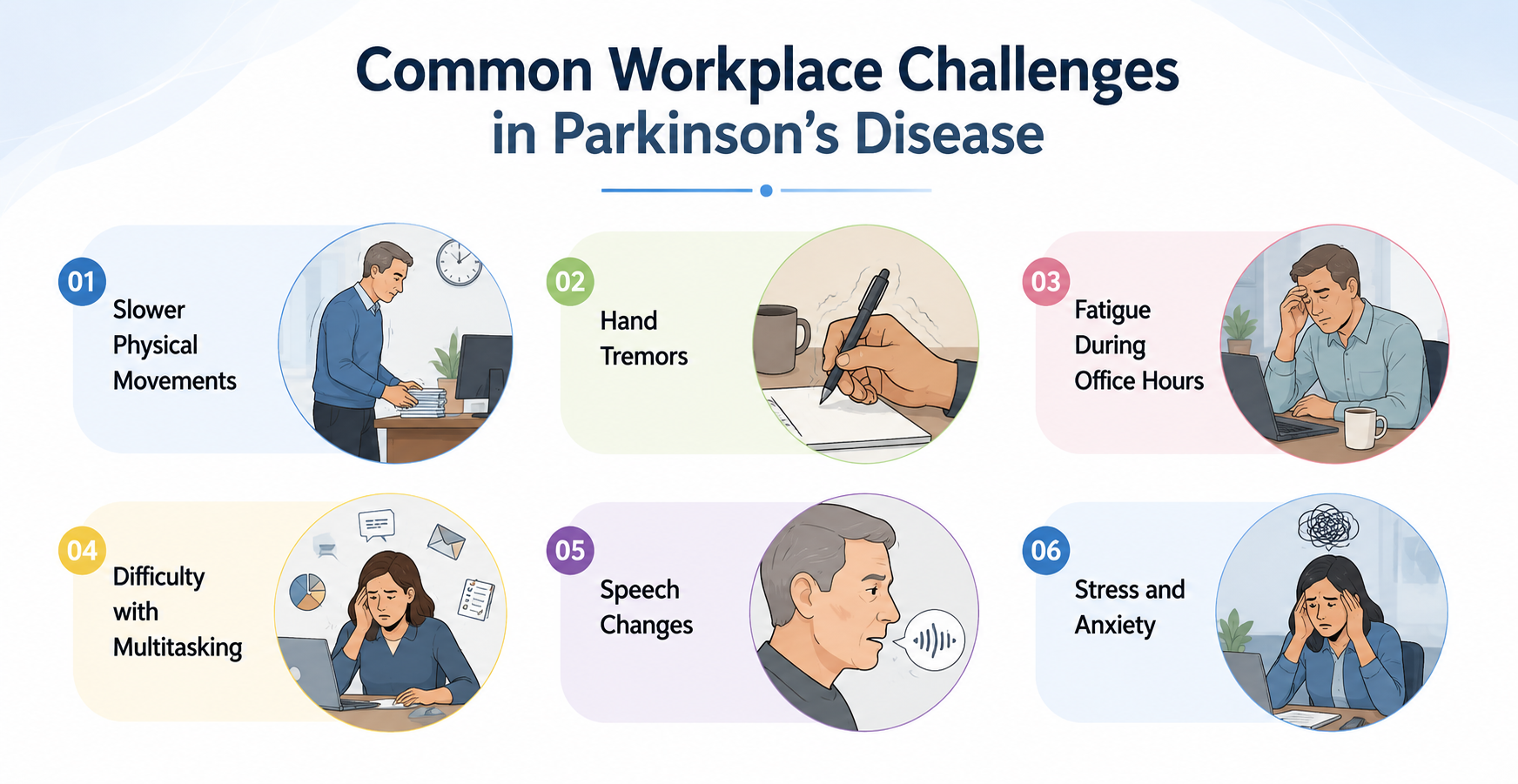
Common Workplace Challenges in Parkinson’s Disease
- Slower Physical Movements: Tasks like typing, writing, using a
mouse, or handling files may take longer than before.
- Hand Tremors: Hand tremors can affect presentations,
signatures, data entry, or jobs requiring precision.
- Fatigue During Office Hours: Long workdays, crowded commutes,
and continuous screen time can increase exhaustion.
- Difficulty with Multitasking: Some people notice slower
thinking speed or reduced concentration during busy work schedules.
- Speech Changes: Soft voice or slower speech may affect
communication in meetings or client interactions.
- Stress and Anxiety: Pressure to maintain performance can
increase stress, which may worsen Parkinson’s symptoms.
In cities like Mumbai, long travel hours, crowded public transport, and demanding work culture
can make symptom management more difficult. Specialists at Bombay
Hospital and Medical Research
Centre help patients manage these daily challenges through personalized neurological
care and
long-term treatment support. Recognizing these challenges early helps you plan better and reduce
unnecessary strain.
Early Signs Parkinson’s Is Starting to Affect Your Job
Many people ignore early warning signs because they do not want their condition to interfere
with work. Paying attention to these changes can help you seek support before burnout develops.
Signs You Should Not Ignore
- You feel exhausted halfway through the workday
- Typing speed has reduced noticeably
- Coworkers ask you to repeat yourself often
- You struggle to focus during meetings
- Handwriting becomes smaller or harder to read
- Stress causes visible symptom flare-ups
- Long commuting leaves you physically drained
- You avoid presentations due to tremors or speech difficulty
A 42-year-old marketing professional with Parkinson’s may work comfortably during morning hours
but develop stiffness and fatigue during evening meetings. Adjusting medication timing and
reducing back-to-back meetings can improve work performance significantly.
Recognizing these patterns early allows you to make changes before symptoms begin affecting your
confidence or career growth.
Productivity Tips for Working Professionals with Parkinson’s
You do not always need major career changes after a Parkinson’s diagnosis. Practical workplace
adjustments often help people continue working effectively.
Best Productivity Strategies for Parkinson’s at Work
- Schedule Important Tasks During Your Best Hours: Many
Parkinson’s medications work best during certain periods of the day. Try scheduling
presentations, client meetings, reports, and focus-heavy tasks during the hours when your
symptoms feel most controlled.
- Use Speech-to-Text Tools: Voice typing software can reduce
hand strain caused by tremors or stiffness. This is useful for emails, reports, notes, and
documentation work.
- Take Short Movement Breaks: Sitting continuously may increase
stiffness. Brief stretching or walking breaks every hour may help improve mobility and
concentration.
- Reduce Back-to-Back Meetings: Continuous meetings can increase
fatigue and mental exhaustion. Keep buffer time between discussions whenever possible.
- Organize Your Workspace: Keep frequently used items close to
you. A clutter-free desk reduces unnecessary movement and frustration.
- Set Medication Reminders: Missing medication timing during
office hours can worsen symptoms. Use mobile alarms or smart reminders to stay consistent.
- Consider Ergonomic Equipment: Ergonomic keyboards, supportive
chairs, and wrist supports can reduce physical strain during long work hours.
These adjustments may seem small, but they can improve comfort, focus, and productivity
throughout the day.
Should You Tell Your Employer About Parkinson’s Disease?
This is one of the most common concerns among working professionals with Parkinson’s disease.
Some people share their diagnosis early. Others wait until symptoms begin affecting daily work.
There is no single right answer. Your decision depends on workplace culture, job
responsibilities, symptom severity, and your comfort level.
Benefits of Open Communication
Discussing your condition with HR or managers may help you receive flexible working hours,
work-from-home options, reduced travel requirements, ergonomic support, scheduled breaks, and
adjusted workloads.
Many employees fear being treated differently after disclosure. Still, staying silent while
struggling physically and emotionally can increase stress over time. A practical and
solution-focused conversation often creates better understanding at work.
Managing Fatigue and Stress While Working with Parkinson’s
Fatigue is one of the most difficult symptoms of Parkinson’s disease. Even mentally demanding
work can leave you physically exhausted.
How to Manage Workplace Fatigue
- Prioritize Sleep: Poor sleep can worsen tremors, stiffness,
and concentration issues. Maintaining a consistent sleep routine is important.
- Avoid Overcommitting: Taking excessive responsibilities may
increase burnout. Focus on tasks that truly require your attention.
- Stay Physically Active: Light exercise, stretching, yoga, or
physiotherapy can improve mobility and energy levels.
- Practice Stress Management: Stress often increases Parkinson’s
symptoms. Deep breathing, meditation, or short relaxation breaks may help regulate stress
during work.
- Plan Your Commute Carefully: In busy cities like Mumbai, long
commuting hours can worsen fatigue. Flexible office timing or hybrid work options may reduce
physical strain.
Managing stress is not only about emotional health. It directly affects your physical symptoms
and daily work performance.
When Should You Consider Flexible Work or Reduced Hours?
Some people continue full-time jobs for years after diagnosis. Others may need gradual
adjustments as symptoms progress.
You should consider discussing work modifications if:
- fatigue affects your daily functioning
- medication side effects interfere with work
- physical tasks feel unsafe
- stress is worsening symptoms regularly
- commuting becomes exhausting
- work leaves no energy for recovery
Flexible Work Options That May Help
- Hybrid work
- Remote work
- Part-time schedules
- Consulting roles
- Reduced travel responsibilities
- Flexible start and end timings
Adapting your work structure is not a failure. It is a practical step toward protecting your
health and maintaining long-term independence.
Role of Medical Support in Managing Parkinson’s Disease
Medical treatment plays a major role in helping working professionals manage Parkinson’s
symptoms effectively.
A neurologist may help with medication
management, tremor control, stiffness reduction, fatigue evaluation, sleep issues, and movement
therapy guidance.
Other therapies may also improve work performance:
- physiotherapy for mobility and posture
- occupational therapy for daily task management
- speech therapy for communication challenges
Regular follow-ups help doctors adjust treatment according to your changing work demands and
lifestyle.
Frequently Asked Questions
Yes. Many people continue full-time work for several years after diagnosis. Treatment,
workplace support, symptom severity, and job type all affect work capacity.
Parkinson’s may affect typing speed, mouse control, and hand coordination. Ergonomic
tools and voice typing software may help reduce strain.
Many people choose to discuss their diagnosis when symptoms begin affecting work
performance. Open communication may help you receive workplace accommodations and
support.
Flexible schedules, work-from-home options, ergonomic equipment, reduced travel,
scheduled breaks, and workload adjustments may help improve comfort and productivity.
Yes. Stress may increase tremors, stiffness, fatigue, and concentration difficulties.
Managing stress through sleep, exercise, and structured work routines may help control
symptoms.
Conclusion
Working with Parkinson’s disease can feel challenging, especially when symptoms begin affecting your
routine, confidence, and energy levels. Still, many people continue productive and meaningful
careers with the right support and planning. Understanding your symptoms, adjusting your work
habits, managing stress, and seeking medical guidance can help you maintain both professional
performance and personal well-being. Early support, practical workplace changes, and regular
neurological care often make daily work life more manageable and sustainable over time.