Kidney stones are a common and painful condition that affects millions of people worldwide. These small, hard deposits that form inside the kidneys can vary in size and type, leading to discomfort and potential health complications if left untreated. A specialist in urology, focused on kidney care, can help identify the type of stone and recommend the best treatment. Understanding the different types of kidney stones and the treatment options available can help you take the necessary steps to prevent or manage this condition effectively.
This blog will guide you through the different types of kidney stones, their causes, symptoms, and the various treatment options available. By the end, you'll have a clearer understanding of this condition and the importance of early intervention.
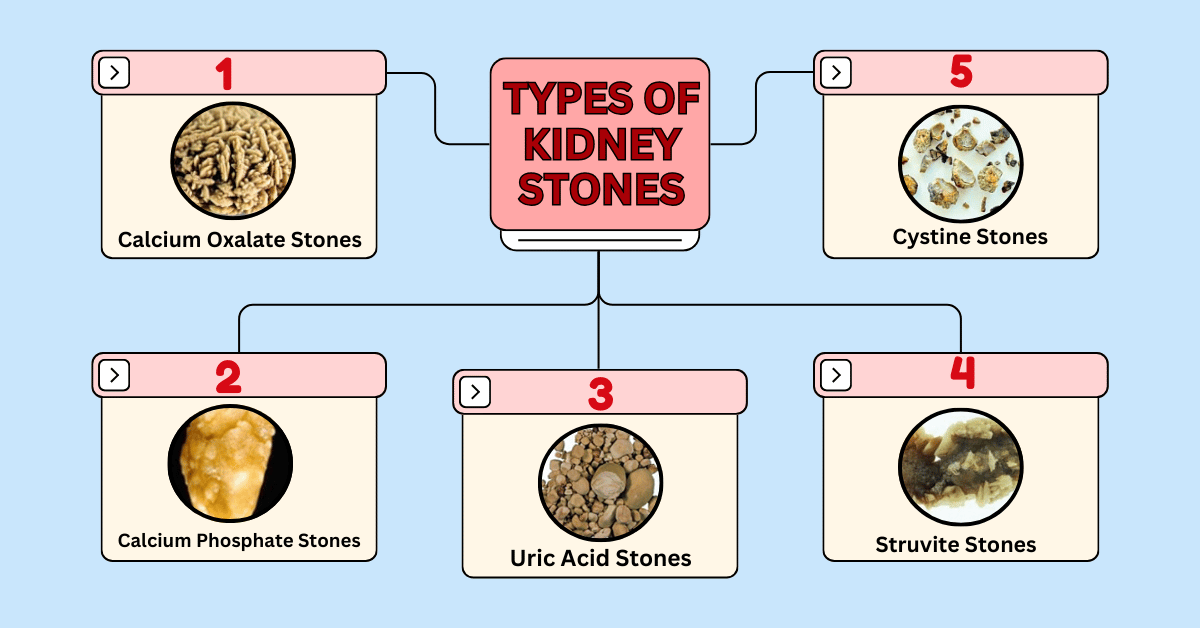
These are the most common types of kidney stones. They form when calcium combines with oxalate, a substance found in certain foods like spinach, nuts, and chocolate. People with higher calcium levels in their urine or high oxalate intake are at a greater risk of developing these stones.
Increasing fluid intake can help flush out the stones. Doctors may also recommend reducing dietary oxalate or taking medications that prevent calcium and oxalate from forming stones.
These stones form when calcium combines with phosphate. While less common than calcium oxalate stones, they are still a significant cause of kidney stones. They often occur in people with certain metabolic conditions or kidney problems, such as renal tubular acidosis.
Like calcium oxalate stones, staying hydrated is key. Additionally, medications can help manage the underlying conditions contributing to their formation.
Uric acid stones develop when there’s too much uric acid in the urine, a byproduct of protein metabolism. People with gout or those who consume high-protein diets are more likely to form these stones.
Drinking plenty of water and reducing protein intake can help. Doctors may also prescribe medications that lower uric acid levels, thus reducing the likelihood of stone formation.
These stones are often associated with urinary tract infections (UTIs). They form when bacteria in the urinary tract produce chemicals that combine with magnesium, ammonium, and phosphate to form stones.
Treating the underlying infection is the primary method for preventing struvite stones. In some cases, surgery may be required to remove large stones that form in response to repeated UTIs.
Cystine stones are rare and result from a genetic disorder called cystinuria. This condition causes the amino acid cystine to leak into the urine, where it can crystallize and form stones.
Increasing water intake is essential for cystine stone prevention. Medications that help lower cystine levels in the urine may also be recommended. In severe cases, surgery may be necessary.
Several factors contribute to kidney stone formation, including:
Kidney stones can range from being painless to extremely painful. Symptoms include:
If you experience any of these symptoms, it's important to seek medical attention right away to prevent complications.
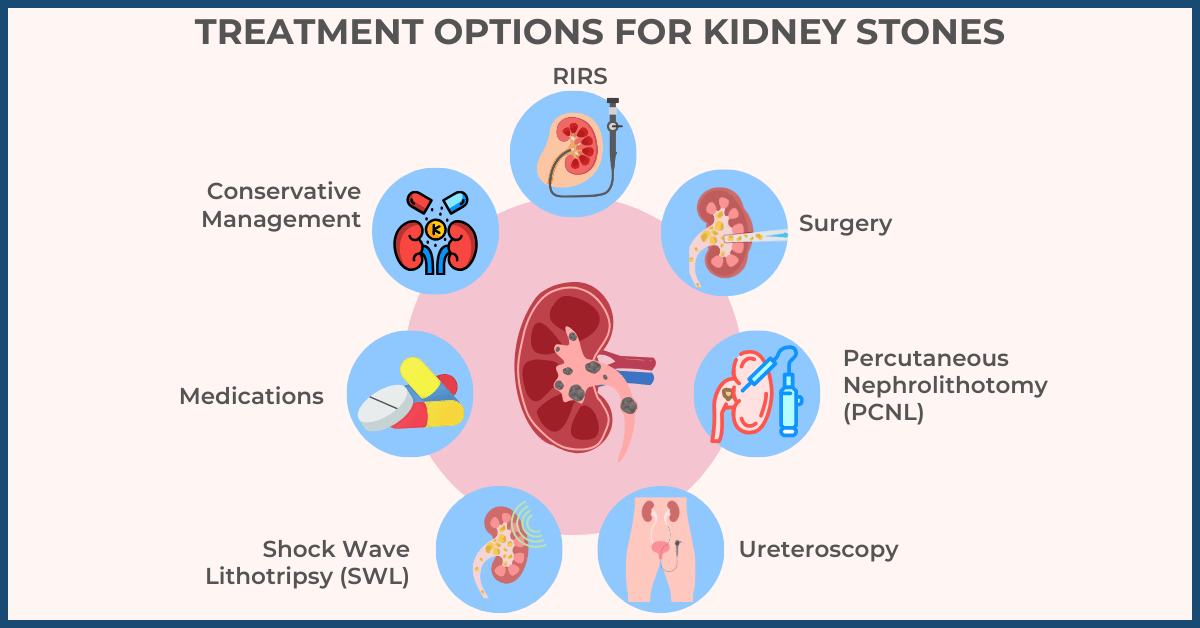
RIRS is a minimally invasive procedure used to treat kidney stones. A flexible ureteroscope is
gently passed through the urinary tract to reach the kidney. The surgeon then locates the stone
and uses advanced laser technology to break it into very fine fragments.
These particles are either removed during the procedure or allowed to pass naturally through
urine over time.
RIRS offers quicker recovery, minimal discomfort, and no external incisions, making it a
preferred treatment option for many patients with kidney stones.
For small stones, your doctor may recommend drinking plenty of fluids to help flush the stone out. Pain relievers like ibuprofen or acetaminophen may also be prescribed to manage discomfort.
For certain types of stones, medications can help dissolve or prevent the stones from growing larger. For example, alpha-blockers can help relax the muscles in the ureter, making it easier to pass the stone.
This non-invasive treatment uses high-energy shock waves to break large stones into smaller fragments that can be passed through the urinary tract more easily. It is a common procedure for treating larger stones.
If the stone is stuck in the ureter, a doctor may use a thin tube, called a ureteroscope, to remove the stone or break it into smaller pieces. This procedure is typically performed under general anesthesia.
For very large stones, PCNL is often used. It involves making a small incision in the back and using a scope to remove the stone. This procedure is typically reserved for large or complex stones that cannot be treated with other methods.
In rare cases, if the stone is too large to be treated with non-invasive procedures, surgery may be required. This is typically the last resort after other treatments have failed.
Drinking enough water is one of the most effective ways to prevent kidney stones. Aim for at least 8-10 glasses of water a day, or enough to produce clear or light yellow urine.
Depending on the type of stone you have, your doctor may recommend dietary changes. For example, reducing salt, oxalate-rich foods, or animal protein can help prevent stones from forming.
Maintaining a healthy weight through regular exercise can help reduce your risk of kidney stones.
In some cases, your doctor may recommend periodic urine tests to check for any changes in the concentration of substances that can form kidney stones.

Bombay Hospital, Mumbai is a trusted center for quality healthcare. It specializes in a wide range of medical fields, including cardiology, cardiovascular thoracic surgery, endocrinology, gastroenterology, nephrology, neurology, neurosurgery, pediatric surgery, plastic surgery, pulmonary medicine, rheumatology, urology, oncology, and more.
For those seeking expert consultation on kidney stones or related issues, Bombay Hospital offers a multidisciplinary approach to treatment. With its state-of-the-art medical facilities and experienced healthcare professionals, patients can expect personalized and comprehensive care.
Kidney stones are a painful and often recurring condition, but with the right knowledge and treatment, they can be managed effectively. Staying hydrated, making dietary adjustments, and seeking timely medical intervention can reduce the likelihood of developing kidney stones. If you suspect you have kidney stones, it's crucial to consult with a healthcare provider to receive appropriate care and prevent complications.